

Introduction to PMO Slang
PMO is a short slang word used in texting and online chats. People use it every day on platforms like Instagram, Snapchat, and TikTok. It saves time and makes messages feel more casual and natural.
This word has more than one meaning, and that is what makes it tricky. Understanding the PMO depends on who says it and why. This article will explain every meaning clearly with real examples.
What PMO Means in Simple Terms
PMO is an abbreviation used in informal digital communication. It is mostly seen in direct messages, comments, and social media captions. The full form changes based on the situation.
Why This Slang Is Trending Online
Short slang like PMO spreads fast because people love quick communication. Platforms like TikTok and Twitter popularize these words. Once a celebrity or influencer uses it, millions of people pick it up.
Quick Overview of Different Meanings
PMO can mean different things depending on the context:
- “Piss Me Off” — used when someone is angry or frustrated
- “Put Me On” — used when asking for a recommendation
- Adult or sensitive meanings — used in certain online communities
- Professional Organization (PMO) — this is a formal business term, not slang
What Does PMO Mean? (Core Definition)
Primary Meaning Explained
The most common slang meaning of PMO is “Piss Me Off.” It shows anger, annoyance, or frustration casually. People use it when something bothers them, and they want to express that quickly.
How Meaning Changes Based on Context
PMO does not always mean the same thing in every message. The tone of the conversation and the relationship between people decide the meaning. Always read the full message before assuming what PMO means.
Most Common Meanings of PMO
1. PMO = “Piss Me Off”
Meaning: This version of PMO is used to express that something is making the person angry or irritated. It is emotional and direct.
Tone The tone here is frustrated, annoyed, or angry. It is not used in a calm or happy conversation.
Example Sentences
- “This traffic is starting to PMO so badly.”
- “She keeps lying, and it really is PMO.”
- “Don’t PMO today; I’m already tired.”
2. PMO = “Put Me On”
Meaning This version means the person is asking someone to introduce them to something new. It could be a song, a show, a person, or a trend.
Tone The tone is friendly, curious, and casual. It shows excitement about discovering something new.
Example Sentences
- “PMO to that artist you were talking about.”
- “You always have good music, PMO.”
- “PMO to a good Netflix show, please.”
Less Common & Hidden Meanings of PMO
Sensitive or Adult Meanings
In some online communities, PMO carries adult or sexual meanings. These meanings are mostly found on adult platforms or niche forums. It is important to know your audience before using this term freely.
Internet Subculture Meanings
Some gaming and underground internet groups use PMO in their own unique ways. These meanings are not common in everyday conversations. They exist mostly inside specific communities and rarely cross over.
Why These Meanings Are Misunderstood
Many people learn slang from one source and think it only has one meaning. When the context changes, the message becomes confusing or offensive. That is why it is always smart to check the full conversation before reacting.
Key Points to Remember
- Context decides which meaning of “PMO” is being used
- The tone of the message helps identify the emotion behind PMO
- PMO is not safe for formal or professional communication
- Always consider who you are talking to before using it
Origin & Evolution of PMO
Where Did PMO Come From?
PMO started appearing in internet chatrooms and forums in the early 2000s. It was part of a bigger wave of text abbreviations like LOL, BRB, and SMH. People used these short forms to type faster and communicate more casually.
Early Internet and Chat Usage
In early chat platforms like AIM and MSN Messenger, abbreviations were very common. PMO was used mostly to express frustration in quick conversations. It was simple, fast, and felt very natural for online chatting.
How PMO Evolved Over Time
Shift in Meanings
As the internet grew, PMO picked up new meanings from different communities. The “Put Me On” meaning became popular with music and pop culture fans. This shift happened mostly between 2015 and 2020 on social media platforms.
Influence of Social Media
Platforms like Twitter, Instagram, and TikTok gave slang a much bigger stage. A single viral post can turn a small abbreviation into a worldwide trend. PMO became mainstream because of how often it appeared in trending content.
How PMO Is Used in Different Contexts
Casual Texting
In everyday texting between friends, PMO is used very naturally. It replaces longer emotional phrases and keeps the conversation short. Most young people use it without even thinking about it.
Friends & Daily Conversations
- “Bro, that PMO so much.”
- “PMO to whatever you’re eating right now.”
- “She did it again, and honestly, PMO.”
Social Media Platforms
On Instagram and TikTok, PMO appears in comments and captions all the time. People use it to react to videos, share opinions, or ask for recommendations. It fits perfectly in the short and fast language of social media.
Comments, Captions, and Trends
- Caption: “When the WiFi goes out… PMO.”
- Comment: “PMO to the song in this video!”
- Reply: “This ending really PMO ngl.”
Gaming & Online Chats
In gaming, players need to communicate fast. PMO is used to react to something frustrating or exciting during gameplay. It is short enough to type mid-game without losing focus.
Fast Communication & Reactions
- “That lag just PMO during the final round.”
- “PMO, to your setup, it looks clean.”
- “Why does this game PMO every single time?”
Real-Life Examples of PMO Usage
Example Conversations
Conversation 1 — Frustration
Alex: “She canceled again last minute.” Jordan: “That would PMO so bad.” Alex: “It really does; I’m done.”
Conversation 2 — Recommendation
Mia: “I need new music; I’m bored.” Leo: “PMO to your vibe, and I’ll send something.” Mia: “Like chill R&B mostly.”
Conversation 3 — Social Media
Comment: “This traffic in the city really PMO every morning.” Reply: “Same, it’s honestly unbearable.”
When NOT to Use PMO
Professional Communication
Using PMO in work emails or formal messages looks unprofessional. Most adults in workplace settings do not understand or appreciate slang. It can also sound rude if misunderstood by a manager or client.
Why It Can Be Risky
PMO can come across as aggressive or inappropriate in formal settings. If someone does not know the slang, they may take it the wrong way. This can cause unnecessary confusion or even conflict at work.
Workplace & Formal Settings
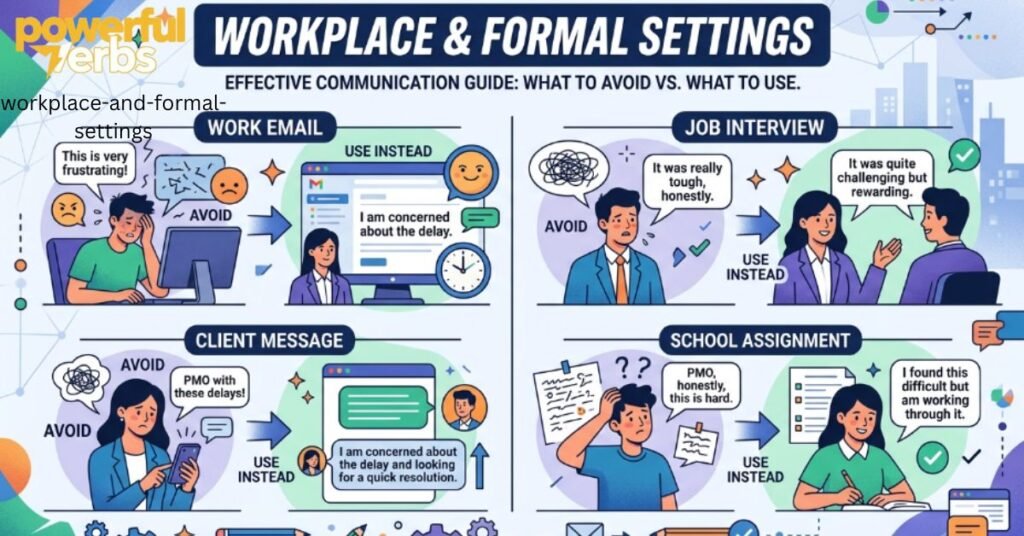
| Situation | Avoid | Use Instead |
| Work email | “This PMO” | “This is very frustrating.” |
| Job interview | “It really PMO.” | “It was quite challenging.” |
| Client message | “PMO with delays” | “I am concerned about the delay.” |
| School assignment | “PMO, honestly.” | “I found this difficult.” |
Better Alternatives to Use Instead
- Instead of PMO (frustration): say “This is frustrating” or “I am annoyed.”
- Instead of PMO (recommendation): say “Can you suggest something?” or “Tell me about it.”
- In formal writing: always use full sentences and professional words
Safer Alternatives to PMO
For Frustration
- “This is really annoying me.”
- “I’m so frustrated right now.”
- “That bothers me a lot.”
For Recommendations
- “Can you put me onto that?”
- “Tell me more about it.”
- “I’d love a recommendation.”
Neutral Phrases
- “That’s a lot to deal with.”
- “Let me know what you think.”
- “I’m open to suggestions.”
Why Context Matters So Much
Same Word, Different Meanings
PMO is a perfect example of how one word can mean completely different things. The same three letters can show anger in one message and curiosity in another. This is why reading the full conversation is always important.
Miscommunication Risks
If someone uses “PMO” while asking for music and you respond as if they are angry, the whole conversation goes wrong. Misreading tone can make people feel ignored or misunderstood. One wrong assumption can create a small but unnecessary conflict.
Rule of Thumb
Simple Guideline for Correct Usage
If the message has a negative or venting tone, PMO likely means “Piss Me Off.” If the message is curious or asking for something, it probably means “Put Me On.” When in doubt, just ask the person what they mean — it saves a lot of confusion.
Common Mistakes to Avoid
| Mistake | Wrong Example | Correct Version |
| Using in a formal email | “PMO with this delay” | “This delay is frustrating.” |
| Misunderstanding meaning | “PMO that song” (taken as anger) | “Put me on to that song.” |
| Using with strangers | Sending PMO to a new contact | Use full words until you know them |
| Using in serious situations | “This news really PMO.” | “This news is very upsetting.” |
| Assuming one meaning | Reading all PMO as anger | Always check the tone first |
PMO in Dating Apps & Online Communities
How It’s Used
On dating apps, PMO is sometimes used as a flirty or casual opener. Someone might say “PMO to your playlist” to start a conversation about music. It feels low-pressure and fun compared to more direct messages.
Flirting vs Casual Tone
The difference between flirting and casual use depends on the rest of the message. If someone adds emojis or personal comments, it could be flirty. If it is just about sharing something, it is usually casual and friendly.
Tips for Safe Use
- Know your audience before using any slang on dating apps
- Do not use PMO if you are unsure how the other person will take it
- Keep it light and follow the tone of the conversation
Comparison with Similar Slang Terms
PMO vs POV
| Term | Meaning | Used For |
| PMO | Piss Me Off / Put Me On | Emotion or recommendation |
| POV | Point of View | Storytelling or perspective |
POV is used to set a scene or share a perspective. PMO is used to express feelings or ask for something. They are both popular but serve very different purposes.
PMO vs IMO
| Term | Meaning | Used For |
| PMO | Piss Me Off / Put Me On | Emotion or discovery |
| IMO | In My Opinion | Sharing personal views |
IMO, it is much safer to use in semi-formal conversations. PMO carries more emotional weight and is less neutral. IMO it is better when you want to share a thought without strong emotion.
PMO vs SMH
| Term | Meaning | Used For |
| PMO | Piss Me Off | Anger or frustration |
| SMH | Shaking My Head | Disappointment or disbelief |
Both PMO and SMH show negative emotions, but PMO is stronger. SMH is more about disbelief while PMO is about active frustration. SMH is slightly safer to use in broader conversations.
Regional & Cultural Differences
United States
In the US, PMO is very commonly understood, especially among younger generations. Both meanings — frustration and recommendation — are widely recognized. It is most popular in urban slang and hip-hop-influenced culture.
United Kingdom
In the UK, PMO is less common but is growing in use through social media. British slang has its own equivalents, so PMO is mostly understood by younger internet users. Older generations in the UK may not recognize it at all.
Canada & Australia
In Canada and Australia, PMO is understood mainly through American social media influence. It is used casually among younger people who follow US trends online. It is not deeply rooted in local slang culture in these countries.
South Asia
In South Asian countries like Pakistan, India, and Bangladesh, PMO is becoming more popular. Young people who use Instagram, Snapchat, and TikTok pick up this slang quickly. It is mostly used in English-speaking digital spaces rather than in local language conversations.
Non-Native English Users
For people who did not grow up speaking English, PMO can be confusing. The double meaning makes it harder to understand without full context. Non-native speakers should look up slang terms before using them to avoid mistakes.
How to Respond to PMO
If It Means Frustration
- “I totally get that; that’s really annoying.”
- “Ugh, same; that would bother me too.”
- “That sounds really stressful; hope it gets better.”
If It Means Recommendation
- “Sure! Check out [name]; I think you’ll love it.”
- “I got you; sending something right now.”
- “Oh, you’ll like this; I’ll share the link.”
Professional Response
If you receive PMO in a professional context and are unsure, respond calmly and neutrally. Ask for clarification politely without making it awkward. Something like “Could you clarify what you mean?” works perfectly fine.
Final Thoughts
PMO is a small word with a big job in modern online communication. It shows how language keeps changing with the internet and how one abbreviation can carry multiple emotions and meanings at once. Learning slang like PMO helps you communicate better and avoid misunderstandings.
Always pay attention to the context, the tone, and the relationship you have with the person using it. When in doubt, keep it simple and use full words that everyone can understand clearly. The goal of any communication is to be understood, and that never goes out of style.
Frequently Asked Questions
1. What does PMO mean when someone sends it to you in a chat?
PMO stands for “Piss Me Off” in chat and texting slang. It’s used to express frustration or annoyance, as in “This slow Wi-Fi is really about to PMO.”
2. How is PMO used in everyday text conversations between friends?
In everyday texting, PMO is used to vent frustration quickly—for example, “My boss just added another meeting; this is going to PMO so bad.” It keeps the message short while conveying strong irritation.
3. Can PMO have more than one meaning in online chat and social media?
Yes, PMO can mean “Piss Me Off,” “Put Me On” (introduce me to something), or “Project Management Office,” depending on context. Always read the surrounding conversation to figure out which meaning applies.
4. What is the difference between PMO meaning “Put Me On” versus “Piss Me Off” in a text?
When someone says “PMO to that new playlist,” they mean “Put Me On”—share it with me. When they say “this traffic is about to PMO,” they mean “Piss Me Off”—it’s making them angry. Context is the key difference.
5. Is PMO a slang term mostly used by Gen Z, or is it common across all age groups?
PMO is most popular among Gen Z and younger Millennials on platforms like Snapchat, TikTok, and Instagram. Older age groups are less likely to use it, though it’s becoming more widely recognized through social media exposure.
6. How do you use PMO correctly in a sentence without sounding awkward?
Use PMO naturally in casual, informal chats—for example, “slow internet really PMOs me” or “PMO to that artist, she sounds amazing.” Avoid using it in professional or formal writing where it would seem out of place.
7. What are some real examples of PMO being used in TikTok or Instagram comments?
On TikTok you might see comments like “People who chew loudly really PMO 😤” or “PMO to this recipe; it looks insane!” These real-world uses show both the frustration meaning and the “put me on” meaning in action.
8. Does PMO mean something different in a professional or business setting?
Yes, in a business or corporate setting, PMO stands for “Project Management Office,” a team that oversees project standards and governance. This is completely separate from its casual texting slang meaning, so context matters enormously.
9. How can you tell from a message whether someone is using PMO as slang or as a business term?
If the message comes from a work email, LinkedIn, or office chat, “PMO” almost certainly refers to the Project Management Office. If it’s in a casual DM, Snapchat, or comment section, it’s likely the slang version meaning “Piss Me Off” or “Put Me On.”
10. What should you reply when someone texts you “PMO” in a conversation?
If they’re venting (“Piss Me Off”), respond with empathy like “Ugh, that’s so frustrating!” If they’re saying “Put Me On,” share what they’re asking about. When unsure, it’s totally fine to ask—”Do you mean you’re annoyed, or do you want me to share something?”

Liam Johnson is a dedicated language expert with 4 years of professional experience. He specializes in Grammar, Vocabulary, and Sentence structure.
