

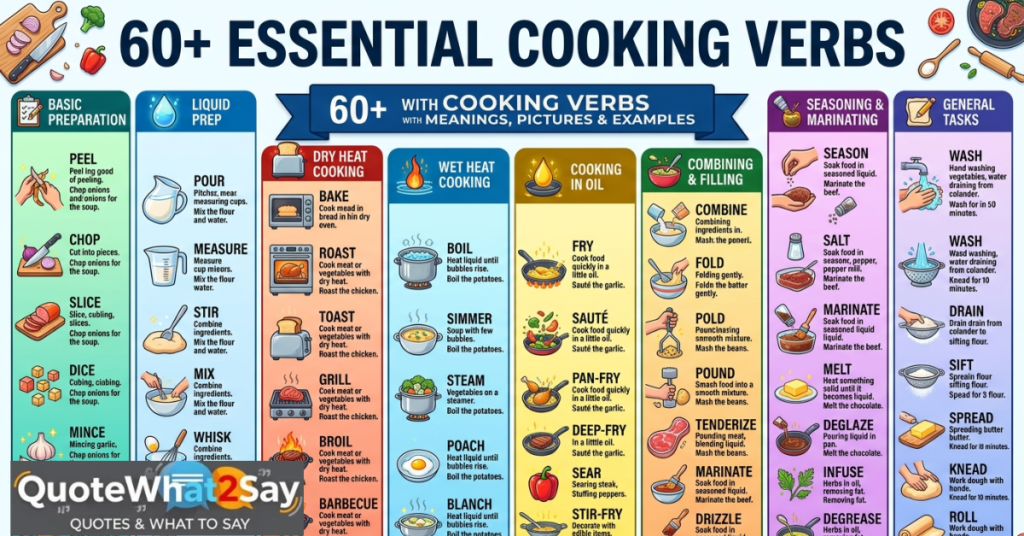
Cooking verbs are important action words used to describe different activities in the kitchen. Whether you are reading a recipe, watching a cooking tutorial, or learning English vocabulary, these verbs help explain every step of food preparation clearly.
From chopping vegetables and boiling pasta to roasting meat and whisking eggs, cooking verbs make recipes easier to understand and improve everyday communication in English. These kitchen action words are commonly used in restaurants, cooking classes, food blogs, and recipe books.
In this complete guide, you will learn:
- Common cooking verbs in English
- Cooking verbs with meanings and examples
- Kitchen vocabulary used in recipes
- Food preparation action words
- Everyday cooking terms for beginners
Cooking Verbs List in English
- Bake
Barbecue
Baste
Beat
Blend
Boil
Braise
Brine
Broil
Caramelize
Chop
Coat
Cook
Crush
Cube
Cure
Deep Fry
Dice
Drain
Ferment
Flavor
Fold
Fry
Garnish
Glaze
Grate
Grill
Grind
Infuse
Julienne
Knead
Marinate
Mash
Melt
Mince
Mix
Pan Fry
Peel
Poach
Pour
Roast
Roll
Saute
Scorch
Sear
Season
Shred
Simmer
Slice
Smoke
Sprinkle
Steam
Stew
Stir
Tenderize
Toast
Whip
Whisk
Common Cooking Verbs with Meanings and Examples
Bake
Bake means to cook food using dry heat inside an oven. Baking is commonly used for cakes, bread, cookies, and pastries.
Example:
She baked a chocolate cake for the birthday party.
Boil
Boil means to cook food in water heated until bubbles appear.
Example:
Boil the pasta for ten minutes.
Chop
Chop means to cut food into medium-sized pieces using a knife.
Example:
Chop the onions before adding them to the pan.
Dice
Dice means to cut food into small square pieces.
Example:
Dice the tomatoes for the salad.
Slice
Slice means to cut food into thin flat pieces.
Example:
Slice the bread carefully.
Mince
Mince means to cut food into extremely tiny pieces.
Example:
Mince the garlic before cooking.
Peel
Peel means to remove the outer skin from fruits or vegetables.
Example:
Peel the potatoes before boiling them.
Mash
Mash means to crush food until it becomes soft.
Example:
Mash the potatoes with butter.
Blend
Blend means to mix ingredients together until smooth.
Example:
Blend the fruits to make a smoothie.
Mix
Mix means to combine ingredients evenly.
Example:
Mix flour, sugar, and eggs in a bowl.
Stir
Stir means to move ingredients around using a spoon.
Example:
Stir the soup slowly while cooking.
Whisk
Whisk means to beat ingredients quickly to make them light and smooth.
Example:
Whisk the eggs until fluffy.
Beat
Beat means to mix ingredients rapidly.
Example:
Beat the cream until thick.
Knead
Knead means to press and fold dough repeatedly using hands.
Example:
Knead the dough for five minutes.
Fry
Fry means to cook food in hot oil.
Example:
Fry the eggs until golden.
Deep Fry
Deep fry means to cook food completely submerged in hot oil.
Example:
Deep fry the chicken until crispy.
Pan Fry
Pan fry means to cook food in a small amount of oil.
Example:
Pan fry the fish over medium heat.
Grill
Grill means to cook food over direct heat or flames.
Example:
They grilled chicken in the backyard.
Roast
Roast means to cook food using dry heat, usually in an oven.
Example:
Roast the vegetables until tender.
Steam
Steam means to cook food using hot steam.
Example:
Steam the vegetables to keep them healthy.
Simmer
Simmer means to cook food gently below boiling temperature.
Example:
Simmer the sauce for twenty minutes.
Saute
Saute means to cook food quickly in a little oil while stirring.
Example:
Saute the mushrooms with garlic.
Sear
Sear means to cook food quickly at very high heat.
Example:
Sear the steak before roasting.
Braise
Braise means to cook food slowly in a small amount of liquid.
Example:
Braise the beef until soft and tender.
Marinate
Marinate means to soak food in spices or sauce before cooking.
Example:
Marinate the chicken overnight.
Season
Season means to add herbs, spices, or salt to improve flavor.
Example:
Season the soup with black pepper.
Sprinkle
Sprinkle means to scatter small amounts of something over food.
Example:
Sprinkle cheese over the pizza.
Garnish
Garnish means to decorate food before serving.
Example:
Garnish the dish with fresh parsley.
Glaze
Glaze means to coat food with a shiny layer.
Example:
Glaze the cake with chocolate syrup.
Caramelize
Caramelize means to heat sugar until it becomes brown.
Example:
Caramelize the onions slowly.
Infuse
Infuse means to add flavor to liquid by soaking ingredients.
Example:
Infuse the tea with mint leaves.
Toast
Toast means to brown food using dry heat.
Example:
Toast the bread lightly.
Melt
Melt means to heat something until it becomes liquid.
Example:
Melt the butter in a pan.
Pour
Pour means to make liquid flow from one container into another.
Example:
Pour the sauce over the noodles.
Kitchen Verbs Used in Daily Cooking
Kitchen verbs are commonly used while preparing meals at home or in restaurants. These action words help explain cooking instructions more clearly.
Some common kitchen verbs include:
- Chop
- Slice
- Dice
- Mix
- Stir
- Fry
- Bake
- Grill
- Roast
- Steam
- Boil
- Peel
- Whisk
- Knead
- Pour
These cooking action words are essential for understanding recipes and improving English vocabulary.
Difference Between Common Cooking Verbs
| Cooking Verb | Meaning |
| Chop | Cut into rough pieces |
| Dice | Cut into small cubes |
| Slice | Cut into thin pieces |
| Boil | Cook in bubbling water |
| Simmer | Cook gently below boiling |
| Grill | Cook over direct heat |
| Roast | Cook using dry oven heat |
| Steam | Cook using hot steam |
| Fry | Cook in hot oil |
| Saute | Cook quickly in little oil |
Why Learning Cooking Verbs Is Important
Learning cooking verbs helps learners:
- Understand recipes easily
- Improve kitchen vocabulary
- Follow cooking instructions correctly
- Speak confidently about food preparation
- Learn English through daily activities
Cooking vocabulary is useful for students, chefs, travelers, restaurant workers, and English learners.
FAQs About Cooking Verbs
What are cooking verbs?
Cooking verbs are action words used to describe preparing, cutting, mixing, heating, and serving food.
What is the difference between chop and dice?
Chop means cutting food into rough pieces, while dice means cutting food into small equal cubes.
What are the most common cooking verbs?
Some common cooking verbs are bake, boil, fry, grill, roast, steam, whisk, chop, and stir.
Why are cooking verbs important?
Cooking verbs help people understand recipes, kitchen instructions, and cooking tutorials more easily.
What is the difference between boil and simmer?
Boil means cooking food in rapidly bubbling water, while simmer means cooking gently at a lower temperature.
Final Thoughts
Cooking verbs are essential English vocabulary words used in recipes and kitchen instructions. Learning these action words helps improve communication, reading skills, and cooking knowledge.
By practicing common cooking verbs like bake, fry, grill, roast, steam, whisk, and chop, learners can understand food preparation more confidently and use English naturally in daily life.
Keep practicing these kitchen verbs regularly to build stronger vocabulary and improve your understanding of cooking instructions in English.

Liam Johnson is a dedicated language expert with 4 years of professional experience. He specializes in Grammar, Vocabulary, and Sentence structure.
