

Purple fruits are among the most visually striking and nutritionally powerful foods found in nature. From deep violet grapes to exotic tropical dragon fruits, these purple-colored fruits carry powerful antioxidants, vitamins, and minerals that support human health. Whether you are shopping at a local market, cooking a new recipe, or simply curious about fruit varieties by color, this complete guide covers 60 purple fruits names with descriptions, taste profiles, and uses.
Understanding purple fruits names helps in everyday conversations, recipe planning, grocery shopping, and dietary choices. This article covers well-known varieties as well as rare and exotic options, making it one of the most complete resources available on this topic.
What Is a Purple Fruit?
A purple fruit is any fruit that naturally develops a deep violet, dark blue-purple, or rich indigo color in its skin, flesh, or both during growth and ripening. This color comes from natural plant pigments called anthocyanins, which are powerful antioxidants linked to improved heart health, better brain function, and reduced inflammation.
Purple fruits grow across tropical, temperate, and subtropical climates worldwide. Some are common in daily diets while others remain rare or region-specific. The color intensity varies from light lavender to near-black depending on the fruit variety, climate, and ripeness level.
Complete List of 60 Purple Fruits Names
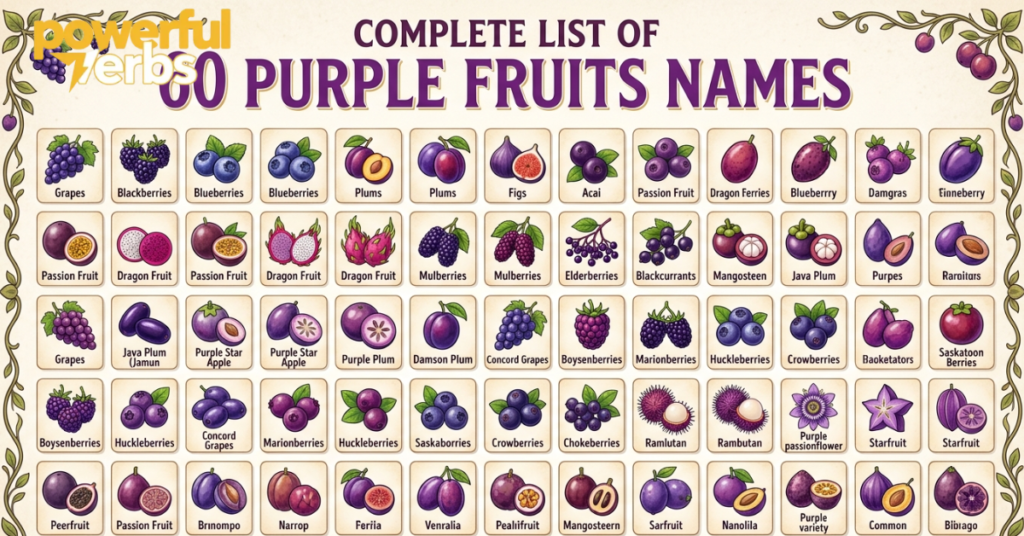
Common Purple Fruits (1–15)
| # | Fruit Name | Taste Profile |
| 1 | Concord Grape | Sweet, aromatic, bold |
| 2 | Black Grape | Sweet, juicy, rich |
| 3 | Purple Grape | Mild sweet, tangy |
| 4 | Blackberry | Sweet-tart, earthy |
| 5 | Blueberry (dark variety) | Mildly sweet, floral |
| 6 | Black Currant | Intensely tart, fruity |
| 7 | Black Cherry | Rich, bittersweet |
| 8 | Purple Plum | Juicy, sweet-tart |
| 9 | Purple Fig | Honey-sweet, jammy |
| 10 | Kalamata Olive | Fruity, savory, rich |
| 11 | Purple Corn | Earthy, mildly sweet |
| 12 | Dewberry | Sweet, blackberry-like |
| 13 | Black Date | Very sweet, chewy |
| 14 | Mulberry | Sweet, mildly tangy |
| 15 | Marionberry | Juicy, bold, sweet |
Berry-Type Purple Fruits (16–30)
| # | Fruit Name | Taste Profile |
| 16 | Açai Berry | Earthy, chocolate-like |
| 17 | Elderberry | Tart, deep when cooked |
| 18 | Boysenberry | Sweet, juicy, bold |
| 19 | Black Raspberry | Rich, soft, hollow center |
| 20 | Bilberry | Tangy-sweet, wild |
| 21 | Oregon Grape | Very tart, cooked best |
| 22 | Maqui Berry | Earthy, intensely purple |
| 23 | Huckleberry | Slightly sweet, firm |
| 24 | Cowberry (Lingonberry) | Tart, used in jams |
| 25 | Goumi Berry (dark) | Sweet-tart, preserved |
| 26 | Juneberry | Mildly sweet, mild |
| 27 | Black Wolfberry | Earthy, dried for tea |
| 28 | Chokeberry (Aronia) | Very tart, astringent |
| 29 | Crowberry | Tart, slightly bitter |
| 30 | Serviceberry | Sweet, almond-like |
Stone Fruits and Tree Fruits (31–42)
| # | Fruit Name | Taste Profile |
| 31 | Black Plum | Sweet-tart, juicy skin |
| 32 | Damson Plum | Tart, sharp, preserved |
| 33 | Purple Nectarine | Sweet, tangy, stone fruit |
| 34 | Black Cherry | Rich, slightly bitter |
| 35 | Purple Apple | Crisp, mildly sweet |
| 36 | Jabuticaba | Sweet, grape-like |
| 37 | Black Sapote | Soft, chocolate pudding-like |
| 38 | Black Sloe | Very tart, liqueur use |
| 39 | Purple Fig | Soft, honey-sweet |
| 40 | Loquat (purple variety) | Mild, sweet-tart |
| 41 | Black Mulberry | Sweet, deep berry flavor |
| 42 | Dried Purple Prune | Concentrated sweet, chewy |
Tropical and Exotic Purple Fruits (43–54)
| # | Fruit Name | Taste Profile |
| 43 | Mangosteen | Delicately sweet, creamy |
| 44 | Star Apple | Milky, mild, creamy |
| 45 | Purple Dragon Fruit | Mildly sweet, refreshing |
| 46 | Purple Haze Dragon Fruit | Sweet, soft, vibrant |
| 47 | Jamun (Indian Blackberry) | Sweet-sour, astringent |
| 48 | Purple Passion Fruit | Tropical, tart, aromatic |
| 49 | Salak (Snake Fruit) | Crisp, sweet-tart |
| 50 | Purple Mangosteen | Soft, floral, tropical |
| 51 | Purple Lychee variety | Floral, sweet, juicy |
| 52 | Grumichama | Sweet, cherry-like |
| 53 | Cambuca | Juicy, tropical sweet |
| 54 | Purple Guava | Floral, sweet-tart |
Rare and Specialty Purple Fruits (55–60)
| # | Fruit Name | Taste Profile |
| 55 | Ugli Fruit (purple skin) | Tangy-sweet, citrusy |
| 56 | Purple Tomato | Mild, slightly sweet |
| 57 | Purple Possum Passion Fruit | Tangy, aromatic, seedy |
| 58 | Black Muscat Grape | Musky, bold, sweet |
| 59 | Purple Tamarillo | Tart, tangy, unique |
| 60 | Finger Lime (purple variety) | Citrusy, tangy, popping |
Detailed Descriptions of Purple Fruits with Pictures
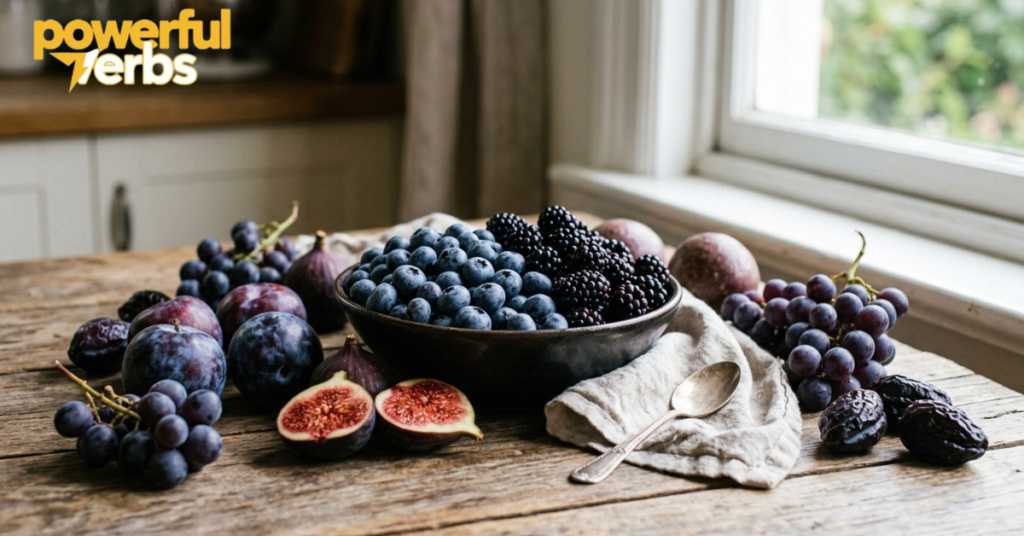
1. Concord Grape
Concord grapes are one of the most recognized purple fruits in North America. These deep purple grapes have a sweet, musky aroma and bold flavor that makes them ideal for grape juice, jelly, and fresh consumption. Their thick skin slips easily from the flesh, which is why they are also called slip-skin grapes.
2. Black Grape
Black grapes are widely cultivated across Europe, Asia, and the Americas. Their dark purple-black skin contains high levels of resveratrol and anthocyanins. They are consumed fresh, dried into raisins, pressed into wine, or used in desserts and salads.
3. Blackberry
Blackberries are dark purple aggregate berries that grow on thorny shrubs across temperate regions. Each blackberry is composed of small juice-filled segments called drupelets. Their sweet-tart flavor makes them popular in pies, jams, smoothies, and yogurt.
4. Blueberry (Dark Purple Varieties)
While most blueberries appear blue, certain varieties develop a deeper purple tone at full ripeness. These dark varieties tend to be sweeter and richer in anthocyanins than lighter types. They are consumed fresh, frozen, baked into muffins, or added to smoothies.
5. Black Currant
Black currants are small deep purple berries with a strong tart flavor and intense aroma. They are popular across Europe for making syrups, juices, jams, and herbal teas. Black currant extract is also widely used in health supplements due to its high vitamin C content.
6. Black Cherry
Black cherries have a deep purple-red color with a rich, slightly bitter flavor that distinguishes them from sweeter varieties. They are eaten fresh, made into preserves, or used in baking. Tart black cherry juice is also known for its anti-inflammatory properties.
7. Purple Plum
Purple plums are juicy stone fruits with firm skin and sweet-tart flesh. There are many varieties ranging from small damsons to large Italian plums. They are eaten fresh, dried into prunes, cooked into sauces, or baked into cakes and tarts.
8. Purple Fig
Figs with dark purple skin are among the sweetest fruits found in nature. Their soft interior contains hundreds of tiny seeds surrounded by honey-flavored flesh. Purple figs are enjoyed fresh, dried, or used in pastries, cheese boards, and preserves.
9. Mulberry
Mulberries are soft elongated purple fruits that grow on deciduous trees. Black mulberries have the deepest purple color and the richest flavor. They are eaten fresh, dried, or made into syrups and wines. Mulberry trees are also cultivated for silk production worldwide.
10. Açai Berry
Açai berries are small dark purple fruits native to the Amazon rainforest in Brazil. They grow in clusters on tall palm trees and are harvested for their nutritional density. Açai has a mildly earthy flavor with subtle chocolate and berry notes. It is most commonly consumed frozen as açai bowls or blended into smoothies.
11. Mangosteen
Mangosteen is a tropical purple fruit with a thick, dark rind and soft white segments inside. It is often called the queen of fruits because of its delicate, balanced sweetness. Native to Southeast Asia, mangosteen is best eaten fresh by breaking open the rind and scooping out the segments.
12. Elderberry
Elderberries are small deep purple berries that grow in clusters on elderflower shrubs. Raw elderberries are mildly toxic and must be cooked before consumption. Cooked elderberry develops a rich, tart, deeply flavored taste perfect for syrups, teas, wines, and medicinal preparations.
13. Boysenberry
Boysenberry is a large dark purple hybrid berry developed from a cross between raspberries, blackberries, and loganberries. It has a juicy texture and a bold, sweet flavor with earthy undertones. Boysenberries are used in pies, jams, ice cream, and sauces.
14. Jamun (Indian Blackberry)
Jamun, also known as Java plum or black plum, is a tropical fruit native to the Indian subcontinent. Its deep purple skin and sweet-astringent flavor make it unique among purple fruits. Jamun is eaten fresh, pressed into juices, or used in traditional medicine for managing blood sugar levels.
15. Jabuticaba
Jabuticaba is an unusual Brazilian fruit that grows directly on the trunk and main branches of the tree. The glossy purple-black berries have sweet grape-like flavor and thin edible skin. They are eaten fresh or fermented into wine and liqueur in South America.
16. Maqui Berry
Maqui berries are wild dark purple berries native to the Patagonia region of Chile and Argentina. They are considered one of the most antioxidant-dense fruits in the world. Maqui berries are harvested wild, freeze-dried into powder, and used in health supplements, smoothies, and energy products.
17. Star Apple
Star apple is a tropical fruit with a smooth purple or green skin and creamy, milky flesh inside. When sliced horizontally, the seed arrangement forms a star pattern, giving the fruit its name. Native to the Caribbean and Central America, star apple has a mild, sweet flavor similar to a sweet grape.
18. Purple Dragon Fruit
Purple dragon fruit is a variety of pitaya with vibrant purple flesh and edible black seeds. Its flavor is mildly sweet with subtle berry notes and a juicy, refreshing texture. Purple dragon fruit is popular in smoothie bowls, fruit salads, and tropical desserts across Southeast Asia and the Americas.
19. Black Sapote
Black sapote is a tropical fruit with green skin that darkens as it ripens. Its flesh turns nearly black when fully ripe and develops a soft, pudding-like texture with a flavor often compared to chocolate. It is native to Mexico and Central America and is used in desserts, smoothies, and fruit spreads.
20. Purple Passion Fruit
Purple passion fruit has a wrinkled dark purple shell that contains aromatic pulp filled with edible seeds. The flavor is intensely tropical, sweet-tart with strong citrusy sharpness and floral notes. Purple passion fruit is used in juices, desserts, cocktails, and tropical fruit blends globally.
Purple Tropical Fruits Overview
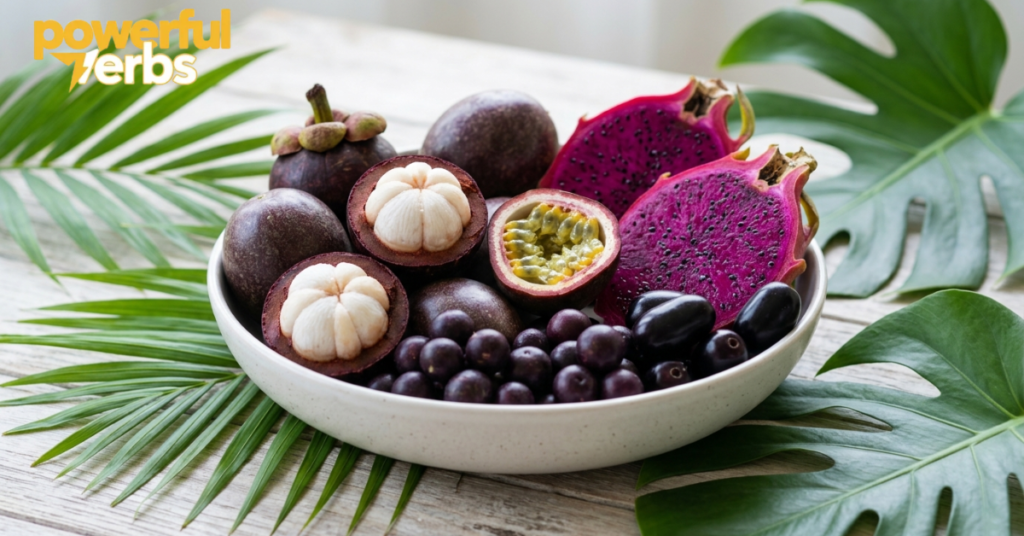
Tropical purple fruits grow in warm, humid climates and are known for their intense flavors, vibrant colors, and exceptional nutritional value. Below is a grouped overview of the most significant tropical purple fruits:
Mangosteen grows across Southeast Asia and produces round fruits with thick purple rinds. The white interior segments are prized for their delicate, balanced sweetness and are eaten fresh.
Jamun is a seasonal tropical fruit from South Asia with deep purple skin and sweet-astringent flesh. It is harvested once a year and is considered a cooling fruit in Ayurvedic tradition.
Açai Berry from the Amazon basin is freeze-dried or frozen for export due to its short shelf life. Its rich antioxidant content has made it globally popular as a health superfood.
Purple Dragon Fruit is grown commercially in Vietnam, Thailand, and Latin America. Its vibrant purple flesh makes it visually dramatic in food presentations.
Star Apple thrives in the Caribbean and is eaten by cutting the fruit in half and scooping out the creamy interior. The milky juice is a natural part of the fresh eating experience.
Purple Passion Fruit is cultivated widely in Colombia, Ecuador, Kenya, and Australia. Its intense aroma and tartness make it one of the most flavorful fruits by weight.
Purple Fruits and Health Benefits
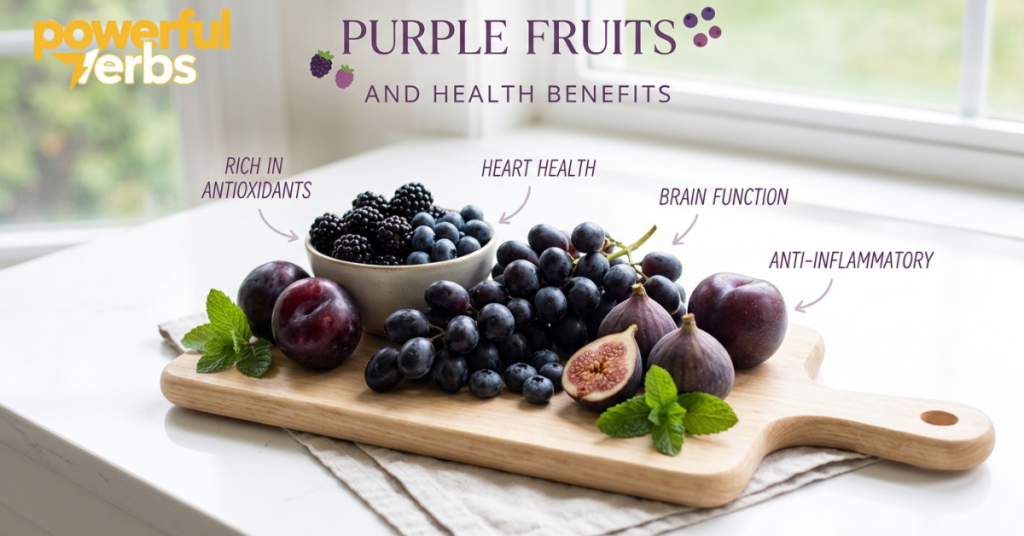
Purple fruits owe their distinctive color to anthocyanins, which are a class of flavonoid antioxidants. Research suggests these compounds may support cardiovascular health, reduce oxidative stress, improve memory and cognitive function, and help regulate blood sugar levels. Below is a summary of key benefits linked to commonly consumed purple fruits:
Blackberries and Black Currants are among the highest sources of vitamin C and anthocyanins per gram. Regular consumption supports immune function and skin health.
Blueberries have been widely studied for their role in improving cognitive performance and reducing age-related memory decline.
Elderberries contain compounds that have demonstrated antiviral properties in several studies, particularly in reducing the duration of cold and flu symptoms.
Açai Berries are calorie-dense fruits rich in healthy fats, fiber, and antioxidants, making them a popular addition to energy-focused diets.
Grapes contain resveratrol, a compound linked to heart health and anti-aging benefits, found primarily in the skin.
Purple Plums and Prunes are well known for supporting digestive health due to their fiber content and natural sorbitol, which promotes regular bowel movement.
Purple Fruits Taste Profile Chart
| Fruit Name | Taste Summary |
| Purple Grapes | Sweet, juicy, mild wine-like depth |
| Blackberries | Sweet-tart, earthy, bold |
| Blueberries | Mildly sweet, gentle acidity |
| Plums | Balanced sweet-tart, juicy |
| Purple Figs | Honey-like, jammy, soft |
| Elderberries | Tart when raw, rich when cooked |
| Mulberries | Sweet, mildly tangy, delicate |
| Purple Passion Fruit | Tropical, sweet-tart, aromatic |
| Açai Berry | Earthy, chocolate undertones |
| Black Currant | Intensely tart, bold, aromatic |
| Purple Dragon Fruit | Mildly sweet, refreshing, subtle |
| Jamun | Sweet, sour, astringent finish |
| Mangosteen | Delicate, floral, balanced sweet |
| Boysenberry | Bold, juicy, hybrid richness |
| Maqui Berry | Deep earthy, intensely purple |
How to Use Purple Fruits in Daily Life
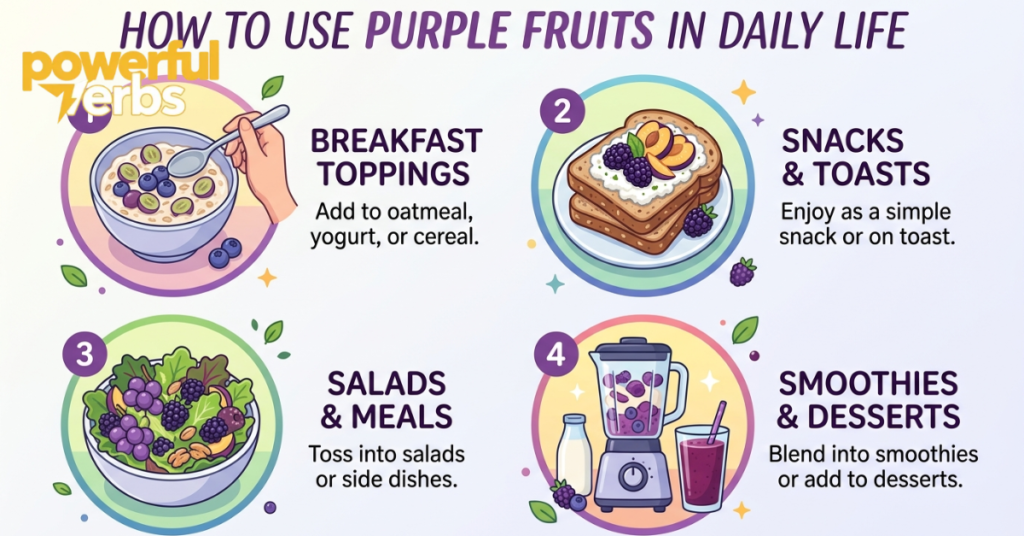
Purple fruits are versatile and can be incorporated into meals and snacks in many practical ways:
Fresh eating is the simplest approach for grapes, plums, figs, cherries, and berries. Rinse, bite, and enjoy the natural sugars and juices directly.
Smoothies and bowls work well with açai, blueberries, blackberries, and purple dragon fruit. Blend with banana, yogurt, and a sweetener for a nutrient-dense breakfast.
Baking and desserts suit blackberries, boysenberries, mulberries, and plums. Use in pies, crumbles, muffins, cakes, and tarts for natural color and flavor.
Jams and preserves are ideal for black currants, elderberries, Oregon grape, and damsons. High pectin content in some purple fruits helps achieve a firm set.
Juices and syrups work best with elderberry, black currant, concord grape, and purple passion fruit. These fruits release deep color and strong flavor when pressed or simmered.
Dried and snacked options include prunes, black dates, dried mulberries, and black wolfberries. These make energy-rich portable snacks.
Frequently Asked Questions About Purple Fruits
What fruit is purple in color?
Many fruits are naturally purple in color. The most common examples are grapes, plums, blackberries, blueberries, figs, mulberries, and elderberries. Tropical varieties like mangosteen, jamun, and purple dragon fruit also fall under this category. The purple color in all these fruits comes from natural pigments called anthocyanins.
What are 12 popular purple fruits names?
Twelve well-known purple fruits are grapes, plums, blackberries, blueberries, figs, black currants, elderberries, açai berries, mulberries, boysenberries, passion fruit, and mangosteen. Each has its own unique taste, texture, and culinary use.
What is the rarest purple fruit?
Among rare purple fruits, jabuticaba stands out because it grows directly on the bark of its tree rather than on branches. Maqui berry, harvested only in wild Patagonia, and purple tamarillo, grown in Andean regions, are also considered rare. Black wolfberry, a dark purple variant of the more common red goji, is another exceptional and rare purple fruit.
What is the sourest purple fruit?
The sourest purple fruits include black currant, elderberry (when raw), Oregon grape, black sloe, and certain sour plum varieties like damson. These fruits are rarely eaten plain due to their intense tartness and are typically cooked, sweetened, or processed into syrups and jams.
Are purple fruits healthy?
Purple fruits are among the most nutritious fruit groups available. Their anthocyanin content provides antioxidant protection, while their vitamins, minerals, and fiber support overall health. Regular consumption of purple fruits is associated with reduced risk of cardiovascular disease, improved cognitive function, and better digestive health.
Which purple fruit is best for smoothies?
Açai berry, blueberry, purple dragon fruit, blackberry, and boysenberry are excellent choices for smoothies. Açai is particularly popular because its creamy texture blends well and its deep purple color creates visually striking smoothie bowls.
Summary
This guide has covered 60 purple fruits names across every major category including common berries, stone fruits, tropical varieties, and rare specialty fruits. From the familiar sweetness of concord grapes and blackberries to the exotic depth of maqui berries and jabuticaba, purple fruits represent an extraordinary range of flavors, textures, and culinary uses.
Learning purple fruits names expands your vocabulary for food, supports healthier grocery choices, and opens up new possibilities in the kitchen. Whether eaten fresh, blended, baked, dried, or preserved, these fruits bring both color and nutrition to any diet.

Liam Johnson is a dedicated language expert with 4 years of professional experience. He specializes in Grammar, Vocabulary, and Sentence structure.
