

Daily routines are the activities people do every day from morning to night. These activities help organize life, improve discipline, and build healthy habits. Learning daily routine vocabulary words in English makes it easier for kids, students, and beginners to describe their everyday activities confidently in conversations, school tasks, and writing practice.
Whether you wake up early, brush your teeth, go to school, do homework, exercise, or sleep at night, every action is part of a daily routine. Understanding these common English words with pictures and examples improves speaking, reading, writing, and communication skills naturally.
In this complete guide, you will learn 250+ daily routine vocabulary words in English with meanings, examples, and categorized lists for easy learning.
Morning Routine Vocabulary Words
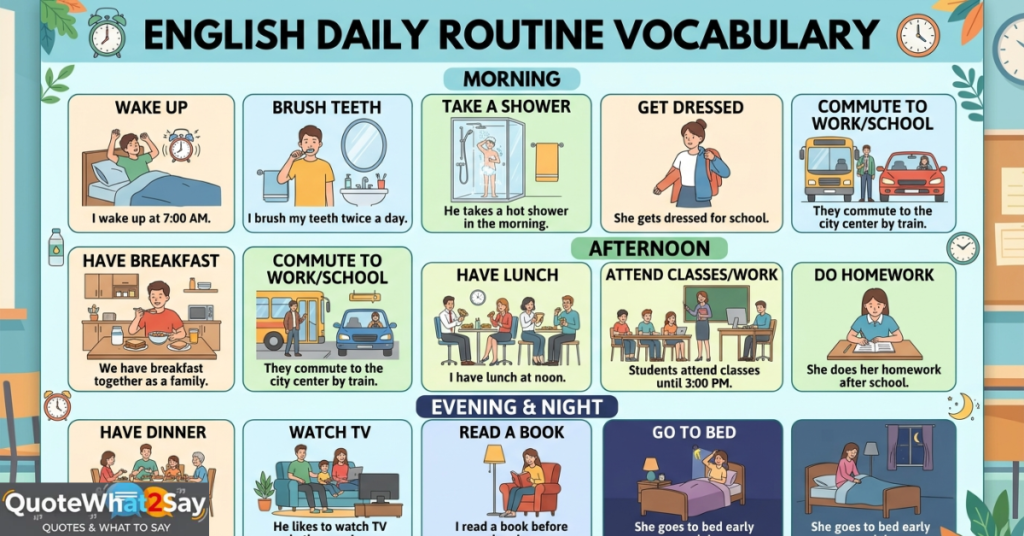
Morning routines help people start the day with energy and positivity. Below are common morning routine vocabulary words used in everyday English.
List of Morning Routine Words
- Wake up
- Get up
- Stretch the body
- Make the bed
- Open the curtains
- Wash the face
- Brush the teeth
- Use toothpaste
- Comb the hair
- Tie the hair
- Take a shower
- Dry the hair
- Wear clothes
- Put on socks
- Wear shoes
- Drink water
- Prepare breakfast
- Eat breakfast
- Drink tea
- Drink coffee
- Read the newspaper
- Check the phone
- Pray
- Meditate
- Exercise
- Go for a walk
- Jog in the park
- Pack the bag
- Leave home
Wake Up
Coming out of sleep to begin the day.
Example: I wake up at 6 o’clock every morning.
Brush the Teeth
Cleaning teeth to keep them healthy and clean.
Example: She brushes her teeth before breakfast.
Take a Shower
Cleaning the body using water and soap.
Example: I take a shower after exercise.
Eat Breakfast
Having the first meal of the day.
Example: We eat breakfast together every morning.
Pack the Bag
Putting books and supplies into a school or work bag.
Example: Ali packs his school bag before leaving home.
School Daily Routine Words
Students perform many activities during school hours. Learning these school routine words improves English communication and vocabulary building.
- Go to school
- Attend class
- Read books
- Write notes
- Listen to the teacher
- Answer questions
- Solve homework
- Draw pictures
- Use a calculator
- Learn English
- Practice spelling
- Join activities
- Play games
- Eat lunch
- Visit the library
- Study science
- Complete assignments
- Use a computer
- Give presentations
- Return home
Attend Class
Going to lessons in school.
Example: Students attend class from Monday to Friday.
Write Notes
Recording important information in notebooks.
Example: I write notes during English class.
Read Books
Studying or enjoying written material.
Example: Sara reads books in the school library.
Common Daily Activities List
People perform different activities throughout the day. These daily activity words are commonly used in spoken English.
- Walk to work
- Ride a bicycle
- Drive a car
- Wait for the bus
- Use the computer
- Send emails
- Talk to friends
- Make phone calls
- Shop for groceries
- Clean the room
- Water plants
- Feed pets
- Wash clothes
- Iron clothes
- Cook food
- Watch television
- Listen to music
- Use social media
- Read magazines
- Relax at home
Ride a Bicycle
Using a bicycle for travel or exercise.
Example: My brother rides a bicycle in the evening.
Cook Food
Preparing meals in the kitchen.
Example: My mother cooks food every afternoon.
Watch Television
Viewing programs for information or entertainment.
Example: We watch television after dinner.
Exercise Routine Words
- Run fast
- Jog slowly
- Lift weights
- Stretch muscles
- Practice yoga
- Play football
- Play cricket
- Swim in the pool
- Dance to music
- Skip rope
- Climb stairs
- Walk the dog
- Ride a skateboard
- Go hiking
- Practice karate
- Do push-ups
- Do sit-ups
- Train at the gym
- Play badminton
- Exercise daily
Practice Yoga
Doing body movements and breathing exercises.
Example: My aunt practices yoga every morning.
Swim in the Pool
Moving through water for exercise or fun.
Example: They swim in the pool during summer.
Food and Meal Vocabulary
- Prepare breakfast
- Fry eggs
- Boil water
- Make tea
- Bake bread
- Cut vegetables
- Wash fruits
- Serve dinner
- Eat lunch
- Drink juice
- Make sandwiches
- Cook rice
- Order food
- Set the table
- Wash dishes
- Clean the kitchen
- Store leftovers
- Pack lunch
- Buy groceries
- Eat healthy food
Wash Dishes
Cleaning plates, spoons, and cups after meals.
Example: I wash dishes after dinner.
Buy Groceries
Purchasing food and household items.
Example: Dad buys groceries every weekend.
Household Chores List
- Sweep the floor
- Mop the floor
- Dust furniture
- Vacuum the carpet
- Clean windows
- Organize books
- Fold clothes
- Make the bed
- Take out trash
- Feed the cat
- Water flowers
- Wipe the table
- Arrange shoes
- Clean the bathroom
- Repair items
- Wash the car
- Hang clothes
- Change bedsheets
- Decorate the room
- Tidy the kitchen
Sweep the Floor
Cleaning the floor using a broom.
Example: She sweeps the floor every evening.
Vacuum the Carpet
Removing dust from carpets with a vacuum cleaner.
Example: We vacuum the carpet before guests arrive.
Evening Routine Words
- Return home
- Change clothes
- Wash hands
- Eat dinner
- Complete homework
- Read a storybook
- Spend time with family
- Use the laptop
- Watch movies
- Listen to relaxing music
- Talk with parents
- Prepare for tomorrow
- Charge the phone
- Check emails
- Clean the room
- Lock the doors
- Turn off lights
- Drink milk
- Say prayers
- Relax quietly
Complete Homework
Finishing school assignments at home.
Example: Children complete homework before bedtime.
Spend Time with Family
Enjoying moments with family members.
Example: We spend time with family after dinner..
Bedtime Vocabulary List
- Put on pajamas
- Brush teeth
- Wash feet
- Read bedtime stories
- Set the alarm
- Turn off the fan
- Switch off lights
- Sleep early
- Lie down
- Close the eyes
- Rest quietly
- Dream peacefully
- Sleep deeply
- Wake up refreshed
Set the Alarm
Adjusting an alarm clock to wake up on time.
Example: I set the alarm for 6 a.m.
Sleep Early
Going to bed at an early hour.
Example: Good students sleep early every night.
Daily Routine Verbs in English
Here are useful daily routine action verbs for English learners:
- Wake
- Wash
- Clean
- Brush
- Study
- Learn
- Teach
- Cook
- Drink
- Eat
- Sleep
- Walk
- Talk
- Write
- Read
- Exercise
- Listen
- Watch
- Drive
- Play
- Relax
- Work
- Travel
- Organize
- Prepare
These verbs improve spoken English and sentence formation skills.
Daily Routine Sentences in English
Below are simple daily routine sentences for students and beginners.
- I wake up early in the morning.
- She brushes her teeth after breakfast.
- We go to school by bus.
- My father reads the newspaper daily.
- They play football in the evening.
- I complete my homework after school.
- My mother cooks delicious food.
- We eat dinner together at night.
- He watches television before sleeping.
- I sleep at 10 p.m. every day.
Benefits of Learning Daily Routine Vocabulary
Learning daily routine vocabulary words helps students and beginners in many ways:
- Improves spoken English
- Builds communication confidence
- Enhances writing skills
- Makes daily conversations easier
- Expands English vocabulary
- Helps in school learning
- Improves sentence formation
- Supports ESL learners
- Develops reading comprehension
- Encourages better communication habits
Tips to Learn Daily Routine Vocabulary Faster
Use Pictures
Learning with images improves memory and understanding.
Practice Daily
Repeat vocabulary words every day to remember them easily.
Make Sentences
Create your own sentences using daily routine words.
Speak in English
Use these words during conversations with friends or teachers.
Watch English Videos
Listening to native speakers improves pronunciation and fluency.
FAQs About Daily Routine Vocabulary
What is daily routine vocabulary?
Daily routine vocabulary includes words and phrases used to describe everyday activities like waking up, studying, eating, working, and sleeping.
Why is daily routine vocabulary important?
It helps learners communicate clearly about their everyday habits and activities in English.
How can kids learn daily routine words easily?
Kids can learn faster through pictures, flashcards, games, and daily speaking practice.
What are common daily routine verbs?
Wake up, brush, eat, study, work, play, clean, relax, and sleep are common daily routine verbs.
How do I improve my daily routine English vocabulary?
Practice speaking, reading, writing, and using new words in everyday conversations.
Final Thoughts
Learning daily routine vocabulary words in English is one of the best ways to improve communication skills for students, kids, and beginners. These words help describe everyday habits, school activities, household chores, meals, exercise, and bedtime routines naturally and confidently.
By practicing these daily routine vocabulary words with examples and pictures, learners can improve English fluency, sentence building, pronunciation, and daily conversation skills more effectively.

Liam Johnson is a dedicated language expert with 4 years of professional experience. He specializes in Grammar, Vocabulary, and Sentence structure.
