

Source Filmmaker, often called SFM, is a powerful tool used by animators, hobbyists, and content creators to build cinematic scenes using assets from the Source engine. One of the most important parts of working with SFM is understanding SFM compiling, the process of turning raw 3D files into working models that SFM can actually load and animate. Without proper compiling, custom characters, props, and animations simply will not appear inside the program.
This guide walks through everything related to SFM compiling in simple, easy-to-follow language. Whether you are a complete beginner trying to bring your first custom model into SFM or an experienced animator looking to refine your workflow, this article breaks down the tools, steps, file types, and troubleshooting tips you need in 2026.
Compiling is often the single biggest barrier between a creator’s idea and a finished animation. Many talented artists give up early simply because the compiling stage feels technical and unfamiliar. Once the process is broken into smaller, manageable pieces, though, it becomes far less intimidating and opens the door to endless creative possibilities.
Breaking Down SFM Compile and Its Purpose in Source Filmmaker
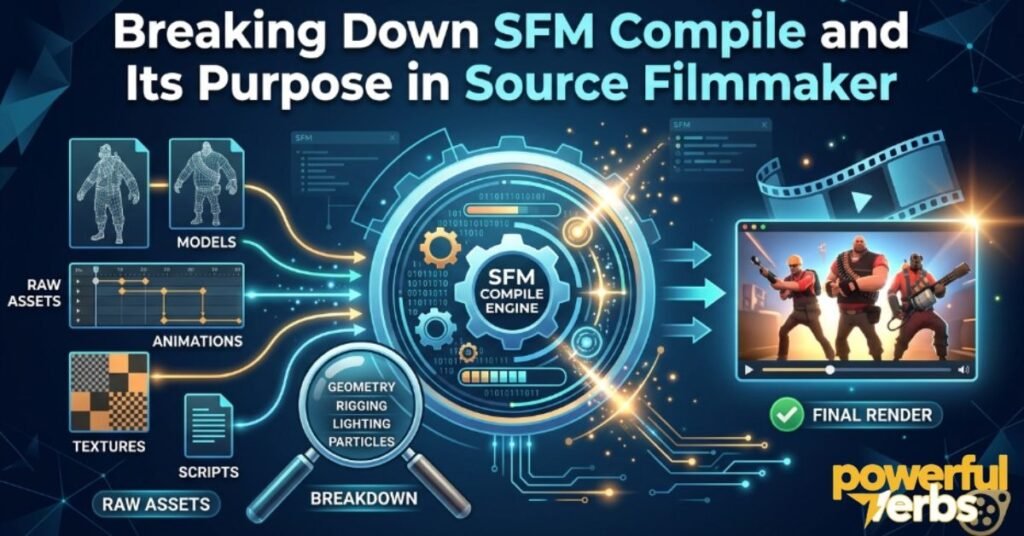
SFM compile is the process of converting a 3D model, along with its textures, bones, and animations, into a format that the Source engine can read. Source Filmmaker does not work directly with raw files exported from programs like Blender or Maya. Instead, those files must go through a compiler that packages everything into a single usable model file.
This compiling step matters because it connects your creative work to the actual animation software. Without it, your custom character or prop stays as a lifeless collection of files that SFM cannot recognize. The compiler reads instructions from a special text file, gathers the meshes and textures, and builds a finished model ready for posing and animating.
Think of SFM compile as a translator. Your 3D software speaks one language, and Source Filmmaker speaks another. The compiler takes your work and turns it into something both sides can understand.
It also helps to understand that compiling is not a one-time skill you learn and forget. Every new character, every new prop, and every new animation set needs to pass through this same pipeline. Because of this, investing time early to understand the process pays off across every future project.
- Compiling connects raw 3D data to a usable Source engine format.
- It packages meshes, textures, bones, and animations into one file.
- It acts as a bridge between creative software and SFM itself.
- It must be repeated for every new custom asset.
see also: What is Welcome Short Form? Meaning, Abbreviations & Uses
How SFM Compile Works Inside the Source Engine Pipeline

The Source engine pipeline is built around a series of steps that take raw content and turn it into game-ready or animation-ready assets. SFM compile sits right in the middle of this pipeline, acting as the bridge between asset creation and asset usage.
Every model that appears in SFM, from default characters to custom fan-made additions, went through this same basic pipeline at some point. Understanding how the pieces fit together makes troubleshooting and customizing much easier down the road.
The pipeline was originally designed for game development rather than animation specifically. SFM simply reuses this same system because it shares the same underlying engine as many Source games. This shared foundation is actually an advantage, since it means creators can pull from an enormous library of existing game assets that already understand the compiling format.
The SFM Compile Workflow
The general workflow follows a predictable pattern:
- Create or gather your 3D assets in modeling software.
- Export the assets into formats the compiler can read.
- Write a QC file with instructions for the compiler.
- Run the compiler to generate the final model files.
- Load and test the model inside Source Filmmaker.
Each step depends on the one before it. Skipping or rushing any part of this chain often leads to broken models or missing textures later on. Many beginners try to skip straight to compiling without properly preparing their assets first, which almost always leads to frustration and repeated failed attempts.
The Relationship Between SFM and Source 2
Source Filmmaker is built on the Source engine, not Source 2. This distinction matters because Source 2 games use a different compiling system and different file formats entirely. Models compiled for Source 2 titles will not work in SFM without significant conversion work.
This is why SFM compile still relies on older, well-established tools rather than newer Source 2 pipelines. Anyone coming from a Source 2 background needs to adjust their expectations and workflow when working specifically within SFM.
Because SFM has not been rebuilt on Source 2, its compiling tools have remained largely unchanged for many years. While this means the workflow can feel a little dated compared to newer engines, it also means the process is extremely well documented, with countless tutorials and community resources built up over a long period of time.
The Essential Toolkit Behind Every SFM Compile
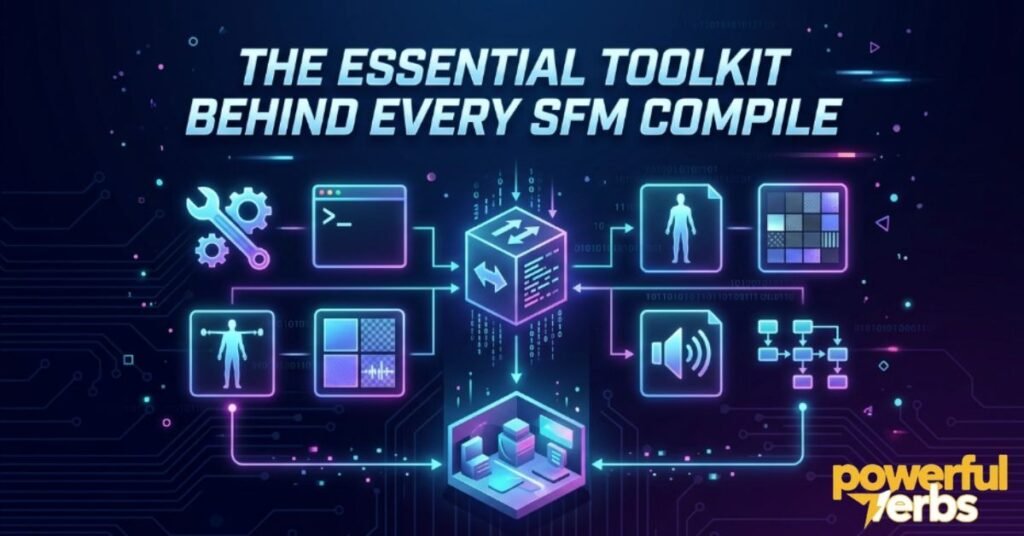
Before diving into compiling, it helps to have the right toolkit ready. Several programs work together to take a model from concept to finished, compiled asset.
| Tool | Purpose |
| StudioMDL | Official command-line compiler for Source models |
| Crowbar | User-friendly GUI alternative to StudioMDL |
| Blender or Maya | 3D modeling and animation software |
| Notepad++ | Writing and editing QC files |
| GCFScape or similar | Extracting existing game files for reference |
StudioMDL Command Line Utility
StudioMDL is the official compiler released by Valve. It reads QC files and converts your model data into the finished MDL format used by Source Filmmaker. This tool works entirely through the command line, which can feel intimidating for beginners, but it remains the most direct and reliable way to compile models.
Many advanced users stick with StudioMDL because it offers full control over every compiling option. It also tends to produce fewer unexpected errors once you understand its syntax.
Learning to read StudioMDL’s output window is a valuable skill on its own. The tool prints detailed messages about every file it loads, every warning it encounters, and any errors that stop the compile. Reading this output carefully, rather than skimming past it, often reveals the exact fix needed.
Crowbar Compilation Tool
Crowbar offers a graphical interface built on top of StudioMDL, making the compiling process far more approachable. Instead of typing commands, users can browse to their QC file, click compile, and view results in a simple window.
This tool has become a favorite among newcomers to SFM compile because it removes much of the intimidation factor while still using the same underlying compiler technology. Crowbar also includes decompiling features, letting users pull apart existing models to study how they were built.
Crowbar is updated regularly by its community maintainers, which means it often supports newer file formats and quality-of-life features faster than older standalone tools. For most beginners, starting with Crowbar and later moving to raw StudioMDL commands as confidence grows is a comfortable learning path.
3D Creation Software for SFM Compile
Blender and Autodesk Maya are the two most common programs used to build and animate models before compiling. Both support plugins and export scripts specifically designed for Source engine content.
Blender has grown especially popular because it is free and has a large community creating Source-specific export tools. Maya remains popular among professional animators who already use it for other projects.
Beyond Blender and Maya, some creators also use 3ds Max, particularly for older Source-focused pipelines, since many early Source modding tutorials were written with 3ds Max in mind. Whichever software is chosen, the important part is finding reliable export scripts built specifically for Source SMD or DMX formats.
Text Editors and QC File Creation
QC files are plain text files, so any basic text editor works. However, programs like Notepad++ add helpful features such as syntax highlighting and line numbering, making it easier to spot mistakes before compiling.
A clean, well-organized QC file saves significant time later when troubleshooting compile errors. Adding comments inside the QC file to explain what each section does can also make it much easier to return to a project after a long break.
Comparing Manual Methods and Automated Tools
| Method | Best For | Learning Curve |
| StudioMDL (manual) | Full control, advanced users | Steep |
| Crowbar (automated) | Beginners, faster workflow | Gentle |
Choosing between manual and automated methods often comes down to personal comfort level and how much control you want over the finer details of the compile process. Some creators even switch back and forth depending on the project, using Crowbar for quick tests and StudioMDL directly for final, polished compiles.
Step-by-Step SFM Compile Process
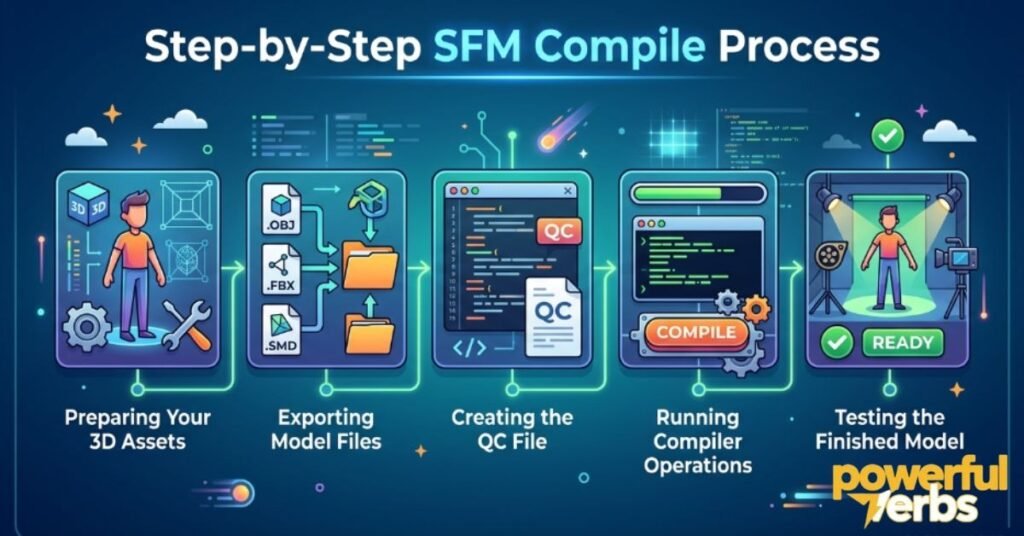
Once your tools are ready, the actual compiling process follows a consistent sequence of steps.
Preparing Your 3D Assets
Before exporting anything, your model needs to be clean and properly built. This means checking that the mesh has no unnecessary overlapping faces, that bones are named clearly, and that the model scale matches Source engine standards.
Skipping this preparation stage often leads to distorted or broken models once compiled. It also helps to make sure your model does not have any disconnected pieces of geometry floating in space, since these small mistakes are easy to miss in modeling software but become obvious once compiled and loaded in SFM.
Exporting Model Files
Most 3D software requires a plugin or add-on to export directly into Source-compatible formats. These exported files typically include separate reference and physics versions of the same model.
- Export the visual reference mesh.
- Export a simplified physics mesh.
- Export any animation sequences separately.
Keeping these exports organized in clearly labeled files from the very beginning saves a lot of confusion later, especially on projects with several body groups or clothing variations.
Creating the QC File
Every instruction the compiler needs comes from the QC file, which guides the entire compilation process. It tells StudioMDL where to find your exported files, what to name the finished model, and how to handle textures, bones, and collision data.
Writing this file accurately is often considered the most technical part of the entire SFM compile process. Many creators keep a working template QC file that they reuse and adjust for new projects instead of starting from a blank page every time.
Running Compiler Operations
With the QC file ready, running the compiler is often the simplest step. Whether using StudioMDL directly or Crowbar’s interface, the compiler reads the QC instructions and generates the final model files.
Testing the Finished Model
After compiling, the new model should be loaded into SFM to check for errors. Common issues at this stage include missing textures, incorrect scaling, or broken animations that need to be traced back to earlier steps.
Testing should not stop at simply loading the model. Posing it, applying different lighting, and checking it from multiple camera angles will often reveal small issues that are not obvious from a single default view.
SFM Compile File Types
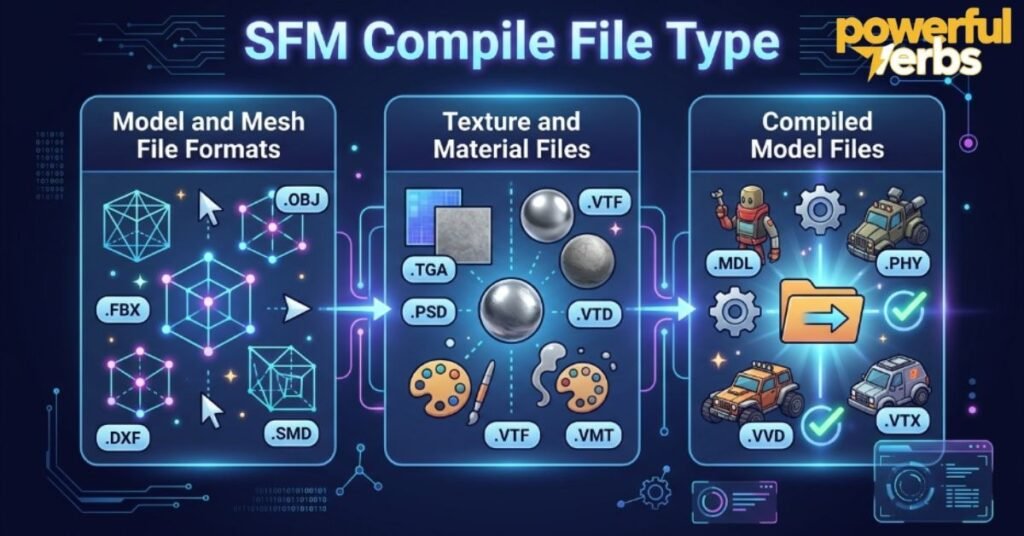
Understanding the different file types involved in SFM compile makes the entire process much less confusing.
Model and Mesh File Formats
Source models typically start as SMD or DMX files exported from 3D software. These formats store the raw mesh, vertex, and bone data before compiling.
Texture and Material Files
Textures usually begin as standard image files like TGA or PNG before being converted into VTF format, the texture format used by the Source engine. Each texture also needs a corresponding VMT file that tells the engine how to apply it.
Compiled Model Files
The final compiled model produces several linked files, including the MDL file itself along with supporting VVD and VTX files. All of these need to stay together in the same folder for the model to function correctly.
| File Type | Purpose |
| SMD or DMX | Raw mesh and animation data before compiling |
| VTF | Compiled texture format used by the engine |
| VMT | Material definition linking textures to surfaces |
| MDL | Final compiled model file |
| VVD and VTX | Supporting data required alongside the MDL |
Understanding the QC File Structure
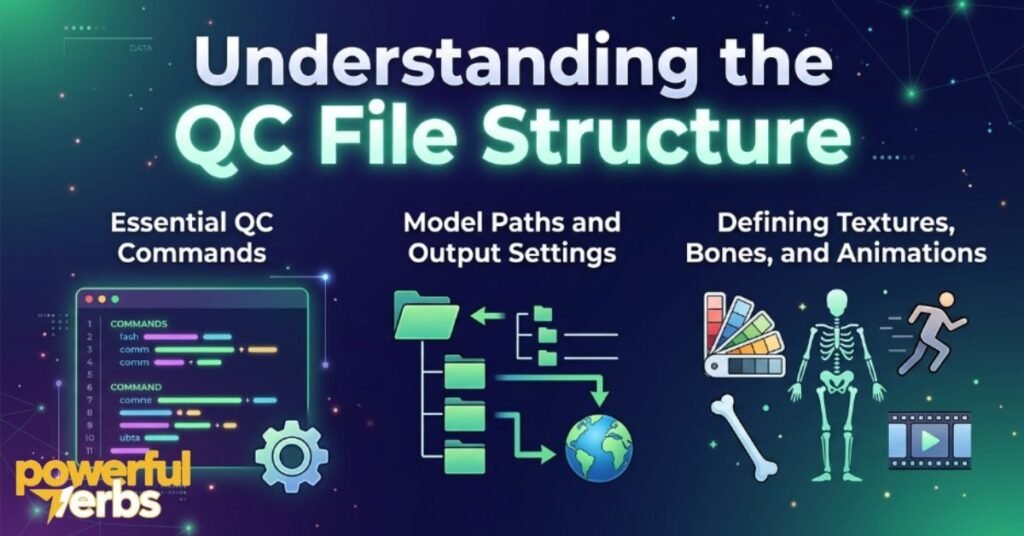
The QC file might look intimidating at first glance, but it follows a logical structure once broken down.
Essential QC Commands
Common commands found in nearly every QC file include instructions for the model name, the body groups, the texture directories, and the sequences used for animation.
- Model name and output path commands
- Body group and mesh reference commands
- Texture and material directory paths
- Animation sequence definitions
- Physics and collision model references
Model Paths and Output Settings
Paths inside the QC file must match your actual folder structure exactly. Even small typos in file paths are one of the most frequent causes of failed compiles. Using relative paths consistently, rather than mixing relative and absolute paths, tends to reduce confusion significantly.
Defining Textures, Bones, and Animations
The QC file also links textures to specific parts of the mesh, defines how bones control movement, and references any animation files that should be bundled with the compiled model. Getting these references correct is essential, since a single mismatched bone name can cause an entire animation sequence to fail silently.
Benefits of SFM Compile
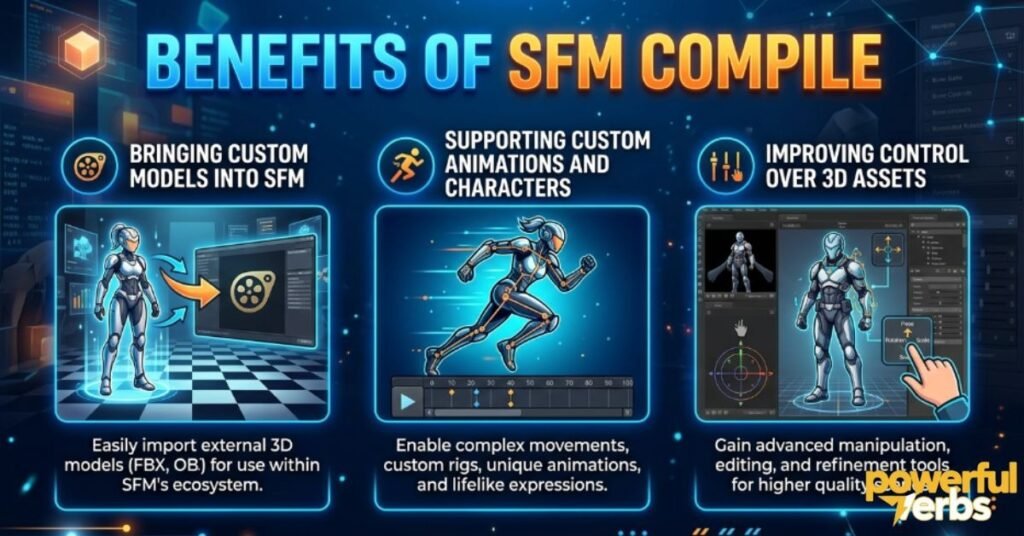
Learning to compile your own models opens up creative possibilities that go far beyond using default assets.
Bringing Custom Models Into SFM
Custom compiling lets creators use characters and props from entirely different games or original designs, expanding what SFM projects can look like.
Supporting Custom Animations and Characters
Compiled models can include unique animation sets, giving characters movements and expressions that do not exist in the default game files.
Improving Control Over 3D Assets
Understanding the compile process gives creators direct control over polygon counts, texture quality, and file organization instead of relying entirely on pre-made content.
- Freedom to use original character designs
- Ability to fix or improve existing community models
- Full control over animation quality and detail
- Greater flexibility for large, ambitious animation projects
see also: What to Reply for Take Care: Cute Replies to Make Them Smile
Best Practices for Successful SFM Compile
Following consistent habits reduces errors and saves time across multiple projects.
Keep Files Organized
Keeping reference meshes, textures, and QC files in clearly labeled folders prevents path errors and makes future edits far easier. A simple folder structure with separate subfolders for models, materials, and animations goes a long way.
Use Consistent Naming
Consistent naming conventions across bones, materials, and file names reduce confusion, especially when working on models with many separate parts. Avoiding spaces and special characters in file names also prevents unexpected compiler errors.
Optimize Models Before Compilation
Cleaning up unnecessary geometry and simplifying physics meshes before compiling leads to smoother performance once the model is loaded into SFM.
Optimizing Models for Performance

Performance matters just as much as appearance, especially for larger scenes with multiple characters.
Managing Polygon Counts
Lower polygon counts generally lead to smoother playback inside SFM, particularly during complex animation sequences with several models on screen at once. Reserving great detail for areas the camera will actually focus on, such as faces, while simplifying less visible areas is a common technique.
Optimizing Textures and Materials
Reducing unnecessary texture resolution and combining materials where possible helps keep file sizes manageable without sacrificing visual quality.
Using LOD and Efficient Model Structures
Level of Detail, or LOD, models automatically swap to simpler versions of a mesh at a distance, reducing strain on the system during rendering.
Common SFM Compile Errors and Solutions
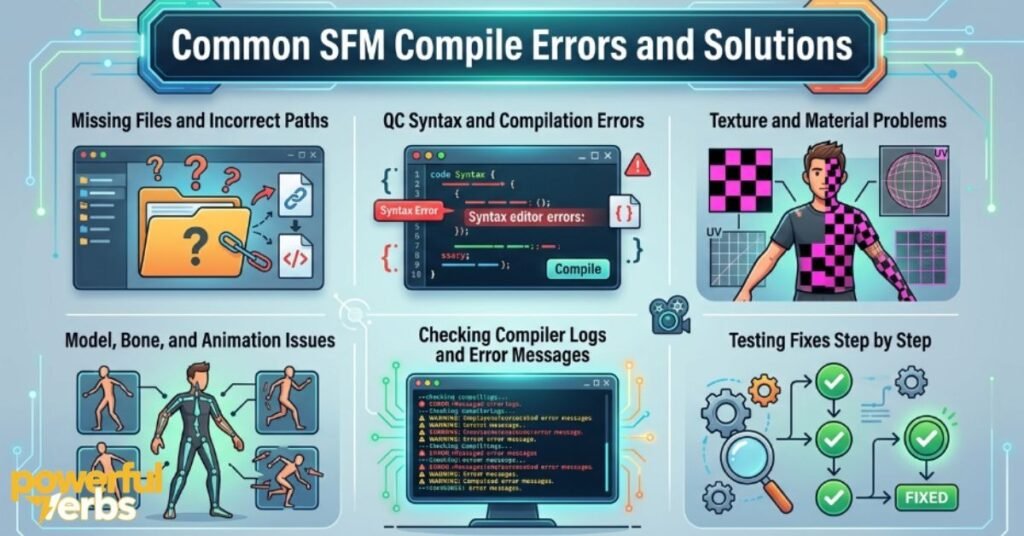
Even experienced users run into compile errors from time to time. Knowing common causes speeds up troubleshooting significantly.
Missing Files and Incorrect Paths
The most frequent error involves the compiler being unable to locate referenced files. Double-checking every path listed in the QC file usually resolves this issue.
QC Syntax and Compilation Errors
Typos or incorrect command formatting inside the QC file can cause the entire compile to fail. Reading error logs carefully often points directly to the problematic line.
Texture and Material Problems
Missing or incorrectly linked VMT files often result in models appearing with checkerboard or purple and black textures inside SFM.
Model, Bone, and Animation Issues
Mismatched bone names between the mesh and animation files can cause distorted poses or completely broken rigs after compiling.
Checking Compiler Logs and Error Messages
Both StudioMDL and Crowbar generate detailed logs during compiling. Reviewing these logs line by line is often the fastest way to identify the exact cause of a failure.
Testing Fixes Step by Step
Rather than changing multiple things at once, adjusting one setting at a time and recompiling helps isolate exactly which change fixed the problem. This patient, methodical approach saves far more time than it costs, especially on complex models with many moving parts.
Advanced SFM Compile Techniques
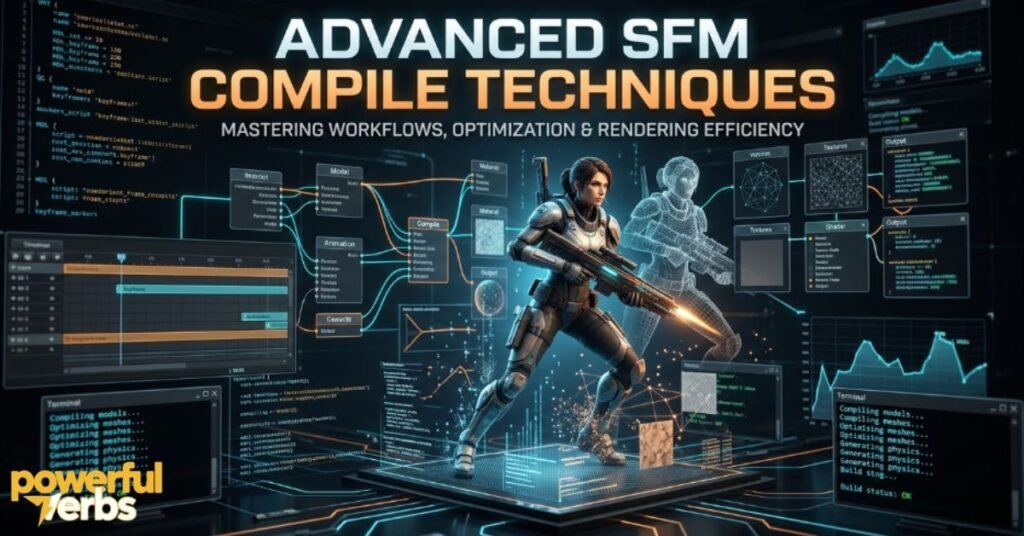
Once the basics feel comfortable, several advanced techniques can expand what is possible with custom models.
Custom Animation Compilation
Advanced users often compile separate animation files that can be applied to existing skeletons, allowing for reusable movement libraries across multiple models.
Creating Custom Physics Models
Building dedicated physics meshes separate from the visual mesh allows for more realistic cloth, hair, or object interactions inside scenes.
Using Multiple Skins and Body Groups
Skins and body groups let a single compiled model support multiple outfit or color variations without needing separate files for each version.
Batch Compiling
For projects involving many models, batch compiling scripts can process multiple QC files automatically, saving significant time compared to compiling one model at a time.
Custom Physics and LOD
Combining custom physics setups with LOD models creates assets that look great up close while still performing well in larger scenes.
Scripting and Automation
Some advanced creators write scripts to automate repetitive parts of the compiling process, such as file organization or batch texture conversion.
Getting Started: A Beginner’s Path Into SFM Compile
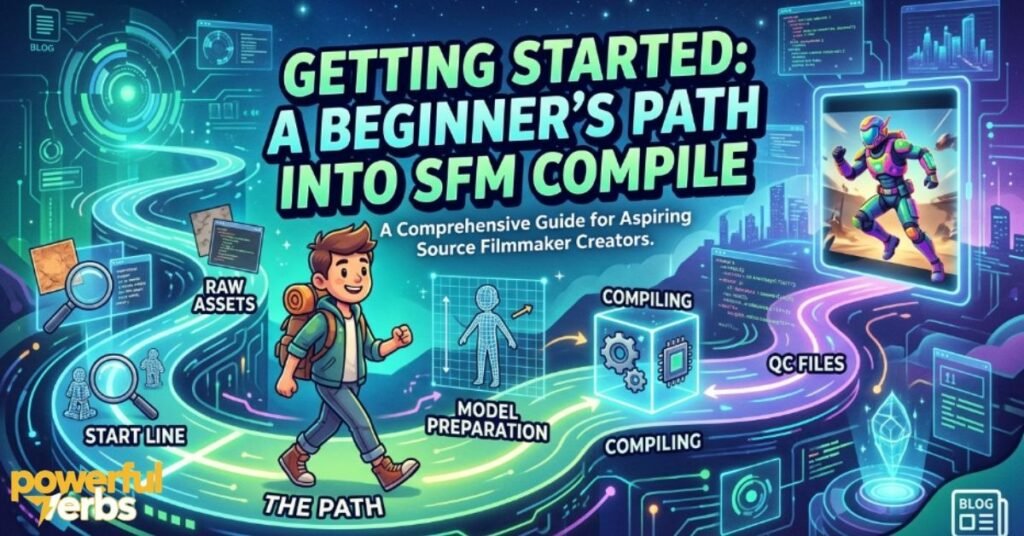
For those just starting, easing into the process gradually makes learning far less overwhelming.
Begin With a Low-Polygon Model
Starting with a simple, low-detail model reduces the number of things that can go wrong while learning the basic compiling steps.
Install and Organize Tools
Setting up StudioMDL or Crowbar, along with a clean folder structure, before starting any project prevents confusion later.
Create Your First QC File
Writing a basic QC file with just the essential commands is a great way to understand the structure before adding more complex features.
Compile, Test, and Repeat
Expect the first few compiles to fail. Treating each attempt as a learning step rather than a setback builds confidence quickly.
Study Existing Models as References
Decompiling existing, well-made models with Crowbar offers valuable insight into how experienced creators structure their QC files and folders.
SFM Compile in the Animation Community
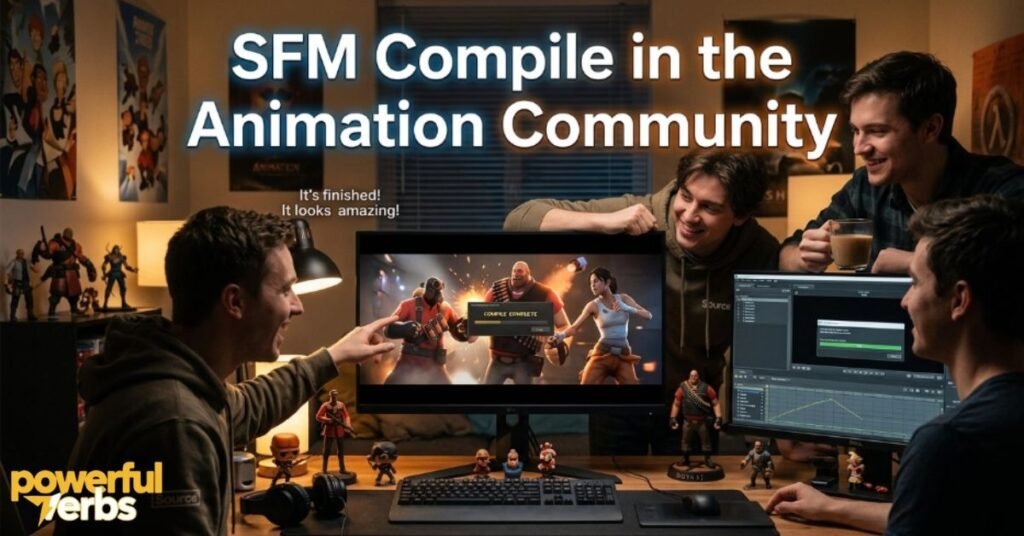
The SFM community has built an entire culture around sharing custom compiled models and workflow tips.
Custom Models for SFM Projects
Community members regularly release custom compiled characters and props, expanding the pool of assets available to everyone using SFM.
Community Resources and Shared Workflows
Forums, video tutorials, and shared QC templates make it much easier for newcomers to learn compiling without starting from zero.
How SFM Compile Stacks Up Against Modern Game Engine Workflows
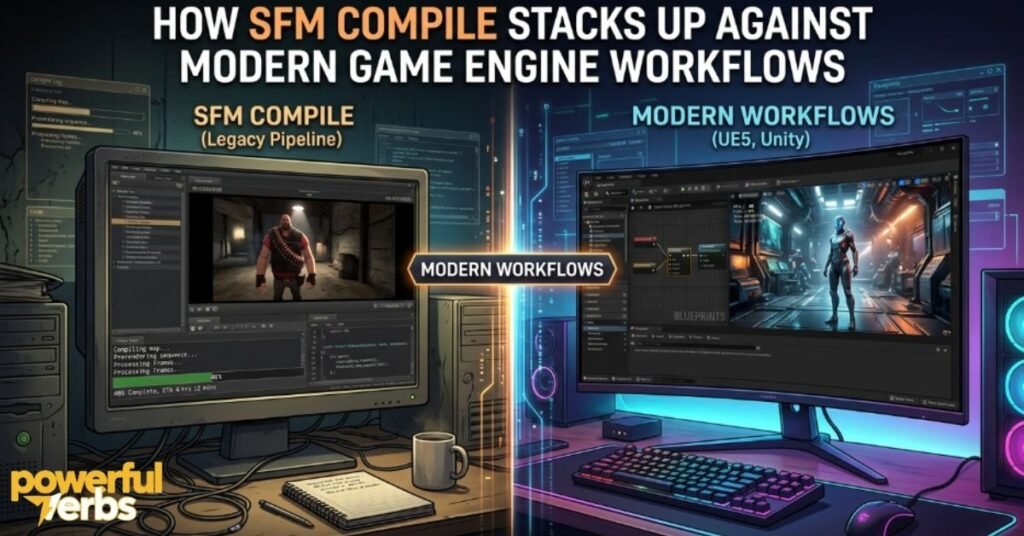
Understanding how SFM compile differs from newer engines helps put the process into perspective.
Differences in Compilation Pipelines
Modern engines like Unreal or Unity often use more automated, drag-and-drop style asset pipelines compared to the manual, text-based QC system used in Source.
Source Engine Workflow vs. Modern Engines
While newer engines prioritize speed and simplicity, the Source engine workflow offers granular control that some creators still prefer for specific animation projects.
When the Traditional SFM Workflow Still Makes Sense
For creators specifically working within the SFM community, sticking with traditional compiling methods remains the most compatible and reliable choice, even as other engines evolve.
Conclusion
SFM compiling might seem complicated at first, but breaking it down into individual steps makes the entire process manageable. From preparing assets and writing QC files to troubleshooting common errors, each stage builds on the last to create a finished, working model.
With practice, patience, and the right tools, anyone can learn to bring custom characters and props into Source Filmmaker. Starting small, studying existing examples, and testing frequently will steadily build the skills needed for more advanced compiling projects down the road.
see also: Is Tubehalote com Legit? The Truth About Tubehalote (2026)
Frequently Asked Questions
How do I compile a model for SFM?
To compile a model for SFM, export your mesh and textures, write a QC file with the correct paths, then run the file through StudioMDL or Crowbar to generate the finished model.
What is a QC file used for in SFM compile?
A QC file gives the compiler instructions, telling it where to find your mesh, textures, and animations so it can build the final compiled model.
Why is my SFM model showing missing textures?
Missing textures usually happen when the VMT file is missing, or the texture path in the QC file does not match the actual folder location.
Can I use Blender to make models for SFM?
Yes, Blender is commonly used to create and export models for SFM using Source-specific export plugins before compiling with StudioMDL or Crowbar.
What is the difference between StudioMDL and Crowbar?
StudioMDL is the original command-line compiler, while Crowbar offers a simpler graphical interface built on top of the same compiling technology.
Why does my SFM compile keep failing?
Most compile failures come from incorrect file paths, QC syntax errors, or mismatched bone names between the mesh and animation files.
How do I fix purple and black textures in SFM?
Purple and black textures usually mean a missing or broken VMT file, so check that every texture has a properly linked material file.
What file format do compiled SFM models use?
Compiled SFM models use the MDL format, along with supporting VVD and VTX files that must stay in the same folder to work correctly.
Is Crowbar good for beginners learning SFM compile?
Yes, Crowbar is considered beginner-friendly because it replaces command-line typing with a simple graphical interface for compiling models.
How can I reduce lag from custom SFM models?
Reducing polygon counts, optimizing textures, and using LOD models are the most effective ways to improve performance with custom SFM models.

Liam Johnson is a dedicated language expert with 4 years of professional experience. He specializes in Grammar, Vocabulary, and Sentence structure.
