

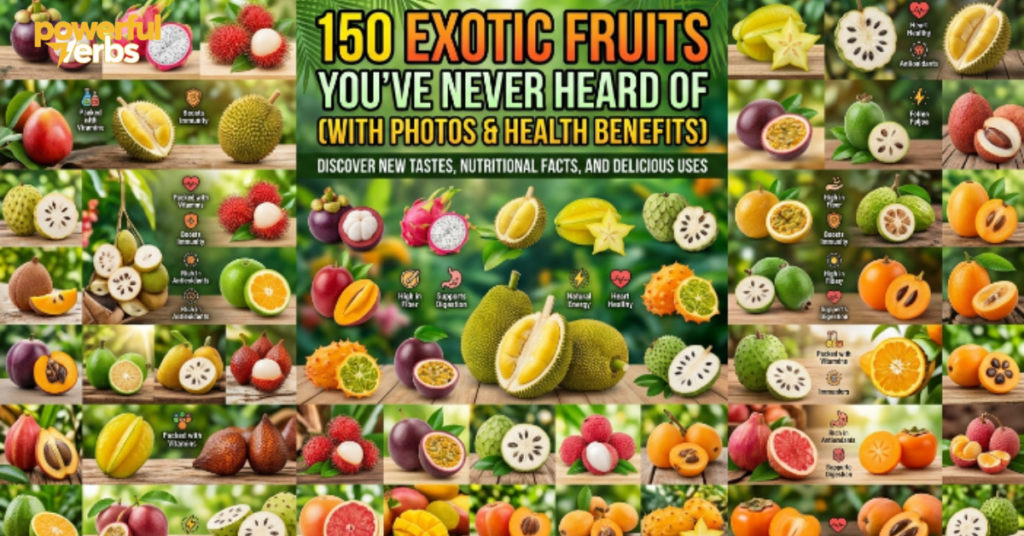
Most people can name a dozen fruits without thinking twice — apple, banana, orange, mango, grape. But the plant kingdom contains thousands of edible fruits, and the overwhelming majority of them never appear on supermarket shelves. Hidden in tropical rainforests, mountain valleys, Pacific islands, and ancient African savannahs are some of the most extraordinary flavors, colors, textures, and nutritional profiles ever produced by nature.
This ultimate guide covers 150 exotic fruits from every continent, complete with detailed descriptions, flavor profiles, origins, and science-backed health benefits. Whether you are a food explorer, a nutritionist, a gardener, or simply someone who wants to eat more adventurously, this is the most complete exotic fruit reference you will find anywhere online.
What Makes a Fruit “Exotic”?
A fruit is considered exotic when it meets one or more of these criteria:
- It grows only in specific tropical, subtropical, or geographically isolated climates
- It is rarely or never found in mainstream grocery stores in Western countries
- It has an unusual appearance, flavor, or texture that most people would find surprising
- It is produced in limited quantities and consumed primarily in its country of origin
- It requires specialized growing conditions that limit global cultivation
The term is relative — a fruit considered exotic in Europe may be completely ordinary in Southeast Asia or South America. For this guide, exotic means genuinely unfamiliar to the majority of people in North America and Europe.
Why Are Exotic Fruits So Hard to Find?
Several factors keep these remarkable fruits off supermarket shelves worldwide:
Short shelf life — Many tropical fruits ripen quickly and cannot survive the weeks-long journey from farm to international retailer without deteriorating beyond edibility.
Fragile texture — Fruits like cherimoya, black sapote, and mamey sapote bruise so easily that commercial packaging and long-distance shipping damage them severely.
Limited cultivation — Some exotic fruits grow only in specific soil types, altitudes, or microclimates that exist in just a few locations on Earth.
Low global demand — Without consumer awareness, there is no commercial incentive to develop the supply chains needed to bring these fruits to international markets.
Pollination challenges — Several exotic species require specific insects, birds, or bats for pollination that only exist in their native ecosystems, making cultivation elsewhere nearly impossible.
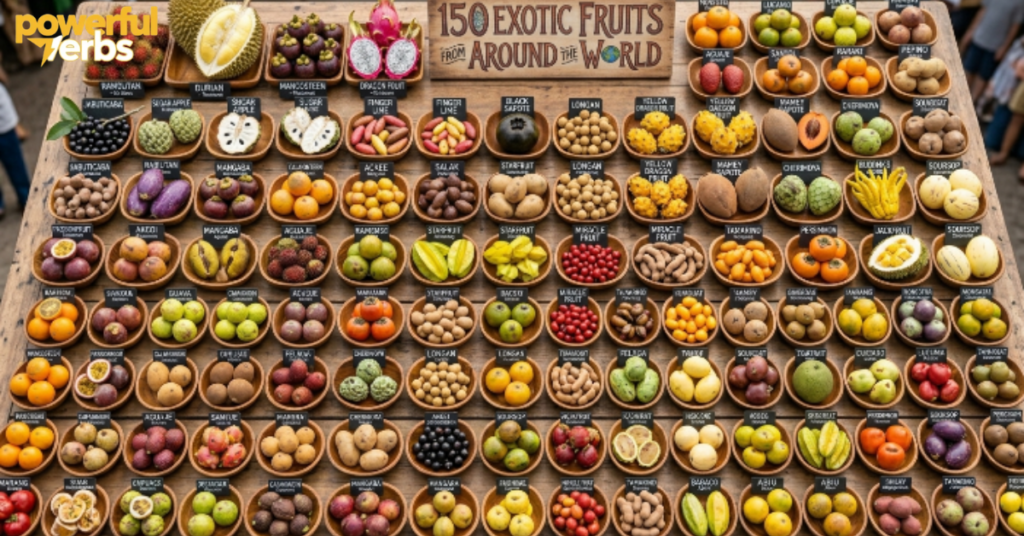
150 Exotic Fruits from Around the World
Southeast Asian Exotic Fruits
Southeast Asia is arguably the richest region on Earth for exotic fruit diversity, home to hundreds of unique varieties found nowhere else in the world.
1. Durian
The most notorious fruit in the world, durian is simultaneously worshipped and banned — prohibited on public transport in Singapore and Thailand due to its overwhelming smell yet regarded as the “king of fruits” throughout Southeast Asia. The large spiky exterior conceals creamy, custard-like segments with a flavor that defies easy description: rich, sweet, savory, buttery, and pungent all at once. Enthusiasts describe eating durian as one of the most intense flavor experiences in the entire world of food.
Origin: Borneo and Sumatra | Flavor: Rich, custard-sweet, pungent | Season: June–August Health Benefits: Extraordinarily nutrient-dense — rich in B vitamins, vitamin C, potassium, iron, and healthy fats. Contains tryptophan, which supports serotonin production and may improve mood and sleep quality.
2. Mangosteen
Called the “queen of fruits,” mangosteen is considered by many food experts to be the most perfectly flavored fruit on Earth. The deep purple shell opens to reveal snow-white segments with a flavor combining the finest qualities of peach, lychee, citrus, and vanilla into one extraordinarily balanced taste. Queen Victoria reportedly offered a reward to anyone who could bring her a fresh mangosteen from Asia.
Origin: Malay Archipelago | Flavor: Floral, sweet-tart, sublime | Season: May–September Health Benefits: Contains xanthones — a class of polyphenol antioxidants almost exclusive to mangosteen with powerful anti-inflammatory and antimicrobial properties. Supports immune function and cardiovascular health.
3. Rambutan
The name comes from the Malay word “rambut” meaning hair, perfectly describing this fruit’s soft, hair-like red and green spines. Beneath the dramatic exterior is translucent white flesh with a juicy, sweet flavor reminiscent of lychee but milder and creamier. Rambutan is one of Southeast Asia’s most beloved fruits and is increasingly appearing in Asian grocery stores worldwide.
Origin: Malay Peninsula | Flavor: Sweet, creamy, mild | Season: June–August Health Benefits: Rich in dietary fiber supporting gut health, vitamin C for immune defense, and iron for healthy red blood cell production. Contains copper, which supports bone strength and nerve function.
4. Lychee
One of the most internationally recognized exotic fruits, lychee has a rough red shell containing translucent, perfumed white flesh around a smooth brown seed. The flavor is floral, intensely sweet, and unmistakably unique — often described as a combination of rose water, pear, and grape. Lychee has been cultivated in China for over 2,000 years and remains deeply embedded in Chinese culture and cuisine.
Origin: Southern China | Flavor: Floral, sweet, perfumed | Season: May–July Health Benefits: Exceptional vitamin C source — a single serving provides over 100% of the daily recommended intake. Contains oligonol, a polyphenol with demonstrated anti-aging and antioxidant properties in clinical research.
5. Longan
Often called “dragon’s eye” in Chinese because the translucent flesh surrounding a dark seed resembles an eyeball, longan is a close relative of lychee with a slightly smokier, less floral but equally sweet flavor. Dried longan is extensively used in traditional Chinese medicine as an energy tonic and is one of the most consumed fruits in China by volume.
Origin: South China, Myanmar | Flavor: Sweet, musky, caramel-like | Season: July–August Health Benefits: Rich in vitamin C, riboflavin, and potassium. Traditional Chinese medicine uses longan to nourish the heart, calm the mind, and combat fatigue and anxiety.
6. Pulasan
Pulasan looks like a stockier, more rounded rambutan with shorter, stubbier spines. The flesh is sweeter and richer than rambutan, and uniquely, the seed of pulasan is also edible — with a flavor resembling raw almond or cocoa. Pulasan is rarely exported and is one of the most underappreciated fruits in the entire Nephelium genus.
Origin: Malay Peninsula, Thailand | Flavor: Very sweet, rich, complex | Season: July–September Health Benefits: Contains saponins with cholesterol-lowering properties, vitamin C, and calcium. The edible seed provides protein and healthy fats rarely found in fruit seeds.
7. Salak — Snake Fruit
Named for its reddish-brown scaly skin that resembles snake scales, salak produces clusters of fruits that peel open to reveal firm, dry, cream-colored flesh divided into lobes around a large seed. The flavor is complex and addictive — a combination of apple, pineapple, and banana with an astringent finish. Bali salak is widely considered the finest cultivar, with a more balanced sweetness than varieties from other regions.
Origin: Java and Bali, Indonesia | Flavor: Apple-pineapple, dry, astringent | Season: Year-round Health Benefits: High in tannins with antioxidant properties, potassium for heart health, beta-carotene for eye health, and pectin fiber supporting digestive regularity.
8. Langsat
Langsat resembles small pale yellow potatoes growing in grape-like clusters directly on the tree trunk and branches. The translucent flesh inside is divided into segments with a flavor that shifts between honey-sweet and pleasantly sour depending on ripeness. In the Philippines, langsat smoke from burning dried skin is traditionally used as a natural mosquito repellent.
Origin: Malaysia, Indonesia, Philippines | Flavor: Sweet-sour, honey-like | Season: July–October Health Benefits: Contains antioxidant compounds including onoceranyl acetate and lansioside A, which have demonstrated anti-tumor activity in laboratory research. Rich in riboflavin and thiamine.
9. Santol
Santol produces golf ball-sized fruits with thick, spongy rind and a central pulp divided into sections with seeds. The pulp is eaten by sucking it off the seeds, with a sweet-sour flavor reminiscent of cotton candy mixed with citrus. The thick rind is often cooked into jams, curries, and preserves in Thailand and the Philippines. Santol is so beloved in the Philippines that it has been declared the national fruit of some provinces.
Origin: Southeast Asia | Flavor: Sweet-sour, cotton candy-like | Season: June–September Health Benefits: Rich in dietary fiber, vitamin C, iron, and calcium. The bark and leaves are used in traditional medicine to treat fever, diarrhea, and skin conditions.
10. Water Apple — Wax Apple
Despite its name, water apple is not related to the common apple. It produces bell-shaped or pear-shaped fruits with smooth, waxy, thin skin in colors ranging from white to pale pink to deep red. The flesh is extremely crisp, watery, and refreshingly mild — similar in texture to a water chestnut but with a delicate floral sweetness. Water apples are eaten fresh as a cooling snack throughout tropical Asia.
Origin: Malay Peninsula | Flavor: Mild, floral, refreshing | Season: February–May Health Benefits: Extremely hydrating with over 90% water content. Contains vitamin C, niacin, and small amounts of calcium and phosphorus. Low in calories at under 25 calories per 100 grams.
11. Rose Apple
Closely related to water apple but producing rounder, greener fruits with a subtle rose-like fragrance and flavor that gives the fruit its name. Rose apple has a crisp, juicy texture and a delicate sweetness with floral overtones. It is eaten raw, made into refreshing drinks, or used in pickles and chutneys across South and Southeast Asia.
Origin: Malaysia, India | Flavor: Sweet, delicate, floral | Season: March–June Health Benefits: Contains jambosine, a compound studied for its potential to control blood sugar levels. Rich in vitamin C, calcium, and volatile oils with antimicrobial properties.
12. Mabolo — Velvet Apple
One of the most unusual-looking fruits in the Philippines, mabolo is covered in a velvety reddish-brown skin with a texture like soft suede. The creamy flesh has a sweet, slightly cheesy aroma and a flavor resembling a blend of peach and banana. The skin must be removed before eating as it has an unpleasant astringency. Mabolo is considered a delicacy in Philippine cuisine.
Origin: Philippines | Flavor: Sweet, peach-banana, slightly gamey | Season: August–November Health Benefits: Rich in calcium — one of the highest calcium contents of any tropical fruit. Also contains significant iron, vitamin B, and protein compared to most other fruits.
13. Jackfruit
The largest tree-borne fruit in the world, jackfruit can weigh up to 55 kilograms (120 pounds) and grow up to 90 centimeters long on the trunks and branches of trees in tropical Asia. Ripe jackfruit has golden, fragrant, sweet flesh with a flavor combining banana, pineapple, and mango. Unripe jackfruit has neutral flavor and a meat-like texture that has made it a globally popular plant-based meat substitute.
Origin: South India, Bangladesh | Flavor: Sweet, tropical, banana-like (ripe) | Season: April–June Health Benefits: Rich in vitamin B6 — one cup provides 25% of the daily value. Also high in vitamin C, potassium, dietary fiber, and antioxidants. The seeds are a protein-rich food source when roasted.
14. Starfruit — Carambola
Starfruit gets its name from its unmistakable cross-section — slice it and every piece is a perfect five-pointed star. The waxy yellow-green skin is entirely edible, and the crisp, juicy flesh has a flavor ranging from tart to sweet depending on variety and ripeness, with notes of apple, pear, and citrus. Starfruit is one of the few exotic fruits that appears regularly in Western specialty grocery stores due to its excellent shelf life and visual appeal.
Origin: Sri Lanka, Maluku Islands | Flavor: Tart-sweet, juicy, apple-citrus | Season: August–February Health Benefits: Exceptionally rich in vitamin C and gallic acid antioxidants. Low glycemic index makes it suitable for diabetic diets. Contains compounds that may reduce blood pressure. Note: contains oxalates and should be avoided by people with kidney disease.
15. Kiwano — Horned Melon
One of the most visually dramatic fruits in existence, kiwano has bright orange skin covered in prominent sharp horns. Cut it open and you find brilliant emerald-green, jelly-like pulp surrounding seeds, with a flavor that is mild, refreshing, and mildly tart — somewhere between cucumber, kiwi, and banana. Kiwano is native to sub-Saharan Africa but is commercially grown in New Zealand and the United States for specialty markets.
Origin: Sub-Saharan Africa | Flavor: Mild, cucumber-kiwi, refreshing | Season: Summer–Autumn Health Benefits: Rich in magnesium, vitamin C, and iron. Contains alpha-tocopherol, a powerful form of vitamin E. High water content makes it extremely hydrating. Only 44 calories per fruit.
16. Dragon Fruit — Pitaya
Dragon fruit’s dramatic appearance — vibrant pink or yellow skin with green scale-like projections — makes it one of the most photographed exotic fruits in the world. The interior is white or red with tiny black seeds throughout, and the flavor is mild, lightly sweet, and refreshing with notes of pear and kiwi. Red-fleshed varieties have a stronger, richer flavor than white-fleshed types.
Origin: Mexico, Central America | Flavor: Mild, sweet, refreshing | Season: Summer–Autumn Health Benefits: Rich in betacyanin antioxidants (in red-fleshed varieties), prebiotic fiber feeding beneficial gut bacteria, magnesium, and iron. Studies suggest regular consumption may improve insulin resistance and reduce markers of metabolic syndrome.
17. Passion Fruit
The wrinkled purple or yellow shell of passion fruit opens to reveal a golden, fragrant, seed-filled pulp with an intense, complex flavor — powerfully aromatic, sweet, tart, and tropical simultaneously. A small amount of passion fruit transforms any drink, dessert, or sauce it touches. The seeds are edible and add pleasant crunch. Passion fruit is one of the most flavor-intensive fruits per gram of any species.
Origin: Southern Brazil, Paraguay | Flavor: Intensely aromatic, sweet-tart | Season: January–March, July–September Health Benefits: Rich in vitamin A supporting eye health, vitamin C for immunity, potassium for heart function, and dietary fiber. Contains alkaloids with mild sedative properties that may support relaxation and sleep quality.
18. Pomelo
The largest citrus fruit in the world, pomelo can reach the size of a basketball. Beneath its thick, pale green or yellow rind and substantial pith lies firm, dry citrus flesh in white, pink, or red varieties with a flavor sweeter and milder than grapefruit, with none of the bitterness. Pomelo is deeply significant in Chinese New Year celebrations, symbolizing luck and prosperity.
Origin: Southeast Asia | Flavor: Sweet, mild citrus, no bitterness | Season: November–March Health Benefits: Rich in vitamin C, potassium, and the antioxidant lycopene (pink varieties). Contains naringenin, a flavonoid with anti-inflammatory and metabolic health benefits. One pomelo can provide up to 400% of the daily vitamin C requirement.
19. Buddha’s Hand
Buddha’s Hand is one of the most visually unusual plants in the entire citrus family — the fruit splits into long, finger-like segments that resemble a hand in prayer position. There is almost no flesh or juice inside; the fruit is essentially all fragrant yellow peel with an extraordinary floral-citrus fragrance. It is used in Asian cultures as a temple offering and is valued in Western kitchens for its exceptional zest, which imparts intense lemon-floral flavor without the acidity of lemon juice.
Origin: Northeast India, China | Flavor: Floral, intensely fragrant, no acidity | Season: October–January Health Benefits: Rich in coumarin compounds with anti-inflammatory properties. Contains limonoids associated with anti-cancer activity in laboratory research. Traditionally used in Chinese medicine to treat coughs and digestive discomfort.
20. Feijoa — Pineapple Guava
Feijoa produces small, oval, green fruits with rough skin that give no hint of the extraordinary flavor inside — a creamy, intensely aromatic pulp with a flavor combining pineapple, guava, mint, and eucalyptus into one of the most distinctive taste profiles of any fruit. The thin skin is technically edible but slightly bitter; most people scoop out the center with a spoon.
Origin: Southern Brazil, Colombia | Flavor: Pineapple-guava-mint, aromatic | Season: Autumn Health Benefits: One of the richest fruit sources of iodine — a mineral difficult to obtain from plant foods. Also rich in vitamin C, folate, and dietary fiber. Contains unique antioxidant polyphenols not widely found in other fruits.
South American Exotic Fruits
The Amazon Basin and Andean highlands of South America contain some of the most nutritionally powerful and flavor-intense fruits ever documented by science.
21. Camu Camu
Camu camu is a small, cherry-like fruit growing in flooded forests along Amazonian river banks in Peru and Brazil, and it holds a remarkable scientific distinction: it contains the highest known concentration of vitamin C of any fruit on Earth — up to 3,000 milligrams per 100 grams, compared to just 50 milligrams in an orange. The flavor is sharply sour, making it impractical to eat fresh in large quantities, which is why it is commonly dried and sold as a nutritional supplement powder.
Origin: Amazon Basin, Peru | Flavor: Intensely sour, berry-like | Season: November–April Health Benefits: Extraordinary vitamin C content supports immune function, collagen production, and antioxidant defense at levels unmatched by any other natural food source. Research suggests regular camu camu consumption may reduce markers of inflammation and oxidative stress.
22. Cherimoya
Mark Twain called cherimoya “the most delicious fruit known to men,” and this 19th-century verdict remains one of the most frequently cited endorsements in fruit history. The heart-shaped fruit with its scale-like green skin opens to reveal incredibly creamy, smooth white flesh with flavor notes of banana, pineapple, vanilla, and coconut cream. The texture has been compared to the finest vanilla ice cream — entirely without dairy.
Origin: Andean highlands of Ecuador, Peru | Flavor: Banana-pineapple cream, vanilla | Season: November–May Health Benefits: Exceptionally rich in vitamin B6, supporting brain health and mood regulation. Contains annonacin compounds studied for potential neuroprotective properties. High in fiber, vitamin C, and potassium. Note: seeds are toxic and must not be consumed.
23. Lucuma
Lucuma has been cultivated in Peru for over 2,000 years and was depicted in pre-Columbian ceramic art as a symbol of fertility and longevity. The yellow-orange fruit has dry, starchy, sweet flesh with a distinctive flavor reminiscent of maple syrup, sweet potato, and caramel. Fresh lucuma is difficult to ship, so it is most commonly encountered as a premium powder or ice cream flavor, where it is beloved throughout South America.
Origin: Peruvian coastal valleys | Flavor: Maple-caramel, sweet potato | Season: April–July Health Benefits: Rich in beta-carotene, iron, zinc, and B vitamins. Has a low glycemic index despite its sweetness, making it valuable for blood sugar management. Contains antioxidants that support wound healing and skin health.
24. Cupuaçu
Cupuaçu is a large, brown-shelled Amazonian fruit closely related to cacao and produces a tangy, creamy white pulp with a complex flavor combining chocolate, pineapple, pear, and banana. The pulp is used extensively in Brazilian desserts, smoothies, and ice cream. The seeds can be processed into cupulate — a chocolate-like product with a unique flavor profile distinct from cacao.
Origin: Amazon Basin, Brazil | Flavor: Chocolate-pineapple-pear, tangy | Season: January–April Health Benefits: Contains theograndins, unique polyphenol antioxidants found only in cupuaçu that studies suggest may reduce inflammation, improve cholesterol profiles, and support immune function. Rich in vitamin C and B vitamins.
25. Acai Berry
Acai became a global superfood phenomenon in the early 2000s, and while the marketing sometimes exceeded the science, the nutritional credentials of this small, dark-purple Amazonian palm berry are genuinely impressive. Fresh acai berries are almost impossible to export due to their extremely short shelf life, so they are consumed as frozen pulp, powder, or juice. The flavor is a unique blend of wild berries and dark chocolate with earthy undertones.
Origin: Amazon River floodplains, Brazil | Flavor: Dark berries, chocolate, earthy | Season: August–December Health Benefits: Among the highest antioxidant scores of any food measured by ORAC testing. Rich in anthocyanins, healthy oleic acid (similar to olive oil), fiber, calcium, and iron. Studies support cardiovascular, anti-inflammatory, and neuroprotective benefits.
26. Jabuticaba
Jabuticaba produces one of the most bizarre sights in plant biology — small, dark-purple, grape-like fruits growing directly embedded in the bark of the trunk and main branches of the tree rather than on stems or leaf branches. The fruits must be eaten immediately after harvest as they ferment within 3–4 days of picking, which explains why jabuticaba is virtually unknown outside Brazil. The flavor is sweet and grape-like with a distinctly astringent skin.
Origin: Central and southeastern Brazil | Flavor: Sweet grape, astringent skin | Season: September–November Health Benefits: Extremely high in anthocyanin antioxidants — up to 13 times more per gram than blueberries in some analyses. Contains anti-inflammatory compounds and pectin fiber. Traditionally used in Brazilian medicine to treat asthma, diarrhea, and hemoptysis
27. Guarana
Guarana produces small, bright red fruits in clusters, and each fruit splits open to reveal a dark seed surrounded by white pulp — resembling a human eye with startling accuracy. The seed contains guaranine, a form of caffeine, at roughly 2–4.5% concentration by weight — more than double the caffeine content of coffee beans. In Brazil, guarana-flavored soft drinks outsell Coca-Cola in many regions.
Origin: Amazon Basin, particularly Maués, Brazil | Flavor: Bitter, earthy, energizing | Season: September–November Health Benefits: Natural caffeine source supporting mental alertness, physical endurance, and metabolism. Contains theobromine and theophylline for additional stimulant effects. Rich in tannins with antioxidant and antimicrobial properties.
28. Soursop — Graviola
Soursop produces large, irregular green fruits covered in soft spines, containing white, fibrous, segmented flesh with a remarkable flavor — sweet and creamy like coconut-pineapple custard with a bright tropical tang. Soursop is one of the most used fruits in Caribbean and Latin American beverages and desserts, and its leaves are widely consumed as herbal tea throughout tropical America and West Africa.
Origin: Caribbean, Central America | Flavor: Coconut-pineapple cream, tangy | Season: Year-round in tropics Health Benefits: Rich in vitamin C, B vitamins, potassium, and fiber. Soursop leaf extracts have been extensively studied in cancer research — annonaceous acetogenins have shown potent anti-tumor activity in laboratory settings, though human clinical evidence remains under investigation.
29. Black Sapote
Often called the “chocolate pudding fruit,” black sapote completely lives up to its name — when fully ripe, the flesh turns to a dark, glossy, intensely chocolate-like pudding texture with rich sweetness. The flavor is unmistakably reminiscent of chocolate mousse, and the fruit contains only about 130 calories per serving. Mexicans have traditionally eaten it mixed with orange juice, vanilla, and cream as a dessert.
Origin: Mexico, Central America | Flavor: Chocolate pudding, rich, sweet | Season: November–January Health Benefits: Contains approximately four times more vitamin C per serving than an orange. Rich in calcium, phosphorus, and iron. Notably lower in calories than its dessert-like flavor suggests, making it a guilt-free sweet treat.
30. Cocona
Cocona is a tomato-like Amazonian fruit with orange or red skin and juicy, tangy pulp used throughout the Peruvian and Colombian Amazon in sauces, hot salsas, juices, and jams. The flavor is sharply acidic with earthy, tomato-like undertones that make it more useful as a condiment fruit than a fresh eating fruit. It is one of the most important flavor ingredients in traditional Amazonian cuisine.
Origin: Amazon Basin | Flavor: Tangy, earthy, tomato-like | Season: Year-round Health Benefits: Unusually rich in iron for a fruit — making it valuable in diets prone to anemia. Contains significant vitamin C, niacin, and compounds traditionally used to treat liver disorders and reduce blood sugar.
31. Mamey Sapote
Mamey sapote produces large, football-shaped fruits with rough, brown skin and shocking salmon-orange to deep red flesh inside. The flavor of a perfectly ripe mamey sapote is one of the most extraordinary in the fruit world — sweet potato, almond, pumpkin pie, cherry, and vanilla converging in a smooth, creamy texture. It is one of the most beloved fruits in Cuba and throughout the Caribbean.
Origin: Mexico, Central America | Flavor: Sweet potato-almond-pumpkin, creamy | Season: Spring–Summer Health Benefits: Extremely rich in vitamin B6, riboflavin, and vitamin C. One fruit can provide over 50% of the daily vitamin A requirement. High in copper, supporting bone health and immune function.
32. Pawpaw — North American Papaw
The pawpaw is North America’s largest native fruit and one of the continent’s most extraordinary culinary secrets. Growing wild in forest understories from Nebraska to Florida, pawpaw produces fruits with a flavor that stops people in their tracks the first time they taste it — a tropical blend of banana, mango, and vanilla custard that seems impossibly exotic for a fruit native to Ohio or Maryland. Pawpaw has a very short shelf life of just 2–3 days after harvest, keeping it firmly out of commercial distribution.
Origin: Eastern United States | Flavor: Banana-mango-vanilla custard | Season: September–October Health Benefits: Contains annonaceous acetogenins with studied anti-parasitic and potential anti-cancer properties. Rich in vitamin C, magnesium, iron, and manganese — with higher protein content than most fruits.
33. Nance Fruit
Nance produces small, bright yellow cherries in enormous hanging clusters, and the smell when a bundle is encountered in a market is one of the most distinctive and polarizing aromas in tropical fruit — powerfully sweet and simultaneously intensely funky in a way that divides people immediately into devoted fans and revolted strangers. The flavor is sweet, oily, and unique. Nance is beloved throughout Central America and is used in chicha (a fermented drink), candies, ice creams, and preserves.
Origin: Mexico to northern South America | Flavor: Sweet, oily, pungent | Season: June–August Health Benefits: Rich in vitamin C, carotenoids, and phenolic antioxidants. Contains alpha-hydroxy acids traditionally used for skin care. Studies suggest nance extract has antimicrobial activity against several pathogenic bacteria.
34. Mangaba
Mangaba grows wild along the coastal regions of northeastern Brazil and produces small, round or oval fruits with thin yellowish-green skin speckled with red. The flesh is soft, creamy, and intensely sweet-sour with an intoxicating tropical fragrance. Mangaba is primarily consumed fresh or made into frozen desserts, liqueurs, and jams in Brazil but is virtually unknown outside the country due to its extreme fragility.
Origin: Coastal Brazil | Flavor: Sweet-sour, creamy, intensely aromatic | Season: October–January Health Benefits: Rich in vitamin C, phenolic compounds with antioxidant activity, and natural latex compounds traditionally used to treat infections and inflammatory conditions in Brazilian folk medicine.
35. Tamarillo — Tree Tomato
Tamarillo produces egg-shaped fruits with smooth, thin skin in red, orange, or yellow varieties containing a rich, tangy, complex flesh that is simultaneously fruity and savory. The flavor is difficult to categorize — somewhere between tomato, passion fruit, and plum — and the fruit is used in both sweet and savory preparations throughout South America and New Zealand where it is commercially cultivated.
Origin: Andes, South America | Flavor: Tangy, complex, tomato-fruit | Season: March–October Health Benefits: Rich in vitamins A, C, E, and B6. High in anthocyanins (red varieties), pectin fiber, and potassium. Low in calories at approximately 40 per fruit. Studies suggest regular consumption supports healthy blood pressure.
African Exotic Fruits
Africa’s extraordinary biodiversity — from tropical rainforests to dry savannahs to highland plateaus — produces a remarkable collection of fruits that remain almost entirely unknown outside the continent.
36. Baobab Fruit
The baobab tree has been called the “tree of life” throughout Africa, and its fruit justifies that reverence. The large, hard-shelled pods contain a dry, powdery white pulp with an intensely tangy, citrus-like flavor that Africans have relied on as a nutritional staple for thousands of years. Baobab fruit powder has become a global superfood ingredient in smoothies, health bars, and supplements.
Origin: Sub-Saharan Africa | Flavor: Tangy, citrusy, slightly sweet | Season: June–September Health Benefits: Contains six times more vitamin C per gram than an orange, making it one of the world’s richest natural vitamin C sources. Exceptionally high in calcium, iron, potassium, and prebiotic fiber. Studies show baobab pulp significantly slows glucose absorption, making it valuable for blood sugar management.
37. Miracle Fruit
Miracle fruit is the most pharmacologically fascinating fruit in the world, and its effect must be experienced to be believed. The small red berry contains miraculin — a glycoprotein that binds to taste receptors on the tongue and temporarily transforms the perception of sour and acidic foods into intensely sweet tastes. After eating a miracle berry, biting into a lemon tastes like sweet lemonade, plain vinegar tastes like apple juice, and hot sauce becomes a sweet chili candy. The effect lasts 30–60 minutes.
Origin: West Africa | Flavor: Mildly sweet on its own | Special Effect: Transforms sour into sweet Health Benefits: Miraculin has been studied as a natural sugar substitute for cancer patients undergoing chemotherapy who experience metallic taste disturbances that make food unpalatable. May support weight management by enabling sweet satisfaction without sugar consumption.
38. Marula
Marula is the fruit made famous by the Amarula cream liqueur and by wildlife documentaries showing African elephants and warthogs enthusiastically consuming fermented fruits that have fallen to the ground. The plum-sized fruits have thin yellow skin when ripe and contain juicy, cream-white flesh around a hard nut, with a flavor that is sweet, tart, and richly tropical. The nut inside contains edible seeds that are pressed to produce a prized marula oil.
Origin: Southern and East Africa | Flavor: Sweet-tart, tropical, complex | Season: January–March Health Benefits: Contains eight times more vitamin C than an orange. The seed oil is rich in oleic acid (82% monounsaturated fat), making it comparable to olive oil nutritionally. Widely used in cosmetics for its extraordinary skin-moisturizing properties.
39. Tamarind
Tamarind is one of the most globally influential flavor ingredients in the world, used in cuisines from India and Thailand to Mexico and the Caribbean. The brown pods contain a sticky, fibrous, dark-brown pulp with a flavor that is powerfully sour, rich, and complex — the backbone of Worcestershire sauce, pad thai, and hundreds of regional condiments. When fully ripe, tamarind sweetens significantly and can be eaten fresh.
Origin: Tropical Africa | Flavor: Intensely sour, rich, complex | Season: February–May Health Benefits: Rich in tartaric acid, an antioxidant that protects against free radical damage. Contains magnesium, potassium, iron, and B vitamins. Traditional medicine across three continents uses tamarind to treat constipation, fever, bile disorders, and nausea.
40. African Horned Cucumber
While the kiwano described earlier is the same fruit, the African horned cucumber context is worth expanding. In its native African habitat, this fruit serves as a critical survival food and water source in dry regions of the Kalahari Desert, where the Khoisan people have relied on its high water content during droughts. The fruit is 88% water and remains edible on the vine for months after ripening.
Origin: Kalahari Desert, Africa | Flavor: Mild, cucumber-melon | Survival Value: Critical water source Health Benefits: High in vitamin C, potassium, and magnesium. Contains lutein and zeaxanthin for eye health. The seeds provide protein and zinc rarely available in desert environments.
41. Safou — African Plum
Safou is one of the most nutritionally important wild fruits in Central and West Africa, producing small, blue-purple plums with oily, butter-like flesh that is typically softened by immersion in hot water or light roasting. The flavor is rich, savory, and buttery with a slight bitterness that Africans balance by eating safou with salt or as an accompaniment to corn porridge. It is a critical calorie and fat source in regions where dietary fats are scarce.
Origin: Central and West Africa | Flavor: Buttery, savory, slightly bitter | Season: July–September Health Benefits: Extraordinarily rich in unsaturated fatty acids — making safou one of the only fruits in the world to serve as a significant dietary fat source. Contains vitamins E, B1, and B2, plus amino acids making it a near-complete protein source.
42. Imbe — African Mangosteen
The imbe is a small, orange-yellow fruit from East Africa related to mangosteen and sharing its genus. The translucent orange flesh has a sweet-sour flavor reminiscent of apricot with resinous undertones. Imbe is consumed fresh, dried into a raisin-like snack, or fermented into wine in Tanzania, Kenya, and coastal regions of East Africa.
Origin: East Africa | Flavor: Sweet-sour, apricot-like, resinous | Season: November–February Health Benefits: Rich in vitamin C and anthocyanin antioxidants. Contains xanthones similar to those found in mangosteen with anti-inflammatory properties. Used in East African traditional medicine to treat skin infections and digestive disorders.
43. Desert Lime — Wild Lime
Native to the harsh inland regions of Australia rather than Africa, desert lime deserves inclusion alongside African survival fruits for its similar ecological role. Tiny, spherical, wild citrus fruits with intensely concentrated lime flavor grow on thorny shrubs in the arid outback. Desert lime is one of the most commercially exciting Australian native foods, prized by chefs worldwide for its extraordinary flavor intensity.
Origin: Inland Australia | Flavor: Intensely tart lime, concentrated | Season: Spring Health Benefits: Contains more vitamin C per gram than commercial limes. Rich in folate and essential oils with antimicrobial properties. High in flavonoids documented to reduce inflammation.
44. Finger Lime — Citrus Caviar
Finger lime is the jewel of Australian native cuisine, producing small, cylindrical fruits in colors ranging from green to red to near-black, filled with pearl-like juice vesicles that burst in the mouth like citrus caviar. The flavor varies by cultivar from lime to grapefruit to blood orange, and the dramatic visual presentation has made finger lime one of the most sought-after ingredients in fine dining worldwide.
Origin: Subtropical rainforests of Australia | Flavor: Variable — lime to citrus burst | Season: Autumn–Winter Health Benefits: Extremely high in vitamin C — some cultivars contain more per gram than any commercial citrus. Rich in folate, potassium, and antioxidant flavonoids. The unique pearled juice vesicles deliver nutrients in concentrated bursts.
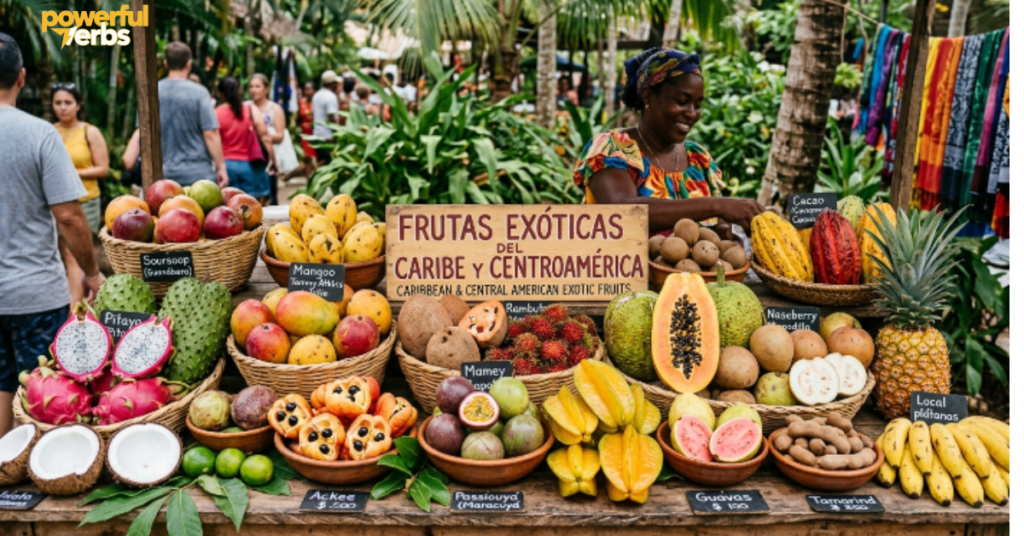
Caribbean & Central American Exotic Fruits
45. Ackee
Ackee is the national fruit of Jamaica and one of the most culinarily important exotic fruits in the Caribbean. When fully ripe, the bright red pods split open to reveal creamy, yellow flesh attached to shiny black seeds. Cooked and combined with saltfish, it forms Jamaica’s national dish. Unripe ackee is toxic — containing hypoglycin A that causes severe vomiting syndrome — but fully ripe, properly prepared ackee is delicious with a rich, buttery flavor resembling scrambled eggs.
Origin: West Africa, naturalized in Jamaica | Flavor: Buttery, egg-like, rich | Season: January–March, June–August Health Benefits: Rich in essential fatty acids, protein, zinc, and vitamin C. Contains linoleic acid supporting heart health. NOTE: Must be fully ripe and properly prepared — unripe fruit is dangerously toxic.
46. Mamoncillo — Spanish Lime
Mamoncillo produces small, grape-sized fruits with thin, hard green shells that pop open to reveal salmon-pink flesh clinging tightly to a large seed. The flesh is eaten by sucking it off the seed, with a sweet-sour flavor combining lime, lychee, and passion fruit in miniature. Mamoncillo is one of the most popular street foods throughout the Caribbean and Central America, sold in giant bunches by roadside vendors.
Origin: Northern South America, Caribbean | Flavor: Sweet-sour, lime-lychee | Season: June–August Health Benefits: Rich in vitamin C, amino acids, calcium, phosphorus, and iron. Contains carotenoids and tryptophan. Traditional Caribbean medicine uses mamoncillo leaves to treat skin infections and dysentery.
47. Monstera Deliciosa Fruit
The monstera plant, beloved worldwide as a houseplant, produces genuinely edible fruit in its native Central American habitat. The large, corn-cob-shaped fruit with hexagonal green scales takes over a year to ripen and must be eaten only when fully ripe — the unripe portions contain oxalic acid crystals causing intense throat and mouth irritation. Ripe portions taste of pineapple, banana, and coconut cream.
Origin: Southern Mexico to Panama | Flavor: Pineapple-banana-coconut, creamy | Season: Year-round (tropical) Health Benefits: Rich in vitamin C, B vitamins, potassium, and phosphorus. Contains antioxidant compounds and dietary fiber. Must be fully ripe to avoid irritating oxalate compounds.
48. Canistel — Eggfruit
Canistel gets its “eggfruit” nickname from its flesh — when ripe, the interior has a dry, mealy texture and rich yellow-orange color almost identical to a hard-boiled egg yolk, with a sweet, pumpkin-squash flavor profile. The texture is so dry and starchy that many people eat it spread on toast or blended into milkshakes. Canistel ice cream is a popular street food in the Philippines and Central America.
Origin: Mexico, Central America | Flavor: Sweet, eggy, pumpkin-caramel | Season: November–March Health Benefits: Exceptionally high in carotenoids and vitamin A — crucial for eye health, immune function, and skin integrity. Rich in niacin, iron, and calcium. The high beta-carotene content makes it one of the most nutritionally significant orange-fleshed fruits.
49. Sapodilla
Sapodilla is the fruit of the sapodilla tree — the same tree that produces chicle, the original base of chewing gum. The rough, brown, potato-like exterior is deceptive: inside is brown, grainy, intensely sweet flesh with a distinctive caramel-molasses flavor unlike any other fruit. The texture has been compared to a pear softened in brown sugar syrup. Sapodilla is among the sweetest naturally occurring fruits by sugar percentage.
Origin: Southern Mexico, Central America | Flavor: Caramel, molasses, pear | Season: October–March Health Benefits: Rich in dietary fiber for digestive health, vitamin C, iron, and folate. Contains tannins with astringent, anti-inflammatory properties. The high sugar content makes it an excellent natural energy source.
50. White Sapote
White sapote produces medium-sized, round fruits with smooth green to yellow skin and creamy, white or pale-yellow flesh with a flavor that blends peach, vanilla, and pear into a perfectly smooth, buttery texture. The flesh contains sedative alkaloids — particularly methyl chavicol — that give white sapote its traditional reputation as a sleep-inducing fruit in Mexican folk medicine. Eating several fruits at once can cause drowsiness.
Origin: Mexico, Central America | Flavor: Peach-vanilla-pear, buttery | Season: September–November Health Benefits: Rich in vitamin C, potassium, and fiber. Contains carotenoids for eye and skin health. The alkaloid compounds have been studied for potential anxiolytic and sleep-supportive properties. One of the smoothest-textured fruits available.
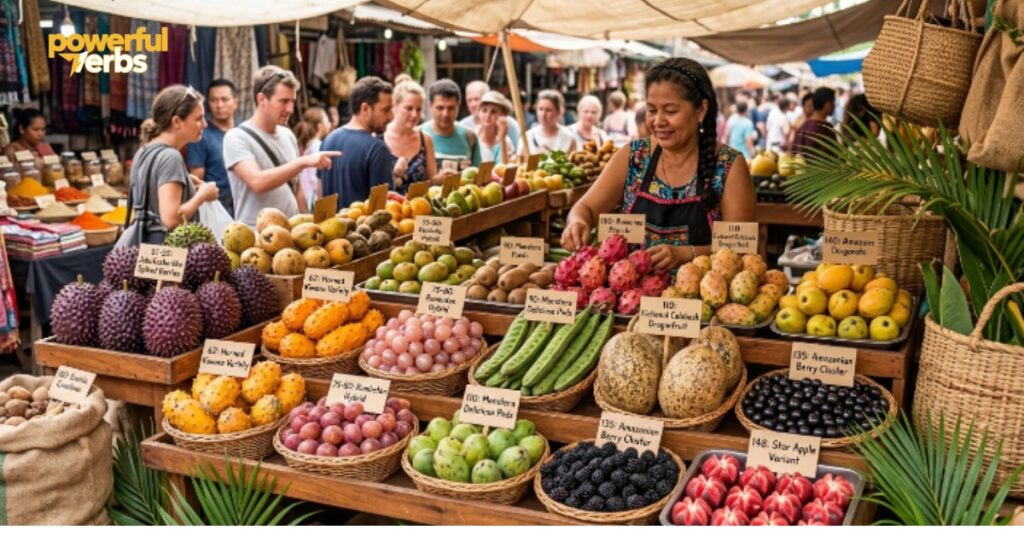
More Extraordinary Exotic Fruits (51–150)
51. Longan Berry (Dried)
Dried longan, known in Chinese as guiyuan, is as culturally significant as fresh longan in East Asia. The drying process concentrates the sweet, smoky flavor into a dense, chewy treat used in soups, teas, and desserts. Rich in iron and used in traditional Chinese medicine to nourish blood and calm the nervous system.
52. Sapote Negro — Black Sapote
Already covered in depth above, this Mexican chocolate pudding fruit deserves separate note for its extraordinary position as the most convincing chocolate substitute in the plant kingdom.
53. Mamey Colorado
A close relative of mamey sapote producing smaller, redder fruits with a cinnamon-sweet flavor profile popular in Cuban cuisine. Rich in carotenoids and vitamin B6.
54. Abiu
A Brazilian Amazonian fruit producing golden-yellow fruits with sweet, white, jelly-like flesh that tastes like caramel crème brûlée with milky coconut undertones. Contains tannins making the skin slightly sticky.
55. Bignay
Small red and dark-purple berries from Southeast Asia with a pleasantly tart flavor used for wine, jams, and fresh eating. Rich in anthocyanins with strong antioxidant activity.
56. Bilimbi — Tree Sorrel
A cucumber-shaped fruit from Southeast Asia related to starfruit, with a flavor so acidic it is almost exclusively used as a souring agent in curries, preserves, and traditional medicines for fever and hypertension.
57. Biriba — Annona mucosa
A soft, custard-like Amazonian fruit with sweet, creamy white flesh and a refreshingly cool quality that makes it one of the most appreciated fruits in the Amazon Basin. Eaten fresh or blended into shakes.
58. Breadfruit
A large, starchy Pacific island staple related to jackfruit with a neutral flavor when unripe that becomes sweet and custard-like when fully ripe. Breadfruit was at the center of Captain Bligh’s historic Bounty voyage in 1789. Rich in complex carbohydrates, potassium, and vitamin C.
59. Cacao Fruit
Most people know cacao as the source of chocolate, but the white, slimy pulp surrounding the cacao beans is itself a delicious fruit — sweet, citrusy, and floral with a refreshing tropical flavor completely unlike chocolate. Cacao pulp is consumed fresh in producing countries and is now appearing in specialty beverages.
60. Calabash Fruit
The large, hard-shelled fruit of the calabash tree produces hollow shells used throughout Africa and the Americas as bowls, cups, and musical instruments. The pulp is used medicinally and in beverages rather than eaten raw due to its bitter taste.
61. Capulin Cherry
A South American mountain cherry with a complex, wine-like flavor combining sour cherry, dark plum, and light tannins. Used for fresh eating and fermented into chicha throughout Andean communities. Rich in anthocyanins and vitamin C.
62. Carob
The brown pods of the carob tree contain naturally sweet, chocolate-flavored pulp and seeds that have been used as a cocoa and sugar substitute for centuries throughout the Mediterranean. Rich in fiber, calcium, and polyphenols with negligible fat content.
63. Cashew Apple
The bright red or yellow fruit attached to the cashew nut is technically the cashew apple — a swollen flower stalk, not a true botanical fruit. The flesh is juicy, sweet-astringent, extremely fragrant, and contains five times more vitamin C than an orange. Widely consumed fresh and fermented into cashew wine in Brazil.
64. Ceylon Gooseberry — Ketembilla
A round, purple-red fruit from Sri Lanka with very sour, juicy flesh used in jams and beverages. Rich in vitamin C and anthocyanin antioxidants. Rarely seen outside South Asia.
65. Chempedak
A Malaysian relative of jackfruit with smaller, oval fruits and flesh with an intensely sweet, custardy flavor combining jackfruit, durian, and mango. Often eaten battered and deep-fried as a street food throughout peninsular Malaysia.
66. Ciruela — Jocote
A small, plum-like Central American fruit with a tart, tangy flavor eaten both unripe (sour and crunchy) and ripe (sweet and jammy) throughout Guatemala, El Salvador, and Mexico. Contains vitamin C and iron.
67. Damson Plum
A small, intensely flavored European wild plum with dark blue-purple skin and very tart, complex flesh. Not widely grown commercially but beloved for making extraordinary jams, sloe gin, and fruit cheeses that capture a flavor depth most commercial plums cannot match.
68. Date Palm Fruit — Medjool
While dates are commercially available, the Medjool date deserves exotic fruit status for most of the world. Medjool dates from Morocco and the Middle East have a flavor of caramel, honey, and brown sugar with a toffee-like texture. One of the sweetest natural foods on Earth at approximately 66% sugar by weight.
69. Dongolo Apricot
A wild African apricot species from Central Africa producing small orange fruits used fresh and dried throughout Congo and Cameroon. Less sweet than commercial apricots but with a concentrated, rich flavor and high carotenoid content.
70. Duguetia
A rare Amazonian genus of Annonaceae fruits related to cherimoya, producing small custard-flavored fruits eaten by indigenous communities and wildlife throughout the Amazon Basin. Poorly documented in scientific literature.
71. Emblic — Amla, Indian Gooseberry
One of the most important fruits in Ayurvedic medicine, amla is extremely sour and astringent when eaten raw but leaves a persistent sweet aftertaste. Contains one of the highest concentrations of vitamin C found in any whole fruit and is the primary ingredient in the classic Ayurvedic formula Triphala.
72. Fig — Wild Varieties
Dozens of wild fig species beyond the commercial Ficus carica exist throughout Asia, Africa, and the Pacific. Wild figs vary enormously in size, flavor, and texture, and many are sweeter and more complex than commercial varieties. Sacred in Buddhism, Islam, and ancient Mediterranean cultures.
73. Genip — Mamoncillo
See mamoncillo above — genip is the English Caribbean name for this same fruit, reflecting its wide distribution across the Caribbean Basin.
74. Giant Granadilla
The largest species in the passion fruit family, producing football-sized fruits with mild, watery pulp and a subtle tropical flavor. Grown throughout tropical America and used primarily for juice and beverages rather than fresh eating.
75. Goldenberry — Cape Gooseberry
The paper-lantern-like dried calyx surrounding the golden, marble-sized fruit of Physalis peruviana is one of the most distinctive sights in South American markets. The fruit inside is sweet-tart with complex fruity flavor notes. Now commercially available in many countries as a “superfood” berry.
76. Governor’s Plum
A small, dark red African fruit with sweet-tart, astringent flavor used in jams and traditional medicine throughout East and Southern Africa. The bark is used medicinally to treat a range of conditions including dysentery and skin diseases.
77. Grumichama — Brazilian Cherry
A small, round, dark-purple Brazilian fruit with sweet, soft flesh and delicate flavor combining cherry, grape, and blueberry. Consumed fresh and made into liqueurs in Santa Catarina state, Brazil.
78. Guanabana — Large Soursop
See soursop above. Guanabana is the Spanish name used throughout Latin America for the same fruit, reflecting its enormous cultural importance across the Spanish-speaking Caribbean and Central American regions.
79. Hog Plum — Ambarella
A tart, green or yellow tropical fruit eaten both unripe — crisp and mouth-puckeringly sour, typically dipped in salt and chili — and ripe, when it softens and sweetens. One of the most beloved street snacks throughout Southeast Asia and the Caribbean.
80. Ilama
An extremely rare member of the Annona family from Mexico and Central America, producing pink-fleshed or white-fleshed varieties with creamy, sweet flavor comparable to cherimoya. Critically endangered in the wild due to habitat destruction.
81. Inga — Ice Cream Bean
Inga pods can grow up to 2 meters long and contain large seeds surrounded by a white, fluffy pulp that dissolves on the tongue like the smoothest vanilla cotton candy. Children throughout tropical America eat inga pods as a sweet snack, and the flavor has led to widespread use of the “ice cream bean” nickname.
82. Jakfruit — Young Green
Unripe jackfruit used as a vegetable deserves separate mention for its extraordinary cultural importance as a meat substitute throughout Southeast Asia and increasingly in global vegan cuisine. The fiber-rich, neutral flesh absorbs marinades and spices to convincingly replicate pulled pork or chicken.
83. Jambolan — Java Plum
Dark purple, grape-like fruits from a large tropical tree with an astringent, wine-like flavor and intensely purple juice that stains everything it touches. Widely used in traditional Ayurvedic and Unani medicine to treat diabetes, with several clinical trials supporting blood sugar-lowering effects.
84. Jujube — Chinese Date
Small, red, apple-like fruits with crisp, sweet, apple-honey flavor when fresh and a chewy, date-like texture when dried. One of the oldest cultivated fruits in China — with a 4,000-year cultivation history. Rich in vitamin C, polysaccharides, and cyclic AMP with documented anxiolytic and sleep-supportive properties.
85. Kaffir Lime
The lumpy, dark green fruit of the kaffir lime tree is valued almost entirely for its aromatic rind and distinctive double-lobed leaves rather than its juice, which is bitter and sour. The intensely fragrant zest and leaves are fundamental flavoring ingredients in Thai, Indonesian, and Malaysian cuisine.
86. Kumquat
The only citrus fruit that is eaten entirely — skin and all. Kumquats are small, oval, orange fruits with sweet skin and sour flesh, creating an unusual and memorable flavor combination when bitten whole. The sweet skin balances the interior sourness into a complete, complex citrus experience.
87. Langsat — Duku
See langsat above. Duku is the name used specifically for a sweeter, less bitter cultivar group of langsat grown primarily in peninsular Malaysia, considered superior in flavor to standard langsat.
88. Lemon Drop Mangosteen — Rheedia
A small, lemon-yellow Amazonian relative of mangosteen with intensely sour, white flesh used as a citrus substitute in cooking throughout the Amazon Basin. Rich in xanthones similar to those found in true mangosteen.
89. Lonchocarpus — Barbasco Fruit
Primarily documented as a plant with fish-poisoning properties used by Amazonian peoples for fishing, the fruit of some barbasco species is edible with a bitter-sweet flavor. Mainly of research interest.
90. Loquat
The loquat produces orange, plum-shaped fruits with juicy, sweet-tart flesh in winter and early spring — making it one of the only fresh fruits available during the cold season in Mediterranean climates. Widely cultivated in China, Japan, and Mediterranean countries. Rich in vitamin A, potassium, and dietary fiber.
91. Lotus Fruit
The edible seeds and sweet rhizomes of the lotus plant are well documented, but the lotus fruit — a distinctive green receptacle with seeds embedded in individual holes like a watering-can head — is also edible, with a mildly sweet, nutty flavor. Lotus seeds are a highly nutritious traditional food throughout Asia.
92. Lulo — Naranjilla
A South American fruit the size of a small orange with rough, green-yellow skin and intensely tart, green, tomato-like juice that is one of the most refreshing and distinctive flavors in Latin American cuisine. Lulo juice is the national beverage of Colombia and is difficult to describe: tomato meets citrus meets passion fruit in a cold glass.
93. Macadamia Fruit
Most people know macadamia as a nut, but the outer husk surrounding the shell is a fleshy, green fruit with a mildly pleasant flavor. The true value is inside the hardest shell of any commercially harvested nut, concealing one of the richest and most flavorful edible seeds in the plant kingdom.
94. Malay Apple
A shiny, dark red, pear-shaped fruit related to water apple with a crisp, watery, mildly sweet flesh and delicate rose-like fragrance. Extremely popular at markets throughout the Pacific islands, Malaysia, and Caribbean for fresh snacking.
95. Mamoncillo Grape
See mamoncillo above. The “grape” descriptor refers to the way these fruits are sold in hanging clusters similar to grape bunches throughout Caribbean markets and streets.
96. Marañon — Cashew Apple
See cashew apple above. Marañon is the Spanish name for the cashew apple used throughout Latin America, where the fruit is consumed fresh and fermented rather than being discarded as it commonly is in cashew-producing countries that export only the nut.
97. Melinjo Fruit
The red fruits surrounding the melinjo seeds are sweet and edible, though the primary culinary value of melinjo in Indonesian cuisine comes from the seeds and young leaves rather than the fruit pulp. The seeds are made into emping — thin, crackerlike chips with a unique bitter-savory flavor.
98. Mimusops — Sapodilla Relative
Several Mimusops species in East Africa and South Asia produce sweet, edible fruits with flesh similar to sapodilla — brown, grainy, and caramel-like. The bakuli fruit of East Africa is one of the most important wild fruits for forest communities.
99. Miracle Berry
See miracle fruit above. The “berry” terminology is used specifically in the context of miracle fruit culinary events — “flavor tripping” parties where participants eat the berry before sampling sour foods to experience the extraordinary taste transformation effect.
100. Monkeyface Orchid Fruit
While the monkeyface orchid is famous for its remarkable flower appearance, the fruits of related Dracula orchid species produce small edible berries occasionally consumed in Ecuadorian cloud forests. Botanical curiosity rather than significant food source.
| # | Fruit | Origin | Flavor Profile | Key Benefit |
| 101 | Morinda — Noni | Pacific Islands | Strong, fermented, pungent | Anti-inflammatory, immune support |
| 102 | Mulberry (Black) | Western Asia | Deep, wine-berry, complex | Anthocyanins, resveratrol |
| 103 | Muscadine Grape | North America | Musky, sweet, thick-skinned | Ellagic acid antioxidants |
| 104 | Naranjilla | Colombia, Ecuador | Tart tomato-citrus | Vitamin C, iron, cooling |
| 105 | Natal Plum — Carissa | South Africa | Sweet-tart, cranberry-like | Vitamin C, calcium |
| 106 | Neem Fruit | South Asia | Bitter, medicinal | Antimicrobial, traditional medicine |
| 107 | Nispero — Loquat | Mediterranean, Asia | Sweet-tart, floral | Vitamin A, potassium |
| 108 | Ogiri — African Locust Bean | West Africa | Fermented, pungent | Protein, riboflavin |
| 109 | Ogechukwu Fruit | Nigeria | Sweet, soft | Local food security importance |
| 110 | Oil Palm Fruit | West Africa | Oily, savory | Palm oil source, vitamin E |
| 111 | Akebia | East Asia | Sweet, edible pod | Unique flavor, antioxidants |
| 112 | Atemoya | Hybrid cultivar | Pineapple-vanilla custard | Vitamin C, B6, smooth texture |
| 113 | Pangium Fruit | Southeast Asia | Bitter, toxic raw | Edible when processed — cultural food |
| 114 | Pepino Melon | South America | Cucumber-melon, mild | Low calorie, vitamin C |
| 115 | Persimmon (Hachiya) | East Asia | Intensely sweet when ripe | Tannins, vitamin A, fiber |
| 116 | Physalis | Americas | Sweet-tart, papery wrap | Antioxidant physalins |
| 117 | Pili Nut Fruit | Southeast Asia | Oily, buttery pulp | Omega-3, protein, minerals |
| 118 | Pitanga — Surinam Cherry | Brazil | Sweet-resinous, multi-lobed | Vitamin C, lycopene |
| 119 | Plinia — Jabuticaba relative | Brazil | Grape-berry | Anthocyanins, unique bark fruiting |
| 120 | Poha — Cape Gooseberry | Andes | Sweet-tart, complex | Antioxidants, vitamin C |
| 121 | Pompia — Sardinian Citrus | Sardinia, Italy | Floral, intensely fragrant | Rare heritage citrus, vitamin C |
| 122 | Prickly Pear — Cactus Fruit | Americas | Sweet, watermelon-like | Betacyanins, magnesium, fiber |
| 123 | Pulasan | Southeast Asia | Very sweet, almond seed | Vitamin C, unique edible seed |
| 124 | Quandong — Native Peach | Australia | Tart, peach-like | Vitamin C, folate, iron |
| 125 | Rambai | Southeast Asia | Sweet-sour, grape-like | Vitamins, traditional food |
| 126 | Red Mombin — Purple Mombin | Americas | Plum-mango, tart | Vitamin C, polyphenols |
| 127 | Riberry — Lilly Pilly | Australia | Clove-cinnamon, tart | Antioxidants, folate, Australian native |
| 128 | Rollinia | Amazon | Lemon meringue pie flavor | Vitamin C, rare Annona |
| 129 | Salimori Fruit | Southeast Asia | Sweet, soft | Limited documentation, regional food |
| 130 | Santol | Philippines, Thailand | Sweet-sour, cottony | Vitamin C, cultural significance |
| 131 | Sea Buckthorn Berry | Eurasia | Intensely sour, citrusy | Omega-7, extraordinary vitamin C |
| 132 | Serviceberry — Juneberry | North America | Sweet almond-cherry | Iron, antioxidants, wildlife food |
| 133 | Siberian Pea Berry | Asia | Bitter, herbal | High protein legume-fruit |
| 134 | Soncoya | Mexico | Mango-papaya, creamy | Annona family, vitamin C |
| 135 | Sour Plum — Ximenia | Africa | Tart, almond-like | Vitamin C, seed oil |
| 136 | Star Apple — Caimito | Caribbean | Creamy, grape-sweet | Calcium, vitamin C |
| 137 | Sugar Apple — Sweetsop | Americas | Vanilla-custard, sweet | Vitamin C, B6, iron |
| 138 | Surinam Cherry | Brazil | Resinous, cherry-citrus | Vitamin C, lycopene, antioxidants |
| 139 | Sycamore Fig | Africa, Middle East | Mild, starchy | Historical food importance, fiber |
| 140 | Tarap | Borneo | Creamy, durian-like | Vitamin C, carbohydrates |
| 141 | Taro Fruit | Pacific Islands | Starchy, mild | Starchy energy food |
| 142 | Tayberry | Scotland (hybrid) | Intense blackberry-raspberry | Anthocyanins, vitamin C |
| 143 | Thorn Apple | Americas | Toxic — ornamental only | WARNING: Do not eat |
| 144 | Ugli Fruit — Tangelo | Jamaica | Sweet-tart, easy-peel citrus | Vitamin C, flavonoids |
| 145 | Uvilla — Gooseberry | Andes | Sweet-tart, papery husk | Physalins, antioxidants |
| 146 | Velvet Tamarind | West Africa | Sweet-sour, tart | Vitamin C, calcium, cultural food |
| 147 | Wax Jambu | Southeast Asia | Watery-sweet, crisp | Hydrating, vitamin C, refreshing |
| 148 | Wild Raspberry (Arctic) | Arctic regions | Intensely sweet, concentrated | Vitamin C, ellagitannins |
| 149 | Wolfberry — Goji Berry | China, Tibet | Sweet-sour, herbal | Zeaxanthin, polysaccharides |
| 150 | Yellow Mangosteen — Garcinia | Southeast Asia | Sour-sweet, unique | Xanthones, anti-inflammatory |
Top 20 Healthiest Exotic Fruits by Nutritional Density
| Rank | Fruit | Standout Nutrient | Key Health Benefit |
| 1 | Camu Camu | Vitamin C (3,000mg/100g) | Immune defense, collagen, antioxidant |
| 2 | Acai Berry | Anthocyanins, healthy fats | Heart health, anti-inflammatory |
| 3 | Baobab | Vitamin C, prebiotic fiber | Immunity, blood sugar, gut health |
| 4 | Sea Buckthorn | Omega-7, vitamin C | Skin health, mucosal healing |
| 5 | Marula | Vitamin C, oleic acid | Skin, heart, antioxidant |
| 6 | Amla | Vitamin C, tannins | Ayurvedic tonic, liver, immunity |
| 7 | Finger Lime | Vitamin C, folate | Immune system, cell division |
| 8 | Mangosteen | Xanthone antioxidants | Anti-inflammatory, antimicrobial |
| 9 | Feijoa | Iodine, vitamin C | Thyroid health, immunity |
| 10 | Cherimoya | B6, vitamin C | Brain, mood, digestion |
| 11 | Jackfruit | B6, potassium | Energy, nerve function |
| 12 | Cupuaçu | Theograndins, vitamin C | Cholesterol, inflammation |
| 13 | Lucuma | Beta-carotene, iron | Eye health, blood, immunity |
| 14 | Mamey Sapote | Vitamin A, B6 | Vision, brain health |
| 15 | Pomelo | Vitamin C, lycopene | Heart, antioxidant, anti-aging |
| 16 | Jambolan | Polyphenols | Blood sugar, diabetes management |
| 17 | Goji Berry | Zeaxanthin | Eye health, aging |
| 18 | Passion Fruit | Vitamin A, fiber | Eye health, gut, relaxation |
| 19 | Jabuticaba | Anthocyanins | Antioxidant, anti-inflammatory |
| 20 | Soursop | Acetogenins, vitamin C | Immunity, anti-tumor research |
How to Find and Buy Exotic Fruits
Asian Grocery Stores — The single best source for Southeast and East Asian exotic fruits including lychee, longan, rambutan, mangosteen, dragon fruit, and starfruit in most Western cities.
Latin Markets and Tiendas — Essential for Caribbean and South American exotics including mamoncillo, tamarillo, guanabana, lucuma, and fresh passion fruit.
African and Caribbean Specialty Stores — Stock baobab powder, dried tamarind, morinda, velvet tamarind, and ackee for those in communities with West African or Caribbean populations.
Farmers Markets in Tropical Regions — Florida, Hawaii, Puerto Rico, California, and Texas farmers markets stock many exotic species unavailable elsewhere in North America.
Online Specialty Retailers — Companies specializing in exotic and tropical fruits now ship nationwide using express delivery to maintain quality. Search for tropical fruit boxes and specialty fruit subscriptions.
Grow Your Own — Hardy kiwi berries, feijoa, fig, loquat, pawpaw, persimmon, pomegranate, and several passion fruit species can be grown in temperate gardens with appropriate variety selection.
Conclusion
The world’s exotic fruit pantry is an almost inexhaustible treasury of extraordinary flavors, colors, textures, and nutritional wonders. From the vitamin C extremism of camu camu to the chocolate-pudding magic of black sapote, from the universe-bending taste-altering miracle fruit to the caramel sophistication of mamey sapote — every fruit in this guide offers something genuinely remarkable that commercial supermarkets have barely begun to share with the world.
The next time you encounter a specialist fruit market, a tropical travel destination, or an online exotic fruit retailer, let this guide serve as your passport to the most extraordinary edible experiences the plant kingdom has to offer.
FAQs
What is the rarest fruit in the world?
Several candidates compete for this title. Rollinia, native to the Amazon, is almost never found outside South America. Ilama, a relative of cherimoya from Mexico, is critically rare. The Malabar plum and several endemic island species may have the smallest total wild populations of any edible fruit globally.
Which exotic fruit has the most vitamin C?
Camu camu from the Peruvian Amazon contains up to 3,000 milligrams of vitamin C per 100 grams of fresh fruit — approximately 60 times more than an orange. This makes camu camu the single richest natural source of vitamin C documented in any food.
What exotic fruits can you grow at home?
In temperate climates, feijoa, loquat, persimmon, passion fruit, fig, cape gooseberry (goldenberry), hardy kiwi berries, and pawpaw can all be grown outdoors with appropriate cold-hardy variety selection. In warm climates, nearly all tropical fruits in this guide can be cultivated with proper care.
Are exotic fruits healthier than common fruits?
Not categorically — common fruits like blueberries, pomegranates, and citrus are highly nutritious. However, several exotic fruits like camu camu, acai, baobab, and sea buckthorn genuinely surpass common fruits in specific nutritional metrics such as vitamin C concentration, omega fatty acid content, and antioxidant density.
What is the best-tasting exotic fruit?
This is deeply subjective, but cherimoya (Mark Twain’s verdict), mangosteen (the “queen of fruits”), and white sapote consistently appear at the top of exotic fruit taste rankings among food experts and tropical fruit enthusiasts. Jabuticaba and rollinia are also frequently cited as among the most extraordinary flavor experiences available from fruit.
Which exotic fruit is best for weight loss?
Passion fruit, water apple, lychee, and kiwano are all very low in calories while being nutritionally rich. Camu camu and baobab provide exceptional nutrition in small serving sizes, making them efficient supplements for nutritionally dense, calorie-controlled diets.
What fruits are exotic in Europe but common in Asia?
Lychee, longan, rambutan, jackfruit, durian, mangosteen, starfruit, and pomelo are completely ordinary in Southeast Asian daily life but are considered premium exotic fruits in most European markets.

Liam Johnson is a dedicated language expert with 4 years of professional experience. He specializes in Grammar, Vocabulary, and Sentence structure.
