

Understanding negative sentences is essential for expressing disagreement, denials, and absence in English communication. Negative sentences use words like “not,” “no,” “never,” and “nobody” to contradict or negate statements, making them crucial for clear and accurate expression.
This comprehensive guide provides 175 practical negative sentence examples organized by category, along with clear explanations of structure and usage tips. Whether you’re a beginner learning English basics or improving your grammar skills, these examples will help you communicate negative ideas confidently in everyday conversations and writing.
Definition and Explanation
A negative sentence is a statement that expresses denial, refusal, or the absence of something by using negative words like “not,” “no,” “never,” “nobody,” or “nothing.” These sentences contradict positive statements and are essential for expressing what doesn’t happen, what someone doesn’t do, or what isn’t true in English grammar.
Examples:
Positive vs. Negative Sentences:
- Positive: She likes coffee. → Negative: She doesn’t like coffee.
- Positive: They are students. → Negative: They are not students.
- Positive: He can swim. → Negative: He cannot swim.
- Positive: We went to the park. → Negative: We didn’t go to the park.
- Positive: I will help you. → Negative: I will not help you.
Structure of Negative Sentences
Understanding the structure of negative sentences helps you form grammatically correct denials and contradictions across different tenses and verb types.
Basic Negative Sentence Structures:
| Tense/Type | Structure | Example |
| Simple Present | Subject + do/does + not + base verb | I do not like spinach. |
| Present Continuous | Subject + is/am/are + not + verb+ing | She is not studying now. |
| Simple Past | Subject + did + not + base verb | They did not come yesterday. |
| Past Continuous | Subject + was/were + not + verb+ing | He was not sleeping at 10 PM. |
| Future (will) | Subject + will + not + base verb | I will not attend the meeting. |
| Present Perfect | Subject + has/have + not + past participle | We have not finished yet. |
| Modal Verbs | Subject + modal + not + base verb | You cannot enter here. |
| Be Verb | Subject + is/am/are/was/were + not | It is not my fault. |
Why Negative Sentences Matter in Everyday Communication?
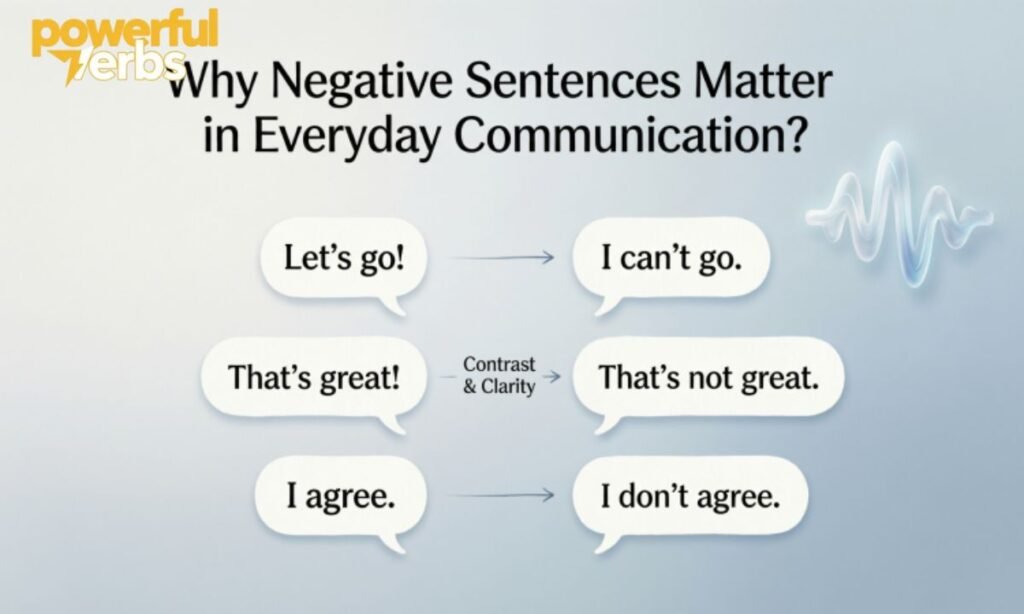
Negative sentences are essential for clear communication because they allow you to express disagreement, deny false information, and clarify what doesn’t exist or happen. Without negative sentences, you couldn’t refuse requests, correct misunderstandings, or express preferences against something, making them fundamental to honest and accurate conversations.
Key Reasons Negative Sentences Matter:
- Express disagreement or denial clearly
- Correct false information or misconceptions
- Refuse requests politely or directly
- State what doesn’t happen or exist
- Show preferences by negating alternatives
- Communicate boundaries and limitations
- Clarify misunderstandings effectively
Tips to Use Negative Sentences Effectively
Following these practical tips helps you use negative sentences correctly and naturally without common grammatical mistakes.
- Use contractions in casual speech: “Don’t,” “can’t,” “won’t” sound more natural than “do not,” “cannot,” “will not.”
- Avoid double negatives: Never say “I don’t have nothing” – use “I don’t have anything” instead
- Match auxiliary verbs to tense: Use “didn’t” for past, “don’t/doesn’t” for present, “won’t” for future
- Be careful with “no” vs. “not”: “No” comes before nouns (no time), “not” comes after verbs (is not ready)
- Use “never” for emphasis: “I never lie” is stronger than “I don’t lie.”
- Place “not” correctly: It goes after the first auxiliary verb (has not been, will not go)
- Remember question form: “Don’t you like it?” not “You don’t like it?” for questions
- Use negative prefixes: Words like “unhappy,” “impossible,” and “disagree” are also negative
175 Most Useful Negative Sentence Examples
These practical examples demonstrate negative sentences across different contexts, helping you understand how to use them naturally in everyday communication.
1–35: Daily Routine & Preferences
- I don’t wake up early on weekends.
- She doesn’t drink coffee in the morning.
- He isn’t a morning person.
- We don’t eat breakfast together.
- They don’t exercise every day.
- I don’t like spicy food.
- She doesn’t wear makeup daily.
- He doesn’t drive to work.
- We aren’t ready yet.
- They don’t watch TV at night.
- I don’t cook dinner on Fridays.
- She doesn’t take the bus.
- He isn’t interested in sports.
- We don’t go shopping often.
- They don’t clean the house daily.
- I don’t drink soda.
- She doesn’t eat meat.
- He doesn’t smoke cigarettes.
- We aren’t vegetarians.
- They don’t drink alcohol.
- I don’t stay up late.
- She doesn’t skip meals.
- He isn’t allergic to anything.
- We don’t have pets.
- They don’t live nearby.
- I don’t use social media much.
- She doesn’t check emails constantly.
- He isn’t always on time.
- We don’t take taxis.
- They don’t order takeout often.
- I don’t iron my clothes.
- She doesn’t wear jewelry.
- He doesn’t shave every day.
- We aren’t organized people.
- They don’t plan.
36–70: Feelings & Activities
- I’m not feeling well today.
- She isn’t happy with the results.
- He doesn’t seem excited.
- We aren’t satisfied with the service.
- They don’t appear interested.
- I don’t enjoy crowded places.
- She doesn’t like loud music.
- He isn’t comfortable speaking publicly.
- We don’t feel safe here.
- They aren’t worried about it.
- I don’t understand the question.
- She doesn’t remember his name.
- He isn’t paying attention.
- We don’t agree with the decision.
- They don’t believe the story.
- I’m not going to the party.
- She isn’t coming with us.
- He doesn’t want to participate.
- We aren’t planning to travel.
- They don’t intend to stay long.
- I don’t play video games.
- She doesn’t watch horror movies.
- He isn’t a fan of classical music.
- We don’t attend concerts.
- They don’t celebrate birthdays.
- I don’t dance in public.
- She doesn’t sing karaoke.
- He isn’t learning a new language.
- We don’t practice yoga.
- They don’t meditate regularly.
- I’m not good at math.
- She isn’t talented in art.
- He doesn’t excel in sports.
- We aren’t experienced drivers.
- They don’t have special skills.
71–105: School & Communication
- I don’t have homework tonight.
- She doesn’t attend tutoring sessions.
- He isn’t a straight-A student.
- We don’t have exams this week.
- They don’t study together.
- I’m not prepared for the test.
- She doesn’t understand the lesson.
- He isn’t finished with his project.
- We don’t have class tomorrow.
- They aren’t graduating this year.
- I don’t speak French fluently.
- She doesn’t know sign language.
- He isn’t bilingual.
- We don’t communicate well.
- They don’t reply quickly.
- I don’t text while driving.
- She doesn’t answer unknown calls.
- He isn’t active on social media.
- We don’t share personal information.
- They don’t post photos online.
- I don’t write letters anymore.
- She doesn’t send postcards.
- He isn’t a good listener.
- We don’t interrupt others.
- They don’t gossip about people.
- I don’t argue unnecessarily.
- She doesn’t raise her voice.
- He isn’t rude to anyone.
- We don’t ignore messages.
- They don’t make promises lightly.
- I don’t procrastinate often.
- She doesn’t forget appointments.
- He isn’t late for meetings.
- We don’t miss deadlines.
- They don’t waste time.
106–140: People & Preferences
- I don’t know him personally.
- She doesn’t have many friends.
- He isn’t related to me.
- We don’t see each other often.
- They don’t get along well.
- I don’t trust strangers easily.
- She doesn’t judge people quickly.
- He isn’t a talkative person.
- We don’t invite everyone.
- They don’t attend social events.
- I don’t like crowded parties.
- She doesn’t enjoy small talk.
- He isn’t interested in dating.
- We don’t believe in superstitions.
- They don’t follow trends.
- I don’t care about fashion.
- She doesn’t wear designer clothes.
- He isn’t materialistic.
- We don’t buy expensive things.
- They don’t show off wealth.
- I don’t collect anything.
- She doesn’t have hobbies.
- He isn’t passionate about anything.
- We don’t support that team.
- They don’t watch reality TV.
- I don’t read fiction books.
- She doesn’t listen to podcasts.
- He isn’t subscribed to magazines.
- We don’t follow celebrities.
- They don’t admire fame.
- I don’t envy others.
- She doesn’t compare herself.
- He isn’t competitive.
- We don’t boast about achievements.
- They don’t seek attention.
141–175: Other Negative Statements
- I don’t believe in coincidences.
- She doesn’t think it’s possible.
- He isn’t convinced yet.
- We don’t see the point.
- They don’t find it funny.
- I’m not responsible for this.
- She isn’t to blame.
- He doesn’t owe anyone money.
- We don’t need help.
- They don’t require assistance.
- I don’t have enough time.
- She doesn’t own a car.
- He isn’t rich or famous.
- We don’t live in luxury.
- They don’t have servants.
- I don’t work on weekends.
- She doesn’t take vacations often.
- He isn’t retired yet.
- We don’t earn much.
- They don’t save money.
- I don’t gamble or bet.
- She doesn’t play the lottery.
- He isn’t lucky with games.
- We don’t win competitions.
- They don’t receive awards.
- I’m not afraid of heights.
- She doesn’t fear public speaking.
- He isn’t scared of insects.
- We don’t panic easily.
- They don’t cry often.
- I don’t complain without reason.
- She doesn’t criticize others.
- He isn’t negative about life.
- We don’t give up easily.
- They don’t lose hope.
Practice Exercise
Test your understanding by converting these positive sentences into negative sentences.
Convert to Negative:
- She likes chocolate ice cream.
- They are coming to the party.
- He can speak three languages.
- We went to the beach yesterday.
- I will call you tonight.
- She has finished her homework.
- They play football every Sunday.
- He was sleeping at 9 PM.
- We should leave now.
- She knows the answer.
Answers:
- She doesn’t like chocolate ice cream.
- They are not coming to the party. / They aren’t coming to the party.
- He cannot speak three languages. / He can’t speak three languages.
- We didn’t go to the beach yesterday.
- I will not call you tonight. / I won’t call you tonight.
- She has not finished her homework. / She hasn’t finished her homework.
- They don’t play football every Sunday.
- He was not sleeping at 9 PM. / He wasn’t sleeping at 9 PM.
- We should not leave now. / We shouldn’t leave now.
- She doesn’t know the answer.
Conclusion
In simple terms, mastering negative sentences through these 175 examples helps you express denial, disagreement, and absence clearly in English. Understanding the structure and proper use of “not,” “don’t,” “never,” and other negative words makes your communication more accurate and natural in everyday conversations.
Now you have a clear understanding of how to form and use negative sentences correctly across different tenses and contexts. Practice converting positive sentences to negative ones daily, pay attention to negative sentences in conversations and reading, and soon, using them will become second nature in your English communication.
Frequently Asked Questions
What are 10 examples of negative sentences in English?
Ten examples include: “I don’t like coffee,” “She isn’t coming today,” “They didn’t finish homework,” “He can’t swim,” “We aren’t ready,” “I won’t attend,” “She doesn’t eat meat,” “He wasn’t sleeping,” “We don’t have time,” and “They aren’t interested.”
How do you change a positive sentence into a negative sentence?
Add “not” after the auxiliary verb (is, am, are, do, does, did, has, have, will, can) or use the contracted form like don’t, doesn’t, didn’t, isn’t, can’t—for example, “She likes tea” becomes “She doesn’t like tea.”
What is the structure of a negative sentence in English grammar?
The basic structure is: Subject + auxiliary verb (do/does/did/is/am/are/was/were/has/have/will/can) + not + main verb (base form or -ing), such as “He does not like pizza” or “She is not studying.”
Can you give me 20 negative sentences for daily use?
Examples include: “I don’t wake up early,” “She doesn’t drink coffee,” “He isn’t ready,” “We don’t eat meat,” “They don’t smoke,” “I’m not tired,” “She doesn’t like crowds,” “He can’t drive,” “We didn’t go,” and “They aren’t coming.”
What are the most common negative words in English sentences?
The most common negative words are: not, no, never, nobody, nothing, nowhere, none, neither, nor, hardly, scarcely, rarely, seldom, and negative contractions like don’t, doesn’t, didn’t, isn’t, aren’t, can’t, won’t.
What is the difference between don’t and doesn’t in negative sentences?
Use “don’t” with I, you, we, and they (I don’t like it), and use “doesn’t” with he, she, and it (She doesn’t like it)—both mean “do not” and “does not” in the present tense.
How do you make negative sentences in the past tense?
Use “did not” (didn’t) + base verb for all subjects in simple past tense, such as “I didn’t go,” “She didn’t call,” “They didn’t arrive”—the main verb stays in base form, not past tense.
What are double negatives, and why should you avoid them?
Double negatives use two negative words in one sentence (like “I don’t have nothing”), which creates confusion or implies a positive meaning—use “I don’t have anything” instead for correct English.
What is the difference between no and not in negative sentences?
“Not” comes after verbs (is not ready, do not know), while “no” comes before nouns (no time, no money, no problem)—both negate, but their positions differ grammatically.
How do you practice making negative sentences in English?
Practice by converting 10 positive sentences to negative daily, pay attention to negative sentences in movies and conversations, complete grammar exercises, and try speaking using negative sentences in everyday situations.

Liam Johnson is a dedicated language expert with 4 years of professional experience. He specializes in Grammar, Vocabulary, and Sentence structure.
