
Introduction
“Used to” is a powerful grammatical structure that helps you talk about past habits, repeated actions, and situations that were true before but aren’t true anymore. Mastering this expression allows you to share childhood memories, discuss lifestyle changes, and describe how your life has transformed over time in natural, fluent English.
What Does “Used To” Mean?
“Used to” means something happened regularly or was true in the past, but doesn’t happen or isn’t true anymore. It expresses discontinued habits, old routines, or previous states that have changed, helping you contrast your past life with your present situation clearly and naturally.
Key Meanings:
- Past habits that no longer continue
- Repeated actions in the past
- Past states or situations that changed
- Things that were true before but aren’t now
Structure of “Used To”
Understanding the correct structure helps you form grammatically accurate sentences with “used to” in positive, negative, and question forms.
| Form | Structure | Example |
| Positive | Subject + used to + base verb | I used to play football. |
| Negative | Subject + didn’t use to + base verb | She didn’t use to like coffee. |
| Question | Did + subject + use to + base verb? | Did you use to live here? |
Important Notes:
- Always use “used to” (with ‘d’) in positive sentences
- Use “use to” (without ‘d) in negative and question forms after “did/didn’t.”
- Follow with base verb, never -ing or past tense
- “Used to” has no present tense equivalent
Difference Between “Used To,” “Be Used To,” and “Get Used To”
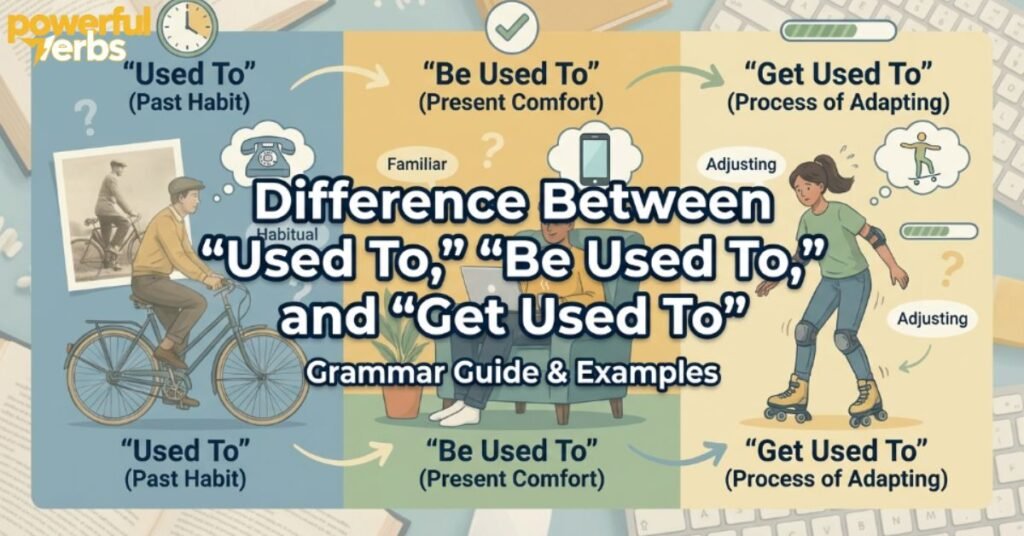
These three expressions look similar but have completely different meanings and uses, so understanding the distinctions prevents common mistakes.
| Expression | Meaning | Structure | Example |
| Used to | Past habit/state (discontinued) | used to + base verb | I used to smoke. (but I don’t know) |
| Be used to | Be accustomed to (present state) | be + used to + noun/-ing | I’m used to waking up early. (I’m accustomed to it) |
| Get used to | Become accustomed to (process) | get + used to + noun/-ing | I’m getting used to the cold weather. (becoming accustomed) |
Example:
Used To (Past Habit):
- I used to play basketball every weekend. (I don’t play anymore)
Be Used To (Accustomed):
- I am used to playing basketball. (I’m comfortable/familiar with it)
Get Used To (Becoming Accustomed):
- I’m getting used to playing basketball again. (I’m adjusting to it)
60 Sentences of Used To
These 50 practical sentences demonstrate how “used to” works across different life contexts, helping you understand its natural usage in everyday English.
1. Daily Routines
- I used to wake up at 5 AM every day.
- She used to drink coffee every morning.
- He used to take the bus to work.
- We used to eat breakfast together.
- They used to exercise before work.
2. School & Education
- I used to study late at night.
- She used to walk to school with friends.
- He used to be afraid of exams.
- We used to play during lunch break.
- They used to sit together in class.
3. Food & Lifestyle
- I used to eat junk food daily.
- She used to hate vegetables.
- He used to cook every evening.
- We used to order pizza on Fridays.
- They used to skip breakfast often.
4. Hobbies & Free Time
- I used to play guitar in a band.
- She used to read books every night.
- He used to collect stamps as a hobby.
- We used to go hiking on weekends.
- They used to watch movies together.
5. Work & Career
- I used to work in a bank.
- She used to travel for business.
- He used to manage a restaurant.
- We used to have meetings every Monday.
- They used to work night shifts.
6. Travel & Adventure
- I used to travel abroad twice a year.
- She used to live in Paris.
- He used to explore new cities.
- We used to go camping in the summer.
- They used to visit their grandparents monthly.
7. Relationships & Friends
- I used to have a best friend named Tom.
- She used to date someone from college.
- He used to spend time with neighbors.
- We used to meet friends every weekend.
- They used to be very close.
8. Technology & Media
- I used to write letters by hand.
- She used to watch cartoons every morning.
- He used to play video games all night.
- We used to rent movies from stores.
- They used to listen to music on CDs.
9. Childhood Memories
- I used to believe in Santa Claus.
- She used to be afraid of the dark.
- He used to ride his bike everywhere.
- We used to play hide and seek.
- They used to build forts with blankets.
10. Lifestyle Changes
- I used to smoke cigarettes.
- She used to be very shy.
- He used to stay up late every night.
- We used to live in a small apartment.
- They used to argue about everything.
11. Health & Fitness Habits
These sentences focus on past health routines and fitness habits that have changed over time.
51. I used to go to the gym every evening.
52. She used to follow a strict diet plan.
53. He used to run five kilometers daily.
54. We used to do yoga in the morning.
55. They used to avoid sugary drinks completely.
56. I used to drink a lot of soda.
57. She used to skip workouts often.
58. He used to play outdoor sports regularly.
59. We used to take long walks after dinner.
60. They used to participate in marathons.
Negative and Interrogative Sentences of “Used To”
Understanding how to form negative and question forms helps you express what you didn’t do in the past and ask about others’ past habits.
Negative Sentences:
- I didn’t use to like vegetables.
- She didn’t use to exercise regularly.
- He didn’t use to speak English well.
- We didn’t use to travel much.
- They didn’t use to watch TV.
Interrogative Sentences (Questions):
- Did you use to play sports?
- Did she use to live here?
- Did he use to work late?
- Did we use to know each other?
- Did they use to be friends?
Short Answers:
- Yes, I did. / No, I didn’t.
- Yes, she did. / No, she didn’t.
Why “Used To” Matters for Learners
“Used to” is essential because it’s the primary way to express discontinued past habits in English, with no direct equivalent in the present tense. Without this structure, you can’t clearly communicate how your life has changed over time, describe childhood routines, or share nostalgic memories, making it one of the most practical grammar points for intermediate learners to master.
Key Benefits for Learners:
- Express past habits naturally
- Show life changes clearly
- Share memories and experiences
- Compare past and present easily
- Sound more fluent and native-like
Conclusion
At its core, mastering “used to” through these 50 sentences helps you talk about past habits, discontinued routines, and life changes with clarity and confidence. Understanding the structure, meaning, and difference from similar expressions makes your English more natural when discussing how things were before.
Now you have a clear understanding of how to use “used to” correctly in positive, negative, and question forms. Practice by writing five sentences about your own past habits daily, and soon expressing past routines will become effortless in your conversations.
Frequently Asked Questions
What are 10 example sentences using used to in English?
Ten examples include: “I used to play football,” “She used to live in Paris,” “He used to wake up early,” “We used to eat together,” “They used to be friends,” “I used to smoke,” “She used to hate vegetables,” “He used to work nights,” “We used to travel often,” and “They used to watch cartoons.”
How do you use used to in a sentence correctly?
Use the structure: Subject + used to + base verb to describe past habits that don’t happen anymore, like “I used to play guitar” (meaning I played before but don’t now)—always use “used to” with ‘d’ in positive sentences.
What is the difference between used to and use to?
“Used to” (with ‘d’) is for positive sentences (I used to swim), while “use to” (without ‘d’) is for negatives and questions after did/didn’t (Did you use to swim? / I didn’t use to swim).
Can you give me 5 negative sentences with used to?
Five negative examples are: “I didn’t use to like coffee,” “She didn’t use to exercise,” “He didn’t use to speak English,” “We didn’t use to travel much,” and “They didn’t use to watch TV”—use “didn’t use to” not “didn’t used to.”
What does used to mean in English grammar?
“Used to” means a past habit, routine, or state that was true before but isn’t true anymore—it expresses discontinued actions or situations, like “I used to smoke” means you smoked in the past but quit.
How do you make questions with used to?
Form questions with: Did + subject + use to + base verb, such as “Did you use to play sports?” or “Did she use to live here?”—answer with “Yes, I did” or “No, I didn’t.”
What is the difference between used to and be used to?
“Used to” describes past habits (I used to smoke), while “be used to” means being accustomed to something in the present (I’m used to waking up early)—completely different meanings and structures.
Can used to be used in present tense?
No, “used to” only describes past habits and has no present tense form—for present habits, use simple present (I play football) or adverbs like “usually” (I usually play football).
What are common mistakes when using used to?
Common mistakes include: writing “use to” in positive sentences (wrong: I use to play), adding -ing after it (wrong: used to playing), using it in the present tense, and writing “didn’t used to” instead of “didn’t use to.”
How do you practice using used to in English conversation?
Practice by writing 5-10 sentences about your childhood habits, past routines, or lifestyle changes using “used to,” then speak them aloud—also listen for “used to” in movies and conversations to understand natural usage.

Liam Johnson is a dedicated language expert with 4 years of professional experience. He specializes in Grammar, Vocabulary, and Sentence structure.
