

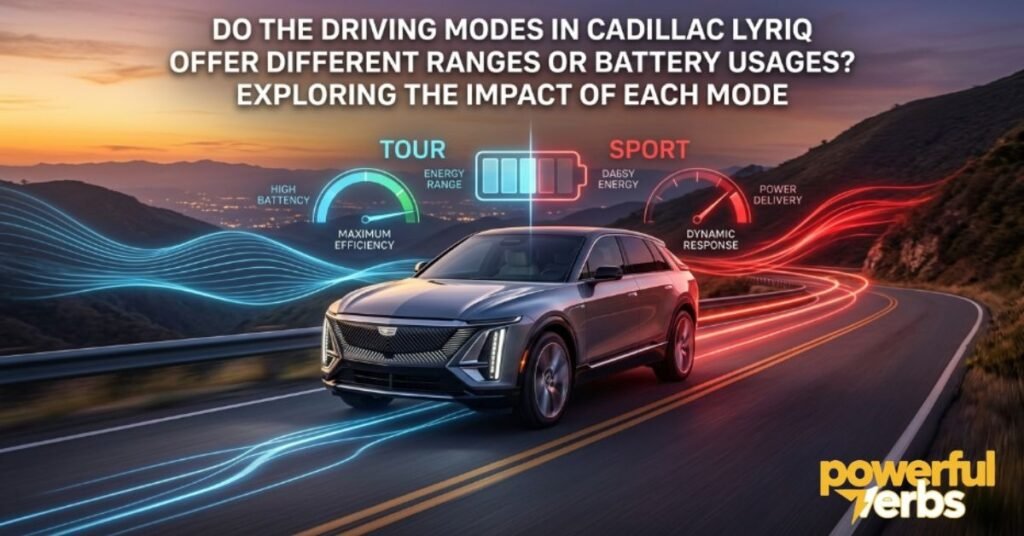
If you just got your hands on a Cadillac LYRIQ, you’ve probably noticed something interesting on the dashboard. There are different driving modes you can choose from. Each one changes how the car feels to drive. But here’s the real question a lot of owners ask: do these modes actually change your range or battery usage? The short answer is yes, but not always by a huge amount. Some modes change the way the motor responds, some change traction settings, and some barely touch efficiency at all.
In this guide, we’ll break down exactly how each driving mode affects your LYRIQ’s battery, what causes those changes, and how much range you can realistically expect to gain or lose. By the end, you’ll understand not just what each mode does, but why it does it, how the numbers compare, and how to use that knowledge to drive smarter every single day.
see also: What is Welcome Short Form? Meaning, Abbreviations & Uses
Understanding the Cadillac LYRIQ’s Driving Modes
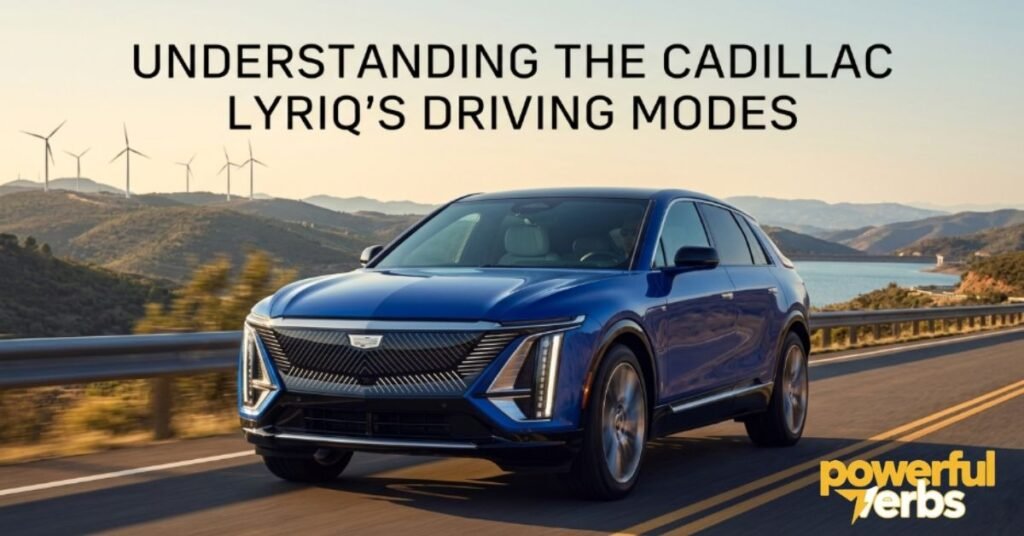
The Cadillac LYRIQ comes with several driving modes built right into the vehicle. Each mode is designed for a different kind of driving situation. Switching between them changes things like throttle response, steering feel, and sometimes traction settings.
These modes aren’t just cosmetic. They genuinely change how the car reacts to your inputs, and that in turn changes how hard the motor works. Since the motor pulls its energy from the battery, anything that changes motor effort can, in theory, change how quickly your battery drains.
It helps to think of these modes as different personalities for the same car. The hardware underneath- the battery pack, the motors, the wheels- stays the same. What changes is the software calibration that decides how eagerly the car responds to your foot on the pedal.
Let’s take a closer look at each one.
1. Tour Mode
Tour Mode is often the default setting for most drivers. It’s built for everyday, comfortable driving. The throttle response is smooth and gentle, which means the car doesn’t lunge forward when you press the pedal.
This mode is great for daily commutes, running errands, or long highway trips where comfort matters more than sporty performance. Many owners simply leave the car in Tour Mode permanently because it feels the most relaxed and predictable, especially when driving with passengers or in stop-and-go traffic.
Tour Mode also tends to make the ride feel calmer overall. Steering effort is lighter, and the car generally feels easier to manage in everyday situations like parking lots, school pickup lines, or busy city streets.
2. Sport Mode
Sport Mode is where the LYRIQ shows off its performance side. The throttle becomes more responsive, steering feels tighter, and the car reacts quicker to your inputs. It’s fun to drive, especially on open roads or when you want a little extra excitement.
Acceleration in Sport Mode feels noticeably sharper. Even light pressure on the pedal produces a stronger response than it would in Tour Mode. This makes merging onto highways or overtaking other vehicles feel much more immediate.
Some drivers also notice the steering wheel feels heavier in Sport Mode. This is intentional. It’s meant to give a more connected, engaging feel when you’re driving with a bit more enthusiasm.
However, this fun does come at a small cost, which we’ll explain later in this article.
3. Snow/Ice Mode
As the name suggests, this mode is built for slippery or low-traction conditions. It softens throttle response even further than Tour Mode and adjusts traction control to help the car stay stable on snow, ice, or wet roads.
Safety is the main goal here, not speed or efficiency. The system intentionally limits how much power reaches the wheels at once, which helps prevent wheel spin on slick surfaces. This makes the car feel calmer and more controlled, even if it feels a little less lively than Tour or Sport Mode.
Many owners switch to this mode automatically whenever winter weather rolls in, and some leave it on for the entire season rather than switching back and forth. It’s designed to keep you safe first, with efficiency being a secondary concern.
4. My Mode
My Mode is a customizable setting. It lets you mix and match different settings based on your personal preference. Some drivers use it to create a balance between Tour and Sport, while others fine-tune it purely for efficiency.
This flexibility makes My Mode popular among owners who want more control over their driving experience. If you like the steering feel of Sport Mode but want the smoother throttle response of Tour Mode, My Mode lets you combine both.
Owners who want maximum efficiency often build a version of My Mode that mimics Tour Mode’s gentle throttle but strengthens regenerative braking as much as possible, squeezing out a little extra range compared to the standard presets.
How Driving Modes Work in Electric Vehicles
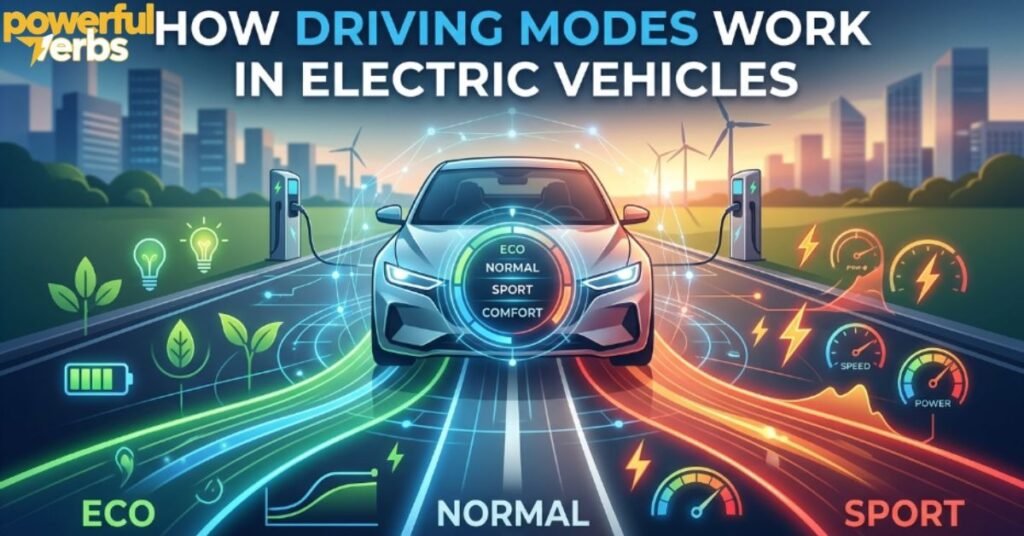
Before we dive deeper into battery impact, it helps to understand what these modes are actually doing behind the scenes.
What Changes When You Select a Different Mode
When you switch driving modes, the car’s computer adjusts several things at once. This can include throttle sensitivity, steering weight, suspension feel on some trims, and traction control settings.
Think of it like adjusting the personality of the car. The battery itself doesn’t change, and the total energy stored inside it stays the same. What changes is how eagerly the motor responds to your right foot. A more eager motor response usually means quicker bursts of energy draw, while a gentler response spreads that energy demand out more smoothly over time.
None of these modes physically alter the battery pack, its chemistry, or its total capacity. They simply change the software rules that decide how quickly stored energy gets released to the motors.
Driving Mode and Regenerative Braking Are Different Controls
This is a common point of confusion. Driving mode and regenerative braking are two separate systems in the LYRIQ. Regenerative braking is usually adjusted separately, often through paddle controls or a menu setting, and it controls how much energy is recaptured when you slow down.
So switching to Sport Mode doesn’t automatically turn off regen, and choosing Tour Mode doesn’t automatically maximize it either. You can actually run Sport Mode with strong regenerative braking, or Tour Mode with light regenerative braking, depending on how you’ve set things up. Understanding this separation helps clear up a lot of confusion owners have when comparing range between modes.
Because these two systems work independently, two drivers could both be in the same driving mode and still get very different range results, simply because one of them has regen set higher than the other.
How Driving Modes Impact Battery Usage and Range
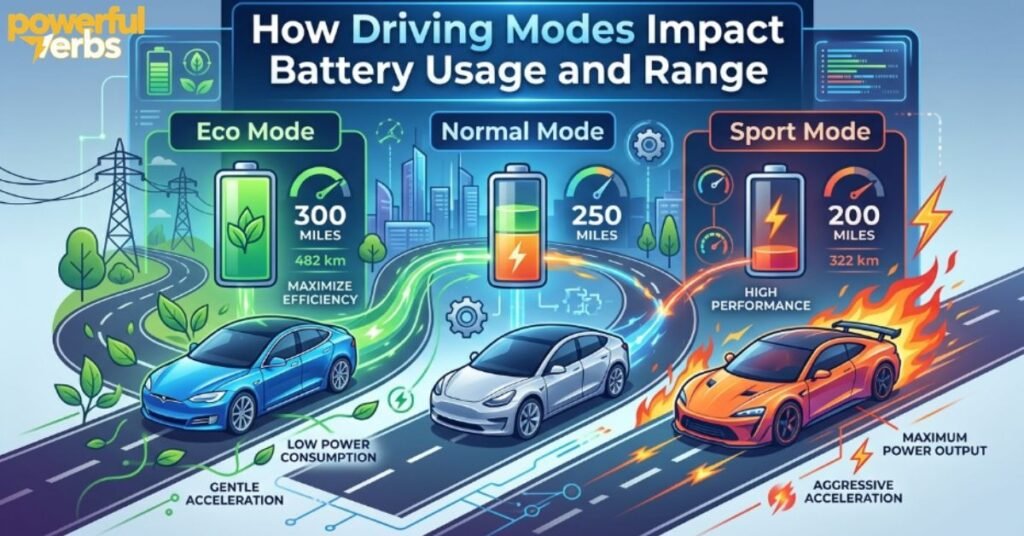
Let’s move on to what most LYRIQ owners really want to understand. How much does each mode actually affect your battery?
Tour Mode and Battery Efficiency
Tour Mode tends to be the most efficient option for daily driving. Because the throttle response is smoother, the motor isn’t asked to deliver sudden bursts of power. This gentle demand on the battery usually means better range compared to Sport Mode.
Since Tour Mode discourages sharp acceleration, it naturally encourages a driving style that happens to be efficient too. Many owners find that simply staying in Tour Mode, combined with a light foot, gives them the closest match between the estimated range on the dashboard and the actual miles they get in real life.
Tour Mode is also a good choice for longer road trips, since consistent, moderate power delivery over hours of driving tends to produce the most predictable energy consumption numbers.
Sport Mode and Battery Consumption
Sport Mode increases throttle responsiveness, which often leads to higher energy draw. Quick acceleration pulls more power from the battery in short bursts. If you use Sport Mode frequently, especially with aggressive acceleration, you may notice your range drop a bit faster than in Tour Mode.
It’s worth noting that Sport Mode itself doesn’t drain the battery just by being selected. If you drive gently while in Sport Mode, the difference in energy use compared to Tour Mode is usually small. The bigger factor is how the increased responsiveness tempts drivers into accelerating harder and more often.
In other words, Sport Mode changes the temptation more than it changes the math. A careful driver in Sport Mode can still get decent range, while a heavy-footed driver in Tour Mode can still burn through the battery quickly.
Snow/Ice Mode and Battery Usage
Snow/Ice Mode isn’t designed with efficiency in mind; it’s designed for safety. That said, because throttle response is toned down, energy use is generally moderate. The bigger factor in winter driving is actually cold temperature, which affects battery performance more than the mode itself.
Cold battery chemistry is simply less efficient at releasing energy, and the cabin heater draws a significant amount of power in freezing conditions. So while Snow/Ice Mode plays a small role, most of the range loss owners experience in winter comes from the weather itself rather than the mode selection.
It’s a common mistake to blame Snow/Ice Mode for reduced winter range. In reality, even if you stayed in Tour Mode during a cold snap, you would likely see a similar drop in range simply due to temperature.
My Mode and Battery Usage
Since My Mode is customizable, its impact on the battery depends entirely on how you’ve set it up. If you lean toward Sport-like settings, expect similar consumption to Sport Mode. If you lean toward Tour-like settings, expect similar efficiency to Tour Mode.
This is really the appeal of My Mode. It gives efficiency-focused drivers a way to dial in exactly the throttle feel they want, without being locked into either extreme.
Owners who commute long distances often find that a custom-tuned My Mode gives them the best of both worlds, comfortable enough for daily use, but efficient enough to stretch every charge as far as possible.
Does Changing Driving Mode Actually Change Range?
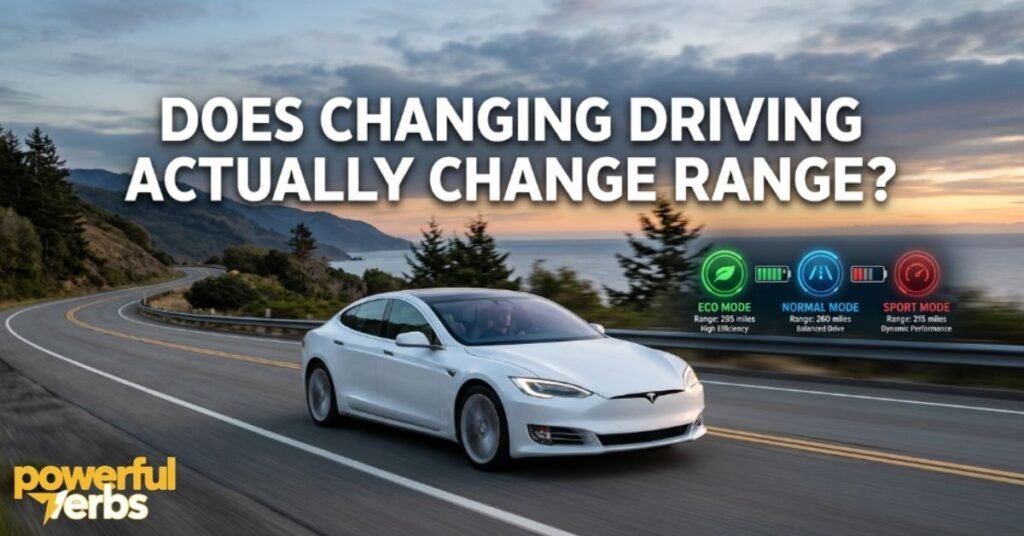
Yes, but the change is usually moderate rather than dramatic. Driving mode is just one factor among many that affect your total range.
Why Sport Mode May Reduce Efficiency
Sport Mode encourages quicker acceleration and a more spirited driving style. Electric motors consume more energy during rapid acceleration, so if you’re constantly flooring it, your range will take a hit compared to smoother driving.
This happens because motors are least efficient when demanding sudden, high bursts of power. A slow, steady increase in speed uses energy far more efficiently than a quick jump from a stop.
Think of it like sprinting versus jogging. Both get you to the same place, but sprinting burns far more energy per mile covered.
Why Snow/Ice Mode Prioritizes Traction
This mode isn’t trying to save your battery; it’s trying to keep your tires gripping the road. The trade-off for that added safety is sometimes slightly less efficient power delivery, though this is a small factor compared to cold weather’s overall impact on EV batteries.
In practice, most drivers won’t notice a big range difference from Snow/Ice Mode alone. The mode is there to keep you safe on slippery roads, and that safety benefit is worth far more than any small efficiency trade-off.
Why Tour Mode Provides a More Predictable Efficiency Baseline
Tour Mode keeps things smooth and steady, avoiding the power spikes that come with performance-oriented driving. Because of this, drivers often find it easier to predict their range accurately when sticking to Tour Mode.
Consistency is the key word here. When your driving style stays steady, the car’s range estimate becomes much more reliable, since it isn’t trying to account for sudden spikes and drops in energy demand.
Quantifying the Impact on Range

While exact numbers vary based on driving habits, weather, and terrain, here’s a general idea of how each mode tends to compare in terms of relative efficiency.
| Driving Mode | Typical Efficiency Level | Best Use Case |
| Tour Mode | High efficiency | Daily commuting, highway trips |
| Sport Mode | Lower efficiency | Spirited or performance driving |
| Snow/Ice Mode | Moderate efficiency | Slippery or winter conditions |
| My Mode | Varies by setup | Personalized daily use |
Tour Mode
Generally offers the best real-world range among the four modes due to its smooth power delivery. Most owners report their most accurate and consistent range figures while using this setting.
Sport Mode
Can reduce range noticeably if driven aggressively, though light use in Sport Mode won’t hurt much. It’s the difference between how you use the mode, not simply that you’re in it.
Snow/Ice Mode
Range impact is usually secondary to the effect of cold weather itself, which is a much bigger factor in winter. Don’t blame the mode for range loss that’s really coming from freezing temperatures.
My Mode
Impact depends completely on your custom settings; it can mirror Tour Mode or Sport Mode depending on what you choose. This makes it hard to give one single number, since every owner’s My Mode setup is a little different.
How to Compare Battery Usage Between Modes Accurately
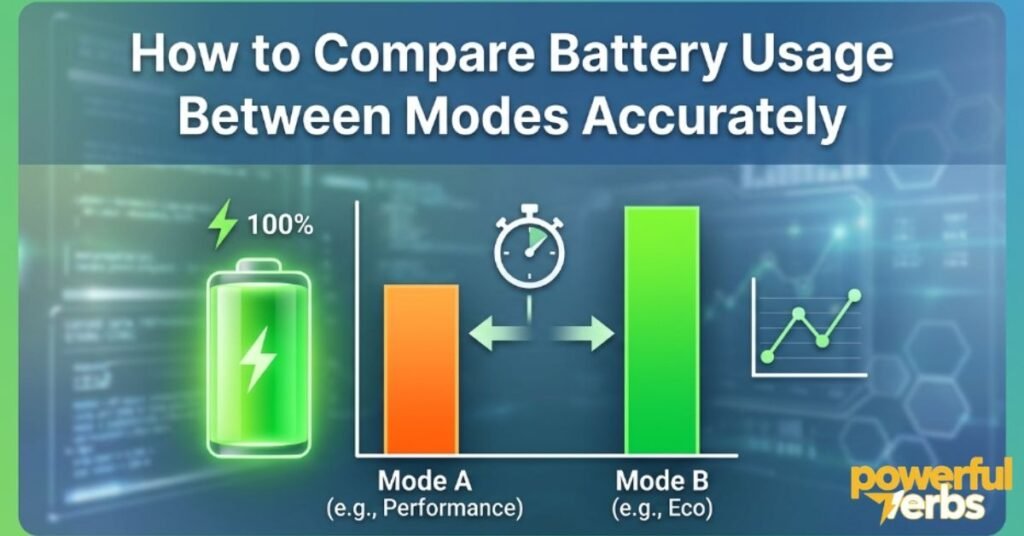
If you want to test how much each mode actually affects your LYRIQ, it helps to be consistent with your testing approach.
Keep Driving Conditions Consistent
Try to test different modes on the same route, at similar times of day, and in similar weather. This way, you’re comparing apples to apples instead of letting outside factors skew your results.
Even small differences like extra traffic or a stronger headwind can throw off your comparison, so try to pick a route and time that stays as consistent as possible across your tests.
A few things worth matching between test drives include:
Similar outdoor temperature, similar traffic conditions, the same starting battery percentage, and roughly the same driving distance.
Compare Energy Consumption Over Similar Distances
Use the car’s energy consumption display to track how many kWh you use over a set distance, like 20 or 30 miles. This gives you a much clearer picture than just watching the range estimate, since the estimate itself can shift based on recent driving behavior.
Tracking kWh per mile over several trips, rather than just one, will also give you a more reliable average instead of a single number that might be skewed by unusual conditions.
Account for Regenerative Braking and Driving Style
Remember, regen settings and how heavy your foot is on the pedal will affect your results just as much as the driving mode itself. Try to keep these factors steady during your comparison, or your results won’t truly reflect the mode’s impact.
Why Driving Mode Selection Is Important in the LYRIQ

Choosing the right mode isn’t just about performance; it’s about matching the car’s behavior to your actual needs.
Choosing Efficiency for Everyday Driving
If maximizing range is your top priority, Tour Mode is usually your best bet for daily use. It keeps things smooth, predictable, and easy on the battery.
Choosing Performance When Needed
Sport Mode is great when you want a livelier driving experience; just be aware it may cost you a bit of range. Saving it for specific moments rather than daily use is a smart way to enjoy it without sacrificing too much efficiency.
Prioritizing Traction in Difficult Conditions
In snow, ice, or heavy rain, Snow/Ice Mode gives you peace of mind that matters more than squeezing out extra miles. Safety should always come first in poor weather conditions.
Practical Considerations
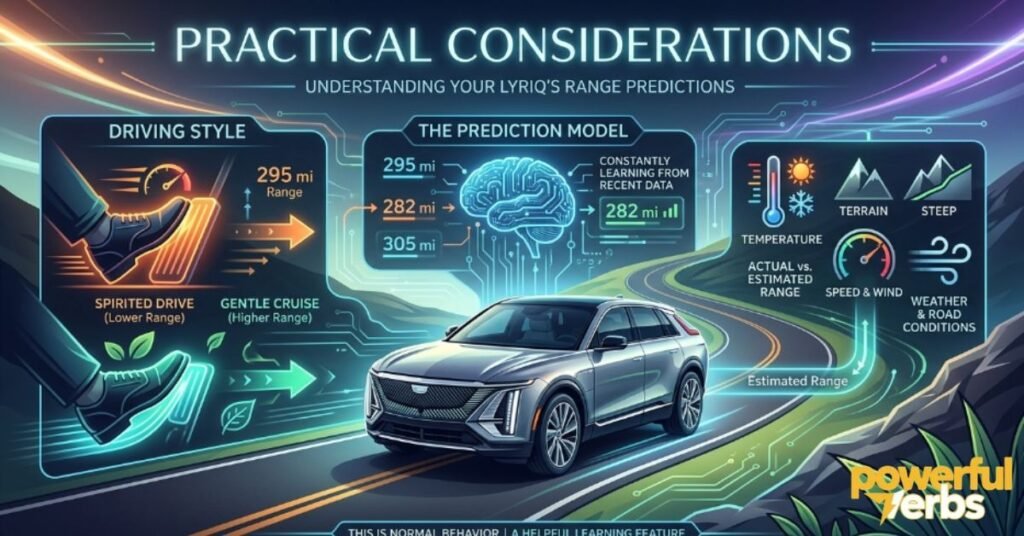
Range numbers aren’t fixed, and that’s completely normal for any electric vehicle.
Why the Estimated Range May Change After Driving
Your LYRIQ’s range estimate is a prediction based on recent driving data. If you drive differently than usual, even briefly, that number can shift up or down. A single spirited drive can temporarily lower your estimated range, while a gentle drive can raise it back up.
This is normal behavior, and it’s actually a helpful feature. The car is constantly learning from your recent habits to give you a more accurate prediction going forward.
The Difference Between Estimated and Actual Range
The number on your dashboard is an estimate, not a guarantee. Actual range depends on real-time conditions like speed, temperature, terrain, and driving style. Treat the estimate as a helpful guide rather than an exact promise.
When a Small Range Change Is Completely Normal
Seeing your range shift by a few miles after switching modes or driving styles isn’t a malfunction; it’s simply how EVs calculate and adjust their predictions. This is standard behavior across nearly every electric vehicle on the market, not something unique to the LYRIQ.
see also: What to Reply for Take Care: Cute Replies to Make Them Smile
Other Elements That Influence Range and Battery Performance in the LYRIQ
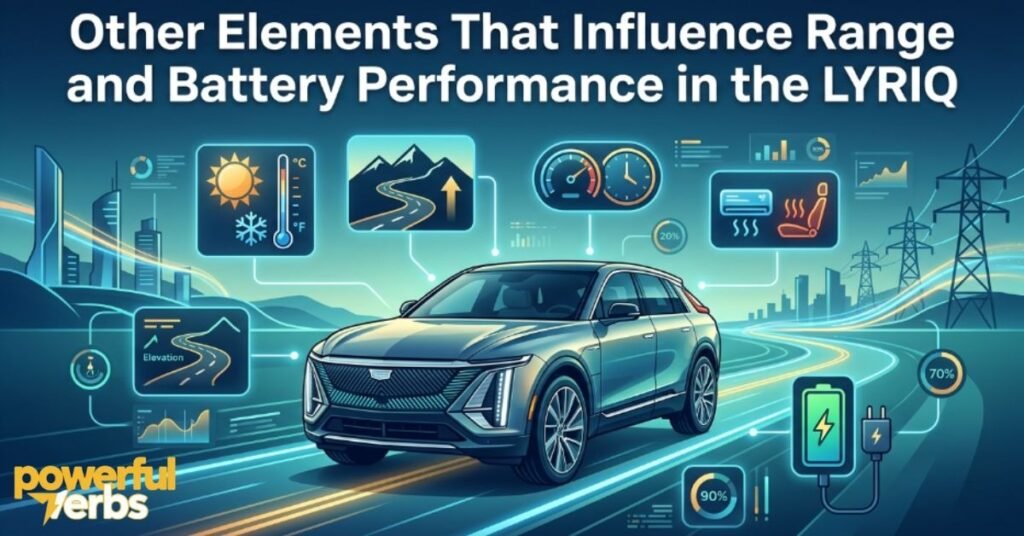
Driving mode is only one part of the overall picture. Several other factors play an even bigger role in your overall range.
1. Driving Style: A Major but Overlooked Factor
How you accelerate and brake matters more than which mode you’re in. Smooth, gradual inputs almost always save more energy than quick, aggressive ones, regardless of the mode selected.
Drivers who anticipate stops early and coast gently instead of braking hard tend to see noticeably better range, no matter which driving mode they’re using.
2. Speed and Highway Driving
Higher speeds increase aerodynamic drag, which pulls more energy from the battery. Driving at 75 mph will use noticeably more energy than driving at 60 mph, since drag increases sharply as speed goes up.
This is why highway range often feels lower than city range, even though highway driving might seem easier on the car.
3. Environmental Conditions and Temperature
Cold weather is one of the biggest range killers for any EV, including the LYRIQ. Battery chemistry simply works less efficiently in low temperatures, and cabin heating adds extra draw too. Hot weather can also reduce range slightly due to air conditioning use.
Extreme temperatures on either end of the spectrum tend to hurt range more than mild, moderate weather.
4. Terrain and Elevation Changes
Climbing hills requires more energy, while descending can actually help recover some through regenerative braking. Hilly routes will generally use more battery than flat ones, especially on long, sustained climbs.
5. Wheels, Tires, and Tire Pressure
Larger wheels and wider tires can slightly reduce efficiency due to increased rolling resistance. Underinflated tires make this worse, so keeping proper tire pressure helps preserve range and keeps handling safer too.
6. Weather and Road Surface
Wet or snowy roads increase resistance and may require more energy to maintain traction and stability. Standing water and heavy rain can also add drag that slightly lowers efficiency.
7. Cargo and Accessories
Extra weight from cargo, roof racks, or towing accessories can reduce your range since the motor has to work harder to move the added mass. Roof racks in particular can hurt aerodynamics even when empty.
Things that commonly add unnecessary weight or drag include:
Roof boxes left on after a trip, heavy tools or equipment stored in the trunk, and unused child seats or gear that rarely gets removed.
The Role of One-Pedal Driving in Efficiency
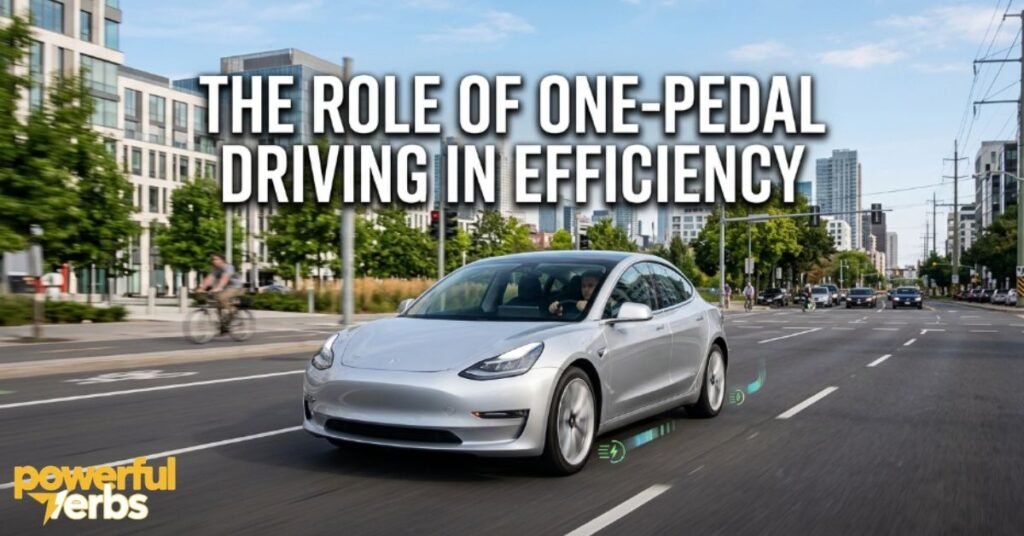
One-pedal driving is a popular feature among EV owners, and it plays a real role in efficiency.
How Regenerative Braking Can Recover Energy
When you lift off the accelerator, the LYRIQ can capture some of that kinetic energy and send it back to the battery instead of losing it as heat through traditional braking. Over time, this recovered energy can add up to a meaningful difference in your overall range.
When One-Pedal Driving May Be Helpful
City driving with lots of stop-and-go traffic is where one-pedal driving really shines, since there are more opportunities to recapture energy during frequent slowdowns. On the highway, where speeds stay more constant, the benefit is smaller but still present.
Optimizing Battery Usage for Long-Term Health
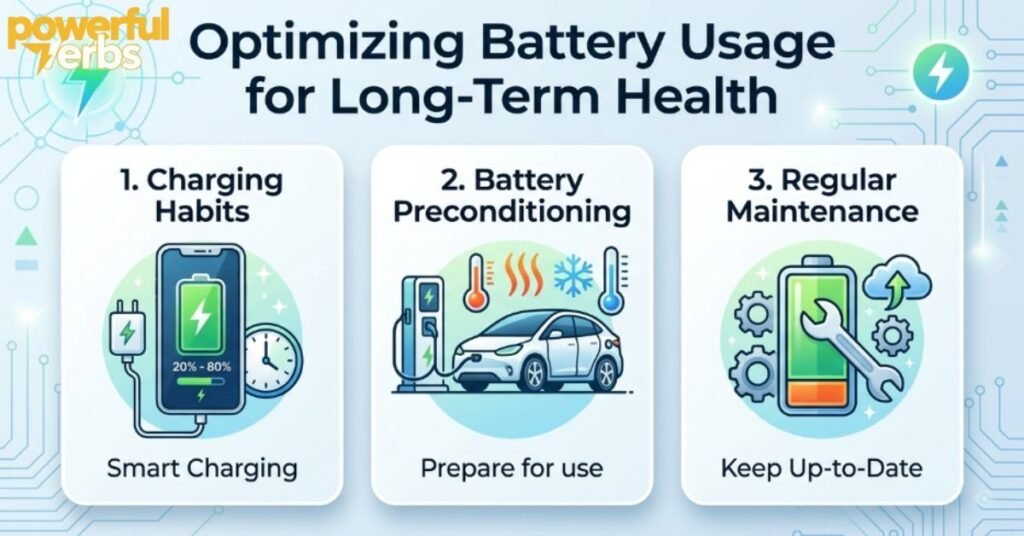
Getting good range today is one thing, but keeping your battery healthy for years to come is just as important.
1. Charging Habits
Avoid charging to 100% every single day unless you’re preparing for a long trip. Keeping your daily charge between 20% and 80% is generally better for long-term battery health, since it reduces stress on the battery cells.
2. Battery Preconditioning
Using preconditioning before fast charging or before driving in cold weather helps the battery perform more efficiently and charge faster. This feature warms the battery to an ideal temperature range ahead of time.
3. Regular Maintenance
Keeping up with software updates and recommended service checks ensures your LYRIQ’s battery management system continues working at its best. Manufacturers often improve efficiency and battery management through software updates over time.
How to Optimize Your LYRIQ Experience
Getting the most out of your LYRIQ means finding the right balance for your lifestyle.
Choosing the Right Mode for Daily Driving
For most people, sticking with Tour Mode for everyday errands and commuting offers the best mix of comfort and efficiency, without sacrificing the smooth ride most drivers want.
Balancing Performance, Comfort, and Efficiency
Save Sport Mode for the moments when you actually want that extra responsiveness, rather than using it as your default setting. This way, you get the fun without giving up too much range.
Adjusting Your Driving Habits for Better Range
Smooth acceleration, moderate speeds, and taking advantage of regenerative braking will do more for your range than mode selection alone. Small habit changes often add up to bigger range improvements than switching modes ever could.
Conclusion
So, do driving modes really affect range and battery usage in the Cadillac LYRIQ? Yes, they do, but the difference is usually moderate rather than extreme. Tour Mode tends to offer the best efficiency, Sport Mode trades some range for a livelier feel, and Snow/Ice Mode prioritizes safety over savings.
At the end of the day, your driving habits, speed, weather, and terrain often have a bigger impact on range than the mode itself. Understanding how each mode works gives you the power to choose the right setting for whatever situation you’re in, whether that’s a relaxed daily commute or a fun weekend drive.
see also: SnapJotz Com Explained: Note App or Content Site? (2026 Answer)
Frequently Asked Questions
Does Sport Mode drain the battery faster in the Cadillac LYRIQ?
Yes, Sport Mode can drain the battery a bit faster because it encourages quicker acceleration, which uses more energy.
Which driving mode gives the best range in the Cadillac LYRIQ?
Tour Mode usually gives the best range because it offers smooth, steady power delivery.
Does Snow Mode reduce range in the LYRIQ?
Snow/Ice Mode has a small effect on range, but cold weather itself is usually the bigger factor in reduced range.
Can I customize a driving mode for better efficiency in the LYRIQ?
Yes, My Mode lets you personalize settings, and you can tune it toward efficiency if that’s your priority.
Does changing driving mode affect regenerative braking in the LYRIQ?
No, driving mode and regenerative braking are controlled separately in the LYRIQ.
How much range does the Cadillac LYRIQ lose in cold weather?
Cold weather can reduce range noticeably in any EV, including the LYRIQ, mainly due to battery chemistry and cabin heating demands.
Is it better to use Tour Mode or My Mode for daily commuting?
Tour Mode is a safe default for daily commuting, but My Mode can match or beat it if customized for efficiency.
Does driving style matter more than driving mode for range?
Yes, smooth and gradual driving habits often have a bigger impact on range than the driving mode you select.
Why does my LYRIQ’s range estimate change after switching modes?
The range estimate updates based on recent driving data, so switching modes or driving styles can shift the prediction up or down.
Does tire pressure affect the Cadillac LYRIQ’s range?
Yes, underinflated tires increase rolling resistance, which can slightly reduce your overall range.

Liam Johnson is a dedicated language expert with 4 years of professional experience. He specializes in Grammar, Vocabulary, and Sentence structure.
