

The short form of “welcome” is commonly used in texting, chatting, and social media to save time and effort. People write “WC,” “Welc,” or “Wlcm” instead of typing the full word, making conversations quicker and more casual. Understanding these abbreviations helps you communicate better in the digital world.
In this guide, you’ll learn all the popular short forms of welcome, where to use them, and why they’re so common. Whether you’re texting friends or posting on social media, knowing these abbreviations will make your online communication smoother and more natural.
What is the Short Form of Welcome?
The most common short forms of welcome are “WC,” “Welc,” and “Wlcm.” These abbreviations are used in informal communication to save typing time and keep messages brief.
“WC” is the shortest version, using just the first and last letters of welcome. “Welc” and “Wlcm” are slightly longer but still much faster to type than the full word.
Most Popular Welcome Abbreviations — WLCM, WLC, WC, WELC
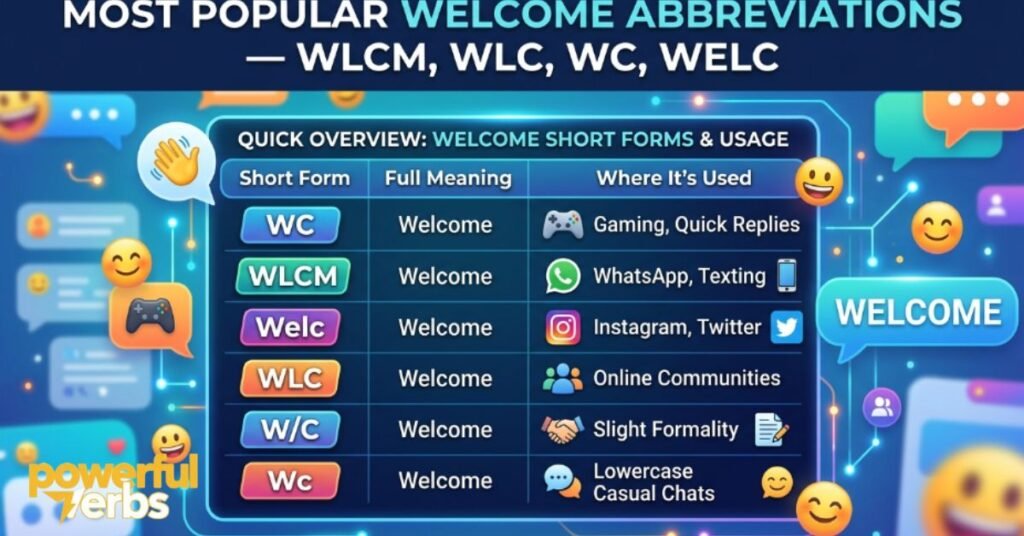
Before diving deeper, here is a quick overview of all the welcome short forms you will commonly see online:
| Short Form | Full Meaning | Where It’s Used |
|---|---|---|
| WC | Welcome | Gaming, quick replies |
| Wlcm | Welcome | WhatsApp, texting |
| Welc | Welcome | Instagram, Twitter |
| WLC | Welcome | Online communities |
| W/C | Welcome | Slight formality |
| Wc | Welcome | Lowercase casual chats |
WLCM meaning: Vowels remove kar ke bana shortcut hai — internet slang mein yeh style bahut common hai.
WLC meaning in text: Gaming groups aur Discord servers mein popular hai. WLC aur WLCM dono same casual friendly tone carry karte hain.
Welc meaning in chat: Welcome ke pehle char letters rakhta hai aur Twitter/Instagram par common hai jahan brevity zaroori hoti hai.
Short Form of Welcome in Chat & WhatsApp
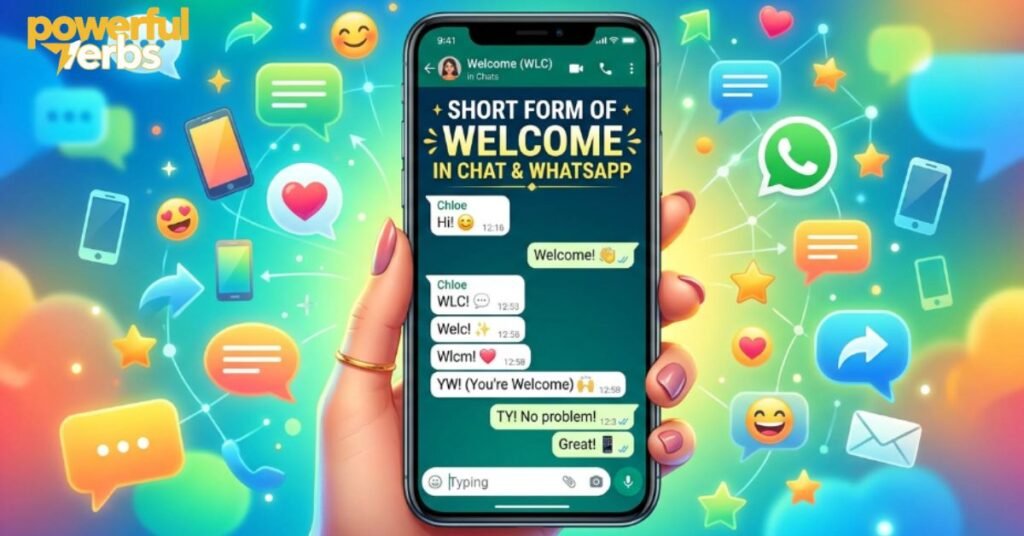
In chat apps and WhatsApp, people frequently use “wlcm,” “welc,” or “wc” to acknowledge someone’s thanks. These short forms make conversations feel casual and friendly while keeping messages quick.
Young people especially prefer these abbreviations because they match the fast-paced nature of texting. Using welcome short forms shows you’re comfortable with modern digital communication.
Example in chat:
Person A: Thanks for helping me with the homework!
Person B: Wlcm! Anytime you need help.
Person A: I appreciate you picking me up today.
Person B: WC! No problem at all.
Person A: Thank you so much for the birthday gift!
Person B: Welc! Hope you loved it.
Just like knowing the right reply for “take care” matters in conversation, yeh short forms jaanna aapki texting ko aur natural banata hai.
The article itself already gestures at this connection — completing it: knowing the right reply for “take care” keeps your conversations flowing just as naturally as a quick “wlcm.”
Welcome Ka Short Form in Everyday Life
In everyday texting and informal conversations, “wlcm” is the most popular welcome short form. People use it when replying to thank you messages from friends, family, or colleagues in casual settings.
This abbreviation works best in personal chats, not in formal emails or professional messages. It helps maintain a relaxed, friendly tone while saving time.
Welcome Ka Short Form — Hindi and Urdu Speakers Guide

For Hindi and Urdu speakers, welcome ka short form is simply the same English abbreviations used globally: wlcm, WC, welc, or WLC. These have been widely adopted into informal Hinglish and Urdu texting culture.
You will frequently see these used in Pakistani and Indian WhatsApp groups, Instagram comments, and YouTube sections. Since English internet slang is globally shared, welcome ka short form kya hota hai — the answer is: wlcm, WC, or welc, depending on how short you want to go.
Welcome Short Word in Social Media
On social media platforms like Instagram, Twitter, and Facebook, people use “WC,” “welc,” or “wlcm” in comments and replies. These short forms fit perfectly with the character limits and fast-paced nature of social platforms.
Users also combine welcome abbreviations with emojis to make responses more expressive. For example, “Wlcm! 😊” or “WC 👍” add personality to brief replies.
Welcome Abbreviation and Acronym
“WC” is technically an abbreviation, not an acronym, because it uses selected letters from the word welcome. An abbreviation shortens a word, while an acronym creates a new word from initial letters.
Other variations like “Welc” and “Wlcm” are also abbreviations that remove vowels for quicker typing. All these forms serve the same purpose of making “welcome” shorter and easier to write.
Examples:
- WC – Welcome (shortest form)
- Welc – Welcome (medium length)
- Wlcm – Welcome (removes vowels)
- W/C – Welcome (with slash)
- Wc – Welcome (lowercase casual)
Understanding the difference between abbreviations and full forms — just like knowing whether “good morning” is one word or two — sharpens your everyday communication skills.
What Does WC Mean in Chat? — WC Meaning Welcome Explained
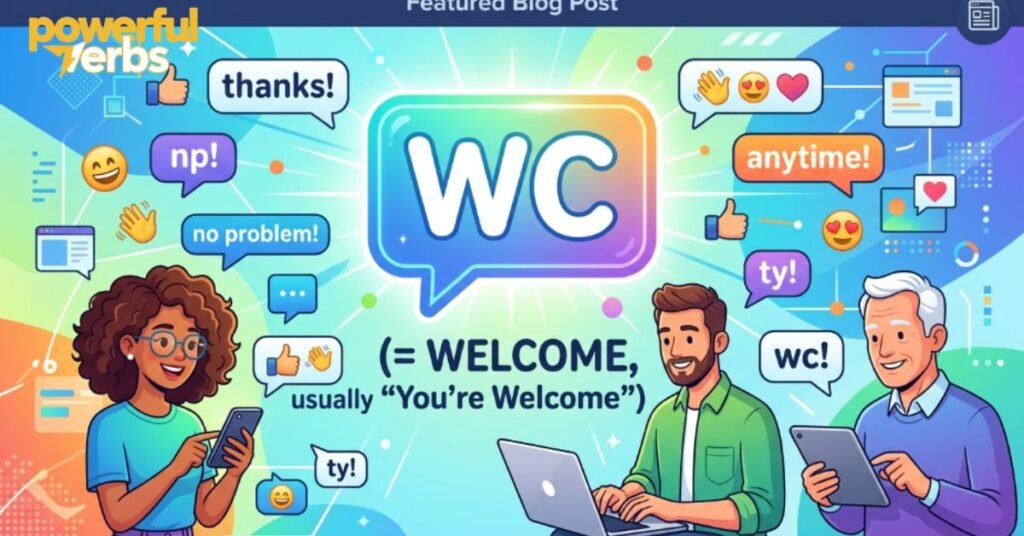
A question many people ask is: what does WC mean when someone replies to a thank you?
When used in response to “thank you,” WC means “welcome” — it is simply a two-letter shortcut for saying “you’re welcome.” It is one of the most compact texting abbreviations in English and is especially popular among gamers and people who prefer ultra-short replies.
Do not confuse this with other meanings of “WC” (such as water closet) — context always makes the intended meaning clear. In a chat after someone says “thanks,” WC will always mean welcome.
You’re Welcome Short Form — YW, URW, NP Explained
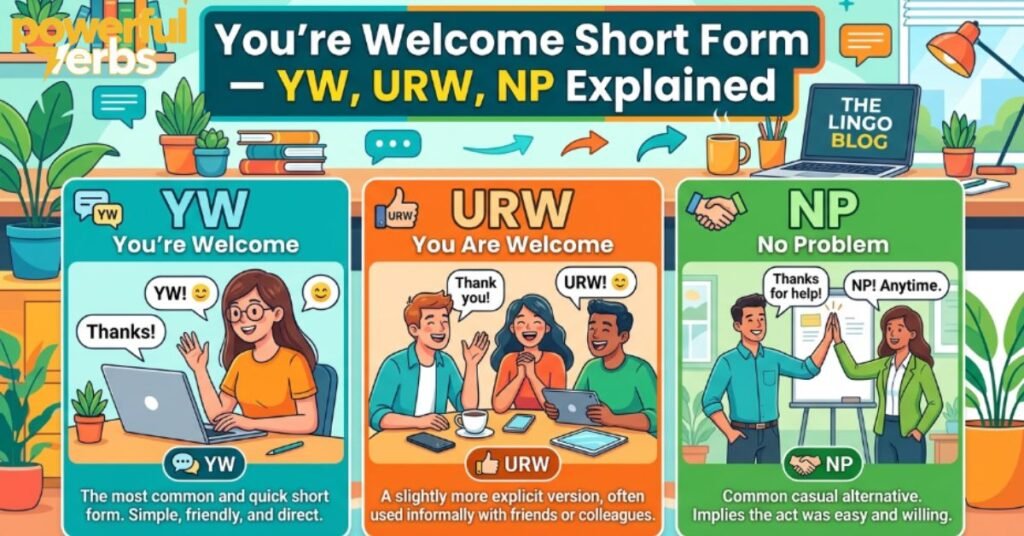
Beyond just “welcome,” there are also several popular short forms of “you’re welcome” that are widely used in texting and social media:
- YW — The most common abbreviation for “you’re welcome.” Clean, fast, and universally understood.
- URW — Stands for “you are welcome,” a slightly more spelled-out version.
- NP — Means “no problem,” often used as a casual alternative to “you’re welcome.”
- NP meaning in chat: It signals that helping was not an issue, making it feel warm and low-key.
Just like “welcome,” the word “sorry” has its own set of texting abbreviations — see this complete guide to sorry short forms for the full breakdown.
Other Rare Welcome Variants — WEL and UWC
A few less common variants also show up occasionally in casual chats:
WEL — A minimal three-letter version of welcome, sometimes seen in older forum posts and organizational shorthand.
UWC — Short for “u welcome,” a texting-style blend that combines “you’re” and “welcome” into one quick reply, popular in fast, informal group chats.
These are far less common than WC, wlcm, or YW, but worth recognizing if you come across them.
Difference Between Welcome Short Form and Full Form
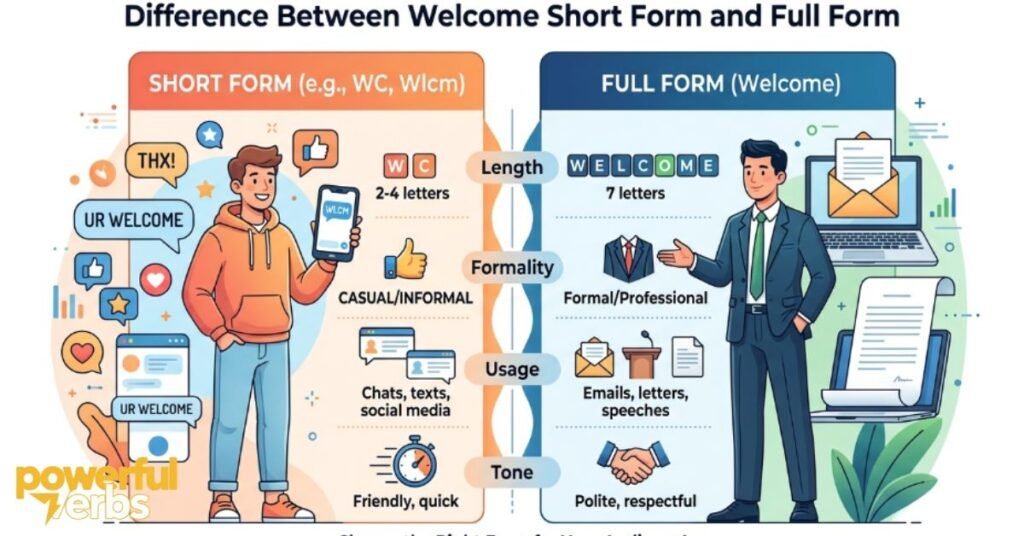
The main difference is length and formality—short forms are casual and quick, while the full word is professional and complete. Use “welcome” in formal emails, letters, or professional conversations to show respect.
Short forms like “wlcm” or “WC” should only be used with friends, family, or in casual digital conversations. Choosing the right form depends on who you’re talking to and the situation.
| Aspect | Short Form (WC/Wlcm) | Full Form (Welcome) |
| Length | 2-4 letters | 7 letters |
| Formality | Casual/Informal | Formal/Professional |
| Usage | Chats, texts, social media | Emails, letters, speeches |
| Tone | Friendly, quick | Polite, respectful |
Welcome Short Form V1 V2 V3 — Grammar Context Explained

In grammar and language learning content, you may sometimes see the terms V1, V2, V3 used alongside word forms. In that context:
- V1 (base form): welcome — “You are welcome here.”
- V2 (past simple): welcomed — “They welcomed the new student.”
- V3 (past participle): welcomed — “She was welcomed by the team.”
When people search for welcome short form V1 V2 V3, they are usually looking for how “welcome” changes as a verb across tenses, alongside its abbreviated forms in texting. The short form (wlcm, WC, welc) belongs to informal digital language, while V1/V2/V3 forms belong to formal grammar usage. This is also connected to how other words behave grammatically, like the subtle difference explored in puting vs putting.
Usage of Welcome Short Form in Sentences
Welcome short forms replace the full word in casual replies and acknowledgments. They work best at the beginning or end of messages in informal contexts.
Here are practical examples showing how to use these abbreviations naturally. Remember to match your tone to the conversation and relationship with the person.
Examples:
- “Wlcm! I’m glad I could help you.”
- “WC, anytime you need assistance just ask.”
- “Welc! That’s what friends are for.”
- “Thanks for inviting me! — WC, happy you could come!”
- “Wlcm to our group! We’re excited to have you here.”
The casual, upbeat energy these short forms carry fits perfectly into everyday English — just like having a wide daily routine vocabulary helps you express yourself more naturally in any situation.
Why Do People Use Welcome Short Forms?
People use welcome short forms to save time when typing on phones or computers. In fast-paced digital conversations, abbreviations make communication quicker and easier.
Short forms also create a casual, friendly atmosphere that matches informal chatting styles. They’re especially popular among younger generations who value speed and efficiency in texting.
Main Reasons:
- Saves typing time and effort
- Fits character limits on social media
- Makes conversations feel casual and relaxed
- Popular in modern digital culture
- Easier to type on mobile keyboards
Welcome Short Form in Formal vs Informal Communication

Understanding the line between formal and informal is the most important skill for using welcome short forms correctly.
In informal communication — texting, social media, gaming, casual group chats — welcome abbreviations like wlcm, WC, and welc fit naturally. They signal that you are relaxed, approachable, and in tune with modern digital communication.
In formal communication — professional emails, client messages, academic writing, official announcements — always use the full word “welcome.” Writing “WC” in a business reply or “wlcm” in a welcome letter would come across as careless or disrespectful.
Knowing which form suits the situation is what separates a confident communicator from an unsure one — just like choosing the right adjectives to describe a person depending on your audience. This is also why understanding your action words matters — exploring cooking verbs with meanings is a good example of how context shapes word choice in any domain.
Variations of Welcome in Different Contexts

Different platforms and communities use various welcome abbreviations based on their preferences. Gaming communities might use “WC,” while WhatsApp users often prefer “wlcm.”
Regional and age differences also affect which short form people choose. Some prefer keeping one vowel for clarity, while others drop all vowels for maximum brevity.
Common Variations:
- WC – Used in gaming and quick replies
- Wlcm – Popular on WhatsApp and texting
- Welc – Common on Instagram and Twitter
- Wc – Lowercase casual version
- W.C. – With periods for slight formality
Building a broad vocabulary across different contexts strengthens your English significantly — you might also find it useful to explore nouns that start with E to expand your general word bank.
Short Essay on Welcome Short Form
Welcome short forms like “WC,” “welc,” and “wlcm” have become essential parts of modern digital communication. These abbreviations emerged from the need for faster typing on mobile devices and limited character counts on social media platforms. Young people especially embrace these shortcuts because they match the quick, casual nature of online conversations.
Understanding when to use welcome short forms is important for effective communication in different settings. While “wlcm” works perfectly for chatting with friends, using it in a job application email would seem unprofessional and disrespectful. The key is recognizing your audience and choosing between casual abbreviations and formal language appropriately.
Conclusion
Welcome short forms like “WC,” “welc,” and “wlcm” are quick, casual ways to acknowledge thanks in digital conversations. They save time, fit modern texting culture, and make online communication feel friendly and relaxed when used in the right contexts.
Remember to use these abbreviations only in informal chats with friends and family, not in professional or formal situations. Knowing when to use short forms versus the full word “welcome” shows good communication skills and respect for different social contexts.
Frequently Asked Questions
What is the short form of welcome in texting and chat?
The most common short forms of welcome in texting are “WC,” “Wlcm,” and “Welc.” These abbreviations are used in casual conversations on WhatsApp, social media, and text messages to save time and keep replies brief.
How do you write welcome in short form on WhatsApp?
On WhatsApp, people commonly write “wlcm” or “welc” as the short form of welcome. These abbreviations are casual, friendly, and perfect for quick responses when someone thanks you in a chat.
Is it okay to use WC instead of welcome in professional emails?
No, you should never use “WC” or other welcome short forms in professional emails or formal communication. Always write the full word “welcome” in business settings, job applications, and official correspondence to maintain professionalism.
What does WC mean when someone replies to thank you?
When someone replies “WC” to thank you, it means “welcome” and is a casual way of saying “you’re welcome.” This abbreviation is commonly used in informal chats, texting, and social media to acknowledge someone’s gratitude quickly.
What’s the difference between using welcome and wlcm in messages?
“Welcome” is the complete, formal word used in professional or respectful communication, while “wlcm” is a casual abbreviation for informal chats. Use the full word for formal situations and the short form only with friends and family in casual texting.
Can I use welcome short forms on Instagram and Twitter?
Yes, welcome short forms like “WC,” “welc,” or “wlcm” are perfectly acceptable on Instagram, Twitter, and other social media platforms. These abbreviations fit the casual, fast-paced nature of social media comments and replies.
Why do people shorten the word welcome in text messages?
People shorten welcome to save typing time, fit character limits, and match the casual tone of digital conversations. Short forms like “wlcm” and “WC” are faster to type on mobile keyboards and popular among younger generations.
What are all the different ways to abbreviate welcome?
Common welcome abbreviations include “WC” (shortest), “Wlcm” (removes vowels), “Welc” (medium length), “W/C” (with slash), and “Wc” (lowercase casual). Each variation serves the same purpose of making the word quicker to type.
When should I use the full word welcome instead of abbreviations?
Use the full word “welcome” in formal emails, business letters, professional conversations, academic writing, and when addressing elders or superiors. Abbreviations should only be used in casual chats with friends, family, or peers.
Is wlcm or WC more popular in text messaging?
“Wlcm” is generally more popular in text messaging and WhatsApp because it’s clearer and easier to understand than “WC.” However, “WC” is shorter and often used in gaming, quick replies, and when extreme brevity is needed.
What does YW mean in texting?
YW stands for “you’re welcome” and is one of the most popular short forms used after someone says thank you in a text or chat. It is clean, universally understood, and works on all platforms.
What is URW in chat?
URW means “you are welcome” — a slightly longer alternative to YW that feels a bit warmer because it spells out “you are” rather than using a contraction.

Liam Johnson is a dedicated language expert with 4 years of professional experience. He specializes in Grammar, Vocabulary, and Sentence structure.
