

Guava fruit belongs to the Myrtaceae family and thrives in tropical and subtropical climates across six continents. With over 100 known cultivars worldwide, guava remains one of the most nutritionally dense, commercially valuable, and flavor-diverse fruits on earth. Yet most people recognize only one or two varieties at the grocery store or local market.
This complete guide covers 30 types of guava fruit with detailed descriptions, physical characteristics, flavor profiles, nutritional data, and growing regions. Whether you are a home gardener, nutritionist, chef, or simply a curious fruit lover, this resource gives you everything needed to identify, compare, and appreciate every major guava variety available today.
What Makes Each Guava Variety Unique?
Before exploring the full list, understanding the key factors that differentiate guava cultivars helps readers make smarter choices:
- Flesh color — white, cream, pink, red, or yellow
- Skin texture — smooth, rough, waxy, or bumpy
- Seed density — seedless, low-seed, or seed-heavy
- Flavor intensity — mild, sweet, tangy, aromatic, or floral
- Size and weight — small (40g) to extra-large (500g+)
- Shelf life — important for commercial growers and exporters
- Primary use — fresh eating, juicing, jam, paste, or drying
Each variety below is categorized clearly so readers can compare cultivars across flesh color, origin, and flavor type.
How to Eat Guava: Seeds, Skin, and Preparation Tips
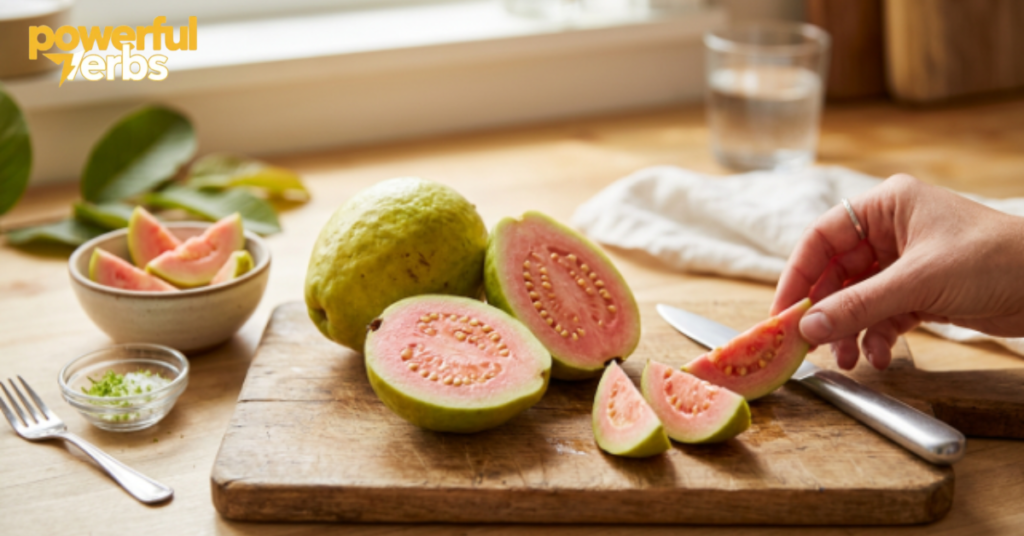
Guava is one of the most versatile tropical fruits. The entire fruit — skin, flesh, and seeds — is edible in most varieties. Here is a quick guide:
Seeded varieties: Slice in half, scoop out seeds if preferred, or eat whole. The seeds of soft-seed cultivars are perfectly digestible. Hard seeds in wild-type guavas should be strained out when making juice.
Seedless and low-seed varieties: Eat raw like an apple, dice into fruit salads, blend into smoothies, or freeze for later use.
Skin: The outer skin contains high concentrations of vitamin C and antioxidants. Most cultivated varieties have thin, edible skin. Thick-skinned types benefit from light peeling before eating fresh.
Pro tip: Slightly underripe guava has a crunchier texture and more tangy flavor — ideal for Thai-style salads and chutneys. Fully ripe guava is softer, sweeter, and better suited for fresh eating and blending.
30 Types of Guava Fruit with Pictures and Full Details
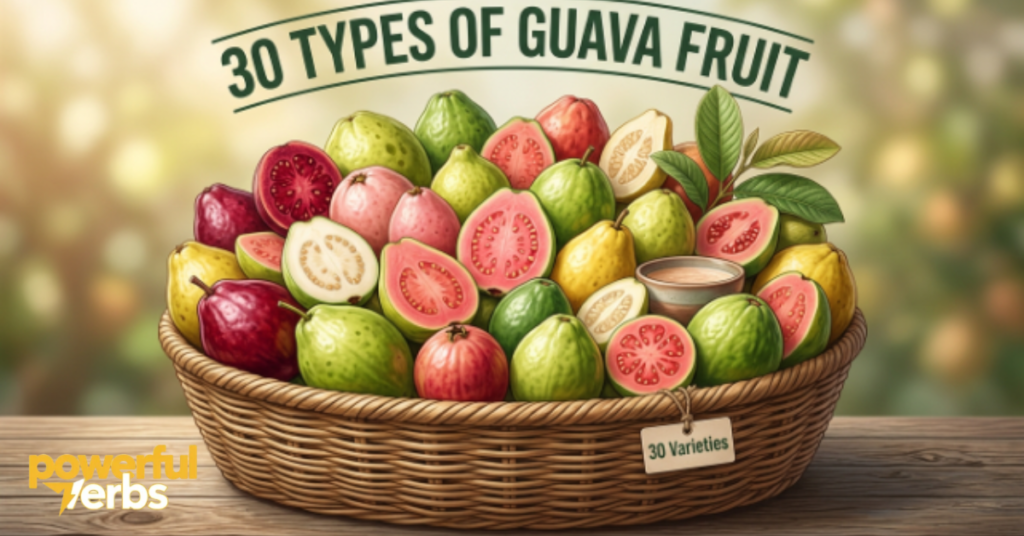
1. Apple Guava (Psidium guajava)
Apple guava is the world’s most widely grown guava cultivar, cultivated across tropical America, Asia, Africa, and the Pacific Islands. Its name comes from its round, apple-like shape. Farmers and exporters favor it for uniform ripening, excellent shelf life, and broad consumer appeal.
| Attribute | Detail |
| Shape | Round |
| Average Weight | 180–250 g |
| Skin Color | Light green turning yellow at full ripeness |
| Flesh Color | White to pale pink |
| Seeds | Many small hard seeds |
| Flavor | Mildly sweet with faint citrus acidity |
| Texture | Firm when unripe, softens progressively at maturity |
| Calories | ~68 per 100 g |
| Best Use | Fresh eating, juice, guava paste |
Growing Regions: Mexico, India, Brazil, Thailand, Egypt, Florida (USA)
Nutritional Highlight: One medium apple guava provides nearly 4x the daily recommended intake of Vitamin C.
2. Strawberry Guava (Psidium cattleianum)
Strawberry guava originated along the coastal forests of eastern Brazil and was later introduced to Hawaii, where it became both a prized garden fruit and, in some areas, an aggressive invasive species. It is significantly smaller than common guava, with deep red-purple skin and an intensely aromatic, berry-like flavor that distinguishes it from all other varieties.
| Attribute | Detail |
| Shape | Round |
| Average Weight | 40–60 g |
| Skin Color | Deep red to burgundy-purple |
| Flesh Color | White to cream |
| Seeds | Many small seeds |
| Flavor | Sweet with distinct strawberry and rose notes |
| Texture | Juicy and very soft at ripeness |
| Calories | ~60 per 100 g |
| Best Use | Fresh eating, jams, jellies, tropical beverages |
Growing Regions: Brazil, Hawaii, New Zealand, South Africa, Sri Lanka
Did You Know? Strawberry guava leaves are traditionally brewed as tea for digestive health in South American folk medicine.
3. Lemon Guava (Psidium cattleianum var. lucidum)
Lemon guava is a naturally occurring yellow-skinned variant within the strawberry guava species group. It is distinguished by bright lemon-yellow skin, a citrus-forward aroma, and a lighter sweetness compared to its red-skinned relative. Coastal subtropical climates produce the highest-quality lemon guava fruits.
| Attribute | Detail |
| Shape | Round |
| Average Weight | 45–55 g |
| Skin Color | Bright yellow |
| Flesh Color | White |
| Seeds | Several small seeds |
| Flavor | Sweet with prominent lemon-citrus aroma |
| Texture | Soft and juicy |
| Calories | ~58 per 100 g |
| Best Use | Fresh eating, tropical cocktails, flavored desserts |
Growing Regions: Brazil, Pacific Islands, Florida, Mediterranean coasts
4. Pineapple Guava / Feijoa (Acca sellowiana)
Pineapple guava, also known as feijoa, is botanically distinct from common guava but belongs to the same Myrtaceae family. Native to the highlands of southern Brazil, Uruguay, and northern Argentina, this unique fruit has an oval shape, thick green skin, and a gel-like interior with a flavor described as a blend of pineapple, mint, and guava.
| Attribute | Detail |
| Shape | Oval to egg-shaped |
| Average Weight | 100–130 g |
| Skin Color | Matte green (does not change at ripeness) |
| Flesh Color | Creamy white with translucent gel center |
| Seeds | Few, very soft |
| Flavor | Tropical-sweet with mint and eucalyptus undertones |
| Texture | Gritty outer flesh, gel-like interior |
| Calories | ~55 per 100 g |
| Best Use | Scooped fresh, added to yogurt, baked goods, wine |
Unique Trait: The flowers of feijoa are edible, with sweet petals used as garnishes or eaten raw directly off the tree.
5. Thai White Guava (Psidium guajava)
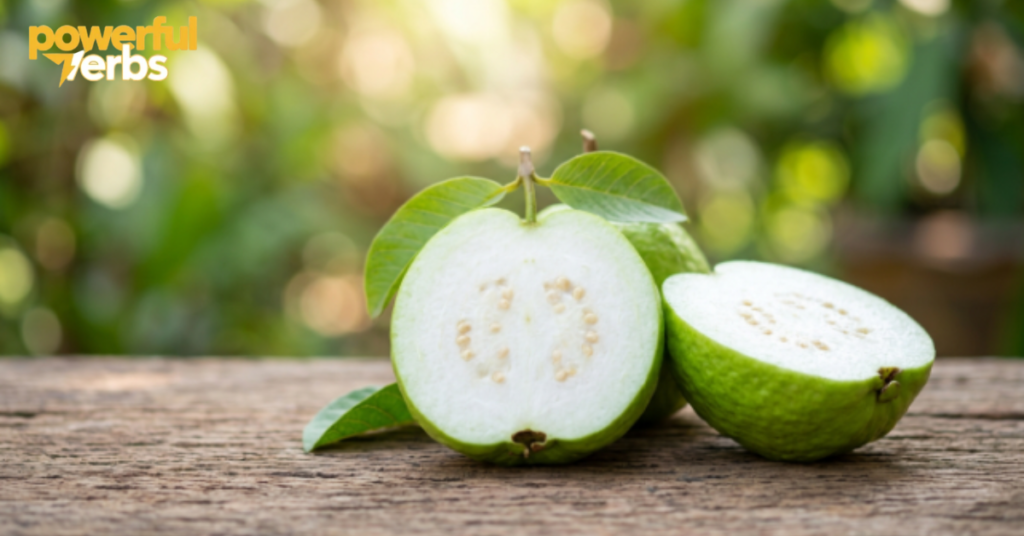
Thai white guava represents selective breeding excellence from Southeast Asia. Developed to maximize crispness, large fruit size, and low seed hardness, this cultivar became the dominant fresh-market guava across Thailand, Vietnam, and southern China. Its mild flavor and satisfying crunch made it an iconic street food snack across the region.
| Attribute | Detail |
| Shape | Round to slightly oval |
| Average Weight | 280–350 g |
| Skin Color | Pale green to lime green |
| Flesh Color | Pure white |
| Seeds | Very few, small and soft |
| Flavor | Mild, lightly sweet with fresh vegetal notes |
| Texture | Extra crunchy — similar to a crisp apple |
| Calories | ~70 per 100 g |
| Best Use | Eaten raw with chili-salt dip, diced in salads |
Cultural Note: Thai white guava is commonly sold sliced in plastic bags at street markets, served with a seasoning blend of sugar, chili flakes, and dried plum powder.
6. Red Malaysian Guava (Psidium guajava)
Red Malaysian guava is a visually striking ornamental-fruiting cultivar with dark red-bronze foliage and deep pink-red flesh. Originally developed in Malaysia as both a landscape plant and productive fruit tree, it gained popularity in tropical home gardens worldwide for its dual ornamental and culinary value.
| Attribute | Detail |
| Shape | Round |
| Average Weight | 190–220 g |
| Skin Color | Dark green with reddish tinge at maturity |
| Flesh Color | Deep pink to red |
| Seeds | Moderate quantity |
| Flavor | Sweet with floral and rose-like aromatic notes |
| Texture | Medium-soft |
| Calories | ~72 per 100 g |
| Best Use | Fresh eating, juice blending, tropical desserts |
7. Allahabad Safeda (Psidium guajava)
Allahabad Safeda is India’s most celebrated guava cultivar, developed in Allahabad, Uttar Pradesh — a region considered the global capital of quality guava production. It holds the distinction of being the benchmark variety for Indian guava exports due to its smooth surface, refined sweetness, and soft white flesh that contains minimal seeds.
| Attribute | Detail |
| Shape | Round |
| Average Weight | 180–260 g |
| Skin Color | Smooth light green |
| Flesh Color | Pure white |
| Seeds | Few, soft |
| Flavor | Distinctly sweet, honey-like finish |
| Texture | Smooth and very soft at full ripeness |
| Calories | ~68 per 100 g |
| Best Use | Premium fresh eating, export, guava candy |
Commercial Significance: Allahabad Safeda accounts for a significant portion of India’s guava export volume and is widely referenced in Indian agricultural research.
8. Ruby Supreme Guava (Psidium guajava)
Ruby Supreme was developed and commercialized in Florida, USA, where it became a popular choice for home orchards and small farms. Its vibrant pink flesh, sweet fragrance, and juicy texture made it a consumer favorite at farmers markets and specialty grocery stores across the southeastern United States.
| Attribute | Detail |
| Shape | Round to slightly pear-shaped |
| Average Weight | 190–220 g |
| Skin Color | Yellow-green at maturity |
| Flesh Color | Bright pink |
| Seeds | Medium quantity, edible |
| Flavor | Rich, sweet, and intensely aromatic |
| Texture | Juicy with moderate softness |
| Calories | ~70 per 100 g |
| Best Use | Smoothies, tropical fruit bowls, jams |
9. Thai Red Guava (Psidium guajava)
Thai red guava is a commercially significant cultivar exported from Southeast Asia to markets across Europe, the Middle East, and North America. Its combination of crisp texture and vivid red interior makes it highly attractive for both fresh eating and processed juice products. The variety is especially prized in the global guava nectar industry.
| Attribute | Detail |
| Shape | Oval |
| Average Weight | 250–360 g |
| Skin Color | Green |
| Flesh Color | Deep red |
| Seeds | Few |
| Flavor | Sweet with mild tartness |
| Texture | Crisp and firm |
| Calories | ~72 per 100 g |
| Best Use | Fresh market, guava juice, nectar production |
10. Mexican Cream Guava (Psidium guajava)
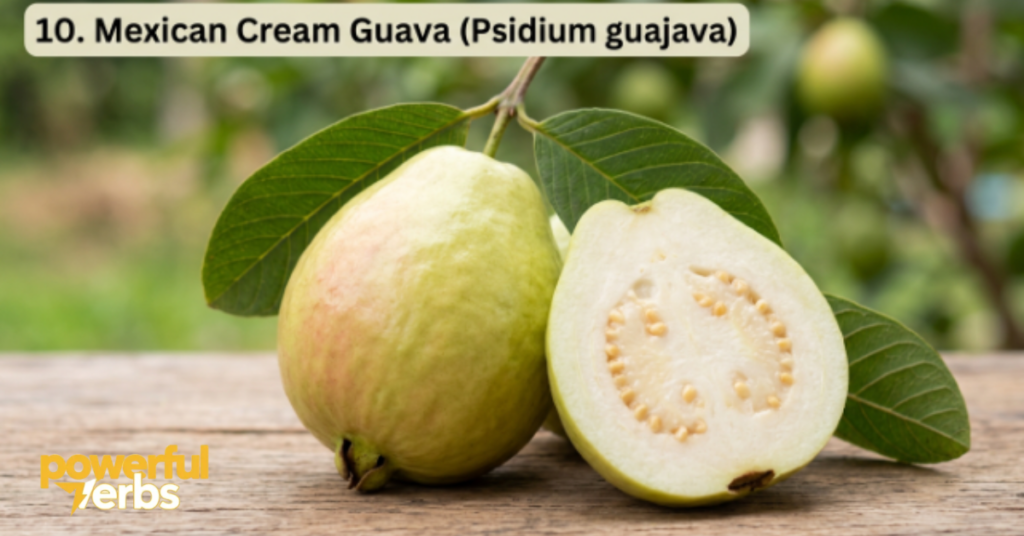
Mexican Cream guava is a prized heritage cultivar native to Mexico, recognized for its exceptionally creamy flesh texture and intense sweetness. It is regarded as one of the finest-flavored guava varieties in the world and is often described as the “dessert guava” due to its rich, custard-like quality when fully ripe.
| Attribute | Detail |
| Shape | Round to oval |
| Average Weight | 190–210 g |
| Skin Color | Yellow-green to fully yellow |
| Flesh Color | Cream to pale white |
| Seeds | Few |
| Flavor | Exceptionally sweet, vanilla-cream undertones |
| Texture | Creamy and very soft |
| Calories | ~68 per 100 g |
| Best Use | Fresh eating, cream desserts, ice cream base |
11. Beaumont Guava (Psidium guajava)
Beaumont guava was developed at the University of Hawaii in the 1960s and named after a research station in Beaumont, Texas. It is one of the most commercially important processing guavas in Hawaii, widely used for large-scale juice, nectar, and guava purée production due to its high yield and rich pink flesh.
| Attribute | Detail |
| Shape | Round |
| Average Weight | 200–280 g |
| Skin Color | Yellow at full maturity |
| Flesh Color | Pink to salmon |
| Seeds | Many |
| Flavor | Strong, sweet-tart, intensely aromatic |
| Texture | Soft |
| Calories | ~70 per 100 g |
| Best Use | Industrial juice processing, guava paste, preserves |
12. Lucknow-49 / Sardar Guava (Psidium guajava)
Lucknow-49, popularly known as Sardar guava, is among India’s oldest and most commercially grown guava cultivars. Released by the Central Institute for Subtropical Horticulture in Lucknow, it became the backbone of India’s domestic guava trade for decades. The variety is admired for its large fruit size and consistent flavor year after year.
| Attribute | Detail |
| Shape | Round to pear-shaped |
| Average Weight | 200–350 g |
| Skin Color | Yellowish-green |
| Flesh Color | White |
| Seeds | Moderate |
| Flavor | Sweet with slight acidic balance |
| Texture | Medium-soft |
| Calories | ~68 per 100 g |
| Best Use | Fresh market, Indian culinary preparations |
13. Tropical Pink Guava (Psidium guajava)
Tropical pink guava is a broad category of pink-fleshed cultivars grown across Central America, the Caribbean, and South Asia. While individual sub-varieties differ slightly, they share a characteristic rosy interior, aromatic fragrance, and well-balanced sweetness that makes them suitable for both fresh consumption and processed products.
| Attribute | Detail |
| Shape | Round to oval |
| Average Weight | 150–250 g |
| Skin Color | Green to yellow |
| Flesh Color | Pink |
| Seeds | Moderate |
| Flavor | Sweet-tart, highly aromatic |
| Texture | Juicy and medium-soft |
| Calories | ~70 per 100 g |
| Best Use | Juice, smoothies, tropical desserts |
14. Tropical White Guava (Psidium guajava)
Tropical white guava represents one of the most globally widespread guava types, cultivated across Africa, Asia, and the Americas. White-fleshed cultivars in this category are frequently the default variety found in local markets across developing tropical nations. They are valued for high yield, drought tolerance, and adaptability.
| Attribute | Detail |
| Shape | Round |
| Average Weight | 150–200 g |
| Skin Color | Green to pale yellow |
| Flesh Color | White |
| Seeds | Moderate to many |
| Flavor | Mild sweet |
| Texture | Firm to medium-soft |
| Calories | ~66 per 100 g |
| Best Use | General fresh market, jam, drying |
15. Tropical Red Guava (Psidium guajava)
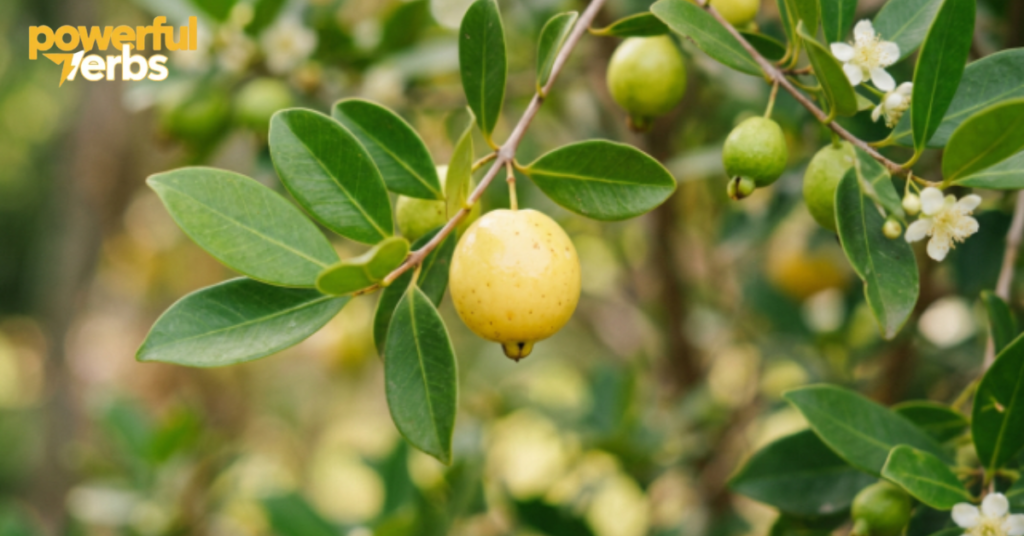
Tropical red guava is cultivated primarily for its nutritionally rich red flesh, which contains higher concentrations of lycopene compared to pink or white varieties. Research published in food science journals consistently finds that lycopene-rich red guava flesh offers antioxidant properties comparable to tomatoes.
| Attribute | Detail |
| Shape | Oval to round |
| Average Weight | 200–300 g |
| Skin Color | Green |
| Flesh Color | Vivid red |
| Seeds | Few to moderate |
| Flavor | Sweet with earthy undertones |
| Texture | Medium-crisp |
| Calories | ~72 per 100 g |
| Best Use | Juice, health beverages, antioxidant supplements |
16. Cattley Guava / Cherry Guava (Psidium cattleianum)
Cattley guava shares the same species as strawberry guava and is sometimes used interchangeably with that name. However, in horticultural contexts, “Cattley guava” more specifically refers to the cultivated ornamental-fruiting form grown in subtropical gardens of California, New Zealand, and the Mediterranean. The small fruits ripen over an extended season, providing a long harvest window.
| Attribute | Detail |
| Shape | Small, round |
| Average Weight | 30–50 g |
| Skin Color | Red to purple |
| Flesh Color | White to pale pink |
| Seeds | Many small seeds |
| Flavor | Sweet-tart, berry-like |
| Texture | Soft and juicy |
| Calories | ~58 per 100 g |
| Best Use | Jams, jellies, syrups, wine |
17. VNR Bihi Guava (Psidium guajava)
VNR Bihi is a modern Indian hybrid cultivar developed through controlled cross-breeding programs. It was specifically engineered for maximum fruit size, reduced seed count, and extended shelf life — qualities that make it ideal for commercial export and modern retail distribution. VNR Bihi guavas can exceed 600 grams in individual fruit weight under optimal growing conditions.
| Attribute | Detail |
| Shape | Round to oblong |
| Average Weight | 400–600 g |
| Skin Color | Light green |
| Flesh Color | White |
| Seeds | Very few, soft |
| Flavor | Mild sweet |
| Texture | Very crunchy |
| Calories | ~65 per 100 g |
| Best Use | Premium fresh market, export, gifting |
18. Lalit Guava (Psidium guajava)
Lalit guava is a hybrid variety released by the Indian Council of Agricultural Research (ICAR). It was developed specifically to combine excellent flavor with high Vitamin C content and pink-orange flesh — traits rarely found together in a single cultivar. Lalit has gained popularity among health-conscious consumers in India and abroad.
| Attribute | Detail |
| Shape | Round |
| Average Weight | 200–250 g |
| Skin Color | Yellow at full ripeness |
| Flesh Color | Pink to orange-pink |
| Seeds | Few |
| Flavor | Sweet, aromatic, slightly tangy |
| Texture | Soft and juicy |
| Calories | ~70 per 100 g |
| Best Use | Fresh eating, health juice, nutritional products |
19. Hisar Surkha Guava (Psidium guajava)
Hisar Surkha (“surkha” means red in Hindi) is a productive Indian cultivar bred at Chaudhary Charan Singh Haryana Agricultural University. It produces medium-sized fruits with distinctive red-tinged flesh and a sweet, aromatic flavor. Hisar Surkha is valued for its high antioxidant content and consistent yields across varying soil conditions.
| Attribute | Detail |
| Shape | Round |
| Average Weight | 180–220 g |
| Skin Color | Greenish-yellow |
| Flesh Color | Red-pink |
| Seeds | Moderate |
| Flavor | Sweet and fragrant |
| Texture | Medium-soft |
| Calories | ~70 per 100 g |
| Best Use | Fresh consumption, regional Indian markets |
20. Pant Prabhat Guava (Psidium guajava)
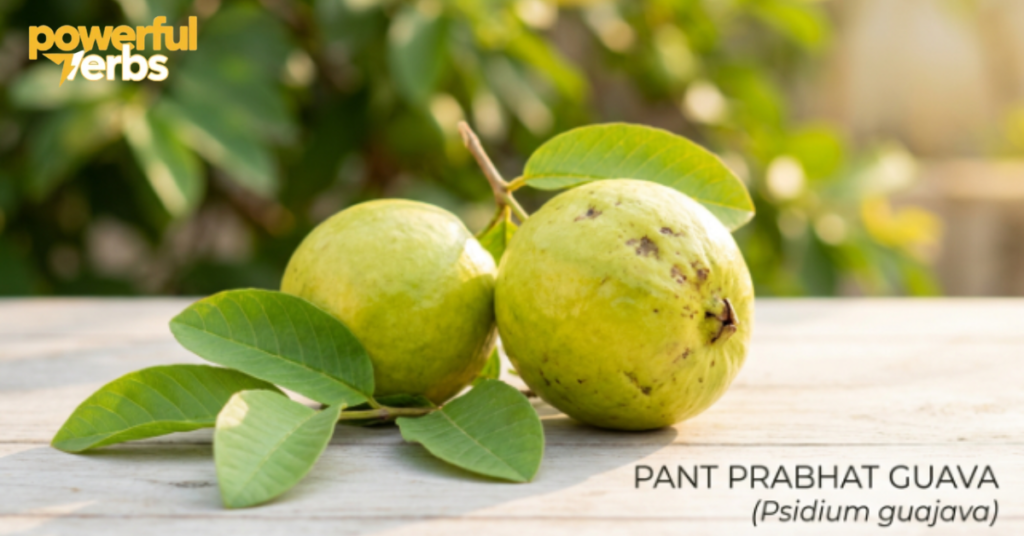
Pant Prabhat is an early-bearing hybrid variety developed at G.B. Pant University of Agriculture and Technology in Uttarakhand, India. Its most important agronomic trait is the ability to produce fruit in the first year of planting — considerably faster than most other guava cultivars, which typically require 2–3 years to begin bearing fruit.
| Attribute | Detail |
| Shape | Round |
| Average Weight | 150–200 g |
| Skin Color | Yellow-green |
| Flesh Color | White |
| Seeds | Few |
| Flavor | Sweet |
| Texture | Soft |
| Calories | ~66 per 100 g |
| Best Use | Small-scale farming, quick-yield orchards |
21. Arka Mridula Guava (Psidium guajava)
Arka Mridula was released by the Indian Institute of Horticultural Research (IIHR) in Bangalore. It is specifically noted for its very soft, nearly melt-in-the-mouth white flesh and near-seedless interior — characteristics that make it exceptionally popular among elderly consumers, children, and buyers seeking premium eating-quality guava.
| Attribute | Detail |
| Shape | Round |
| Average Weight | 180–220 g |
| Skin Color | Smooth light green |
| Flesh Color | White |
| Seeds | Very few, tiny |
| Flavor | Very sweet, delicate |
| Texture | Extremely soft |
| Calories | ~68 per 100 g |
| Best Use | Premium fresh eating, elderly and child nutrition |
22. Arka Kiran Guava (Psidium guajava)
Arka Kiran is another IIHR-released hybrid, distinguished from Arka Mridula primarily by its pink-orange flesh and higher antioxidant concentration. The cultivar was developed to address growing consumer demand for nutritionally enhanced guava varieties and is now gaining distribution across premium supermarket channels in India.
| Attribute | Detail |
| Shape | Round to oval |
| Average Weight | 200–230 g |
| Skin Color | Yellow-green |
| Flesh Color | Orange-pink |
| Seeds | Few |
| Flavor | Sweet-tart, richly aromatic |
| Texture | Juicy and medium-soft |
| Calories | ~72 per 100 g |
| Best Use | Nutritional fresh eating, specialty juice |
23. Thai Maroon Guava (Psidium guajava)
Thai Maroon guava is a visually distinctive Southeast Asian cultivar with unusually dark maroon-red skin coloration — a trait rarely seen in Psidium guajava. Its appearance resembles a dark plum from the outside, making it instantly recognizable at markets. The flesh is white to cream with mild sweetness and a pleasant light crunch.
| Attribute | Detail |
| Shape | Round |
| Average Weight | 200–280 g |
| Skin Color | Deep maroon-red |
| Flesh Color | White to cream |
| Seeds | Few |
| Flavor | Mild sweet |
| Texture | Crunchy |
| Calories | ~68 per 100 g |
| Best Use | Fresh eating, decorative fruit platters |
24. Safed Jam Guava (Psidium guajava)
Safed Jam is a traditional Indian cultivar whose name translates to “white jam guava” — a direct reference to the exceptional quality of jam and preserves it produces. The fruit is harvested at a less-ripe stage for processing but develops full sweetness when allowed to ripen completely on the tree.
| Attribute | Detail |
| Shape | Round |
| Average Weight | 180–230 g |
| Skin Color | Pale green to white-green |
| Flesh Color | White |
| Seeds | Moderate |
| Flavor | Sweet and mildly tangy when fully ripe |
| Texture | Medium-firm |
| Calories | ~67 per 100 g |
| Best Use | Jam production, preserves, canning |
25. Allahabad Surkha Guava (Psidium guajava)
Allahabad Surkha is the pink-fleshed companion cultivar to the famous Allahabad Safeda, developed within the same horticultural research ecosystem of Allahabad, India. While Safeda is the dominant commercial choice, Surkha is prized by connoisseurs for its richer flavor profile and visually appealing pink-red flesh.
| Attribute | Detail |
| Shape | Round |
| Average Weight | 170–240 g |
| Skin Color | Light green to yellow |
| Flesh Color | Pink-red |
| Seeds | Moderate |
| Flavor | Sweet with more pronounced aroma than Safeda |
| Texture | Soft and juicy |
| Calories | ~70 per 100 g |
| Best Use | Fresh eating, premium local markets |
26. Chittidar Guava (Psidium guajava)
Chittidar guava is a regionally popular Indian variety characterized by distinctively spotted skin — “chittidar” meaning “spotted” or “speckled” in Hindi. The irregular markings on the skin are a natural genetic trait, not a sign of disease or damage. The flesh is white and flavorful, with a balanced sweetness well-suited to the North Indian palate.
| Attribute | Detail |
| Shape | Round |
| Average Weight | 160–210 g |
| Skin Color | Green with distinctive cream-white spots |
| Flesh Color | White |
| Seeds | Moderate |
| Flavor | Sweet with mild acidity |
| Texture | Medium-soft |
| Calories | ~68 per 100 g |
| Best Use | Regional Indian fresh market |
27. White Malaysian Guava (Psidium guajava)
White Malaysian guava is the white-fleshed counterpart of the Red Malaysian cultivar and shares the same Malaysian breeding heritage. While less visually dramatic than its red sibling, White Malaysian guava produces larger individual fruits and a more neutral, refreshing flavor profile that appeals to a wider range of consumers.
| Attribute | Detail |
| Shape | Round to oval |
| Average Weight | 220–300 g |
| Skin Color | Pale green |
| Flesh Color | White |
| Seeds | Moderate |
| Flavor | Mild, refreshing, lightly sweet |
| Texture | Crunchy to medium |
| Calories | ~66 per 100 g |
| Best Use | Fresh eating, juice blending |
28. Yellow Strawberry Guava (Psidium cattleianum var. lucidum)
Yellow strawberry guava is a naturally occurring variant within the Cattley guava species, distinguished from its red-skinned relatives by bright yellow coloring and a notably sweeter, less tangy flavor. It is less widely cultivated commercially but is popular in home gardens across subtropical regions for its ornamental appearance and continuously productive fruiting habit.
| Attribute | Detail |
| Shape | Small, round |
| Average Weight | 40–55 g |
| Skin Color | Bright yellow |
| Flesh Color | White to pale yellow |
| Seeds | Several small seeds |
| Flavor | Sweet, honey-like, low acidity |
| Texture | Soft and juicy |
| Calories | ~58 per 100 g |
| Best Use | Fresh eating, gourmet jams, specialty beverages |
29. Shweta Guava (Psidium guajava)
Shweta guava (“shweta” meaning white in Sanskrit) is a refined white-flesh Indian cultivar appreciated for its clean appearance, minimal seed content, and smooth eating experience. It is increasingly favored in urban Indian markets where consumers prioritize seedless or low-seed varieties for convenience.
| Attribute | Detail |
| Shape | Round |
| Average Weight | 190–240 g |
| Skin Color | Smooth light green |
| Flesh Color | White |
| Seeds | Very few |
| Flavor | Mild, sweet |
| Texture | Smooth, medium-soft |
| Calories | ~67 per 100 g |
| Best Use | Urban fresh markets, health-conscious consumers |
30. Brazilian Guava (Psidium guajava)
Brazilian guava encompasses the diverse family of traditional cultivars native to Brazil — the evolutionary homeland of the Psidium guajava species. These old-world varieties often display more intense aroma, deeper flesh pigmentation, and higher seed density compared to modern bred cultivars. They remain integral to Brazilian food culture, appearing in the iconic goiabada (guava paste) that is a staple of Brazilian cuisine.
| Attribute | Detail |
| Shape | Oval to irregular |
| Average Weight | 180–300 g |
| Skin Color | Green to golden yellow |
| Flesh Color | Pink to deep red |
| Seeds | Many |
| Flavor | Intensely sweet-tart, highly aromatic |
| Texture | Juicy |
| Calories | ~70 per 100 g |
| Best Use | Guava paste (goiabada), jam, traditional sweets |
Complete Guava Varieties List A to Z (All 30+)
| # | Variety Name | Flesh Color | Origin |
| 1 | Allahabad Safeda | White | India |
| 2 | Allahabad Surkha | Pink-Red | India |
| 3 | Apple Guava | White/Pink | Tropical America |
| 4 | Arka Kiran | Orange-Pink | India (IIHR) |
| 5 | Arka Mridula | White | India (IIHR) |
| 6 | Beaumont Guava | Pink | Hawaii, USA |
| 7 | Brazilian Guava | Pink/Red | Brazil |
| 8 | Cattley Guava | White/Pink | Brazil |
| 9 | Cherry Guava | White | Brazil |
| 10 | Chittidar Guava | White | India |
| 11 | Hisar Safeda | White | India |
| 12 | Hisar Surkha | Red-Pink | India |
| 13 | Lalit Guava | Orange-Pink | India |
| 14 | Lemon Guava | White | Brazil/Pacific |
| 15 | Lucknow-49 (Sardar) | White | India |
| 16 | Mexican Cream Guava | Cream/White | Mexico |
| 17 | Pant Manohar | Pink | India |
| 18 | Pant Prabhat | White | India |
| 19 | Pineapple Guava (Feijoa) | Cream | South America |
| 20 | Red Malaysian Guava | Deep Pink | Malaysia |
| 21 | Ruby Supreme | Pink | Florida, USA |
| 22 | Safed Jam | White | India |
| 23 | Shweta Guava | White | India |
| 24 | Strawberry Guava | White | Brazil |
| 25 | Thai Maroon Guava | White/Cream | Thailand |
| 26 | Thai Red Guava | Red | Thailand |
| 27 | Thai White Guava | White | Thailand |
| 28 | Tropical Pink Guava | Pink | Central America |
| 29 | Tropical Red Guava | Red | Southeast Asia |
| 30 | Tropical White Guava | White | Pan-Tropical |
| 31 | VNR Bihi Guava | White | India |
| 32 | White Malaysian Guava | White | Malaysia |
| 33 | Yellow Strawberry Guava | White/Yellow | Brazil |
How to Identify Guava Variety by Appearance
Identifying guava cultivars at a market or orchard becomes easier once you learn to observe these five key visual cues systematically:
Step 1 — Note the skin color. Deep red or maroon skin points toward strawberry, Cattley, or Thai Maroon guava. Yellow skin suggests lemon guava or a ripe Mexican Cream variety. Standard green-to-yellow transition is common across most Psidium guajava cultivars.
Step 2 — Check the fruit size. Small fruits (under 80g) typically indicate strawberry or Cattley species. Unusually large fruits (above 400g) often indicate modern Indian hybrids such as VNR Bihi. Mid-range fruits are common guava cultivars.
Step 3 — Examine the skin texture. Smooth, glossy skin is characteristic of premium fresh-market cultivars like Allahabad Safeda. Rough or bumpy skin appears in wild-type and heritage varieties. Spotted skin is the signature of Chittidar guava.
Step 4 — Smell the aroma. A strong floral-sweet fragrance indicates pink or red flesh. A citrus-forward scent suggests lemon guava. A mild or neutral aroma is typical of white-fleshed crunchy types like Thai White.
Step 5 — Cut and observe the flesh. Flesh color immediately narrows the identification to the correct category. Pure white = Safeda, Tropical White, or Thai White. Pink = Ruby Supreme, Tropical Pink, or Lalit. Red = Thai Red, Tropical Red, or Brazilian. Cream = Mexican Cream or Feijoa.
Guava Varieties by Flesh Color: Quick Visual Reference
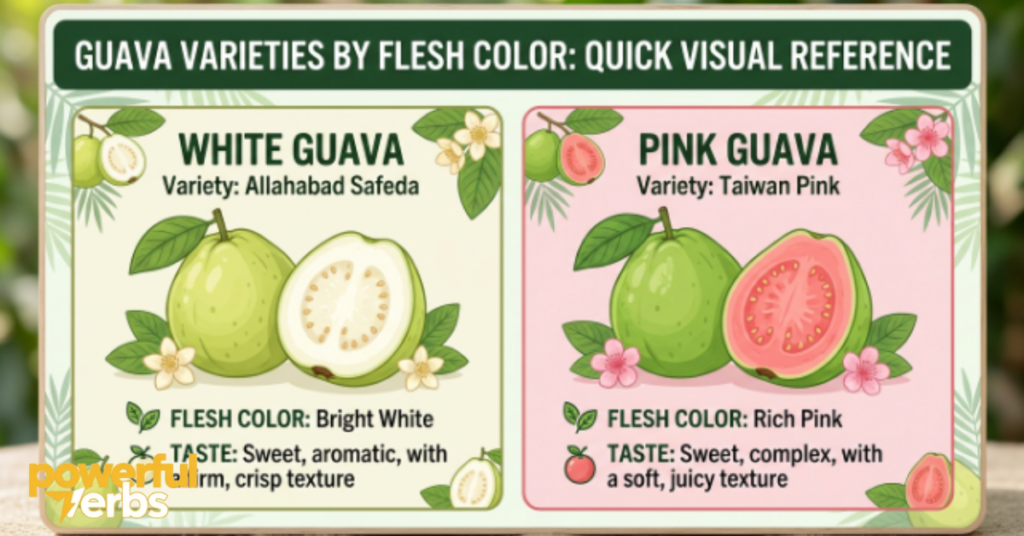
White Flesh Guavas
Best for: Fresh eating, mild flavor preference, seedless snacking Key varieties: Allahabad Safeda, Thai White, Tropical White, Lucknow-49, Arka Mridula, Shweta, Sardar, Pant Prabhat
Pink Flesh Guavas
Best for: Balanced sweetness, aromatic juice, smoothies Key varieties: Ruby Supreme, Tropical Pink, Allahabad Surkha, Hisar Surkha, Lalit, Pant Manohar
Red Flesh Guavas
Best for: Highest antioxidant content, vivid juice color, lycopene-rich diet Key varieties: Thai Red, Tropical Red, Brazilian Guava, Red Malaysian
Yellow Flesh Guavas
Best for: Tropical aroma, tangy-sweet flavor, specialty beverages Key varieties: Lemon Yellow Guava, Yellow Strawberry Guava
Cream/Off-White Flesh Guavas
Best for: Dessert preparations, premium fresh eating, custard-like texture Key varieties: Mexican Cream, Pineapple Guava (Feijoa), Beaumont
Guava Nutritional Comparison by Variety Type
| Flesh Color | Avg. Vitamin C (mg/100g) | Lycopene Content | Sugar Level | Best Nutritional Use |
| White | 200–250 mg | Very Low | Moderate | Immune support, fiber |
| Pink | 180–220 mg | Moderate | Moderate-High | Antioxidants, digestion |
| Red | 160–200 mg | High | High | Heart health, lycopene |
| Yellow | 180–210 mg | Low | Moderate | Vitamin C, hydration |
| Cream | 150–180 mg | Very Low | Very High | Energy, dessert nutrition |
Note: Vitamin C values vary with ripeness stage and growing conditions. Harvesting slightly before full ripeness typically preserves the highest Vitamin C concentration.
Growing Regions and Climate Requirements
Guava is one of the most climatically adaptable tropical fruit trees, thriving across a wide range of environments:
Tropical Humid Zones (India, Thailand, Brazil, Philippines, Malaysia): Optimal year-round production; supports all variety types including premium thin-skinned cultivars.
Subtropical Zones (Florida, California, Mediterranean, South Africa, New Zealand): Supports cold-hardy cultivars including Feijoa, Cattley guava, and some Psidium guajava types that tolerate brief frosts.
Semi-Arid Tropical Zones (Egypt, Pakistan, parts of India): Hardy varieties like Lucknow-49 and Apple guava tolerate drought conditions with irrigation support.
Altitude Cultivation (highland regions of Colombia, Kenya, Papua New Guinea): Feijoa and certain Psidium guajava ecotypes adapt well to cooler highland climates up to 2,000 meters elevation.
Most Common Uses of Guava Across Varieties
Fresh Eating: Thai White, VNR Bihi, Allahabad Safeda, Mexican Cream, Shweta, Arka Mridula
Commercial Juice and Nectar: Beaumont, Thai Red, Tropical Pink, Brazilian Guava, Tropical Red
Jam, Jelly, and Preserves: Strawberry Guava, Cattley Guava, Safed Jam, Yellow Strawberry Guava
Guava Paste and Confectionery: Brazilian Guava, Beaumont, Lucknow-49
Health and Nutraceutical Products: Lalit, Arka Kiran, Tropical Red, Hisar Surkha
Ornamental Landscaping with Edible Fruit: Red Malaysian, Cattley Guava, Pineapple Guava (Feijoa)
Frequently Asked Questions About Guava Varieties
What are the main types of guava fruit grown worldwide?
The primary guava categories are white flesh, pink flesh, red flesh, yellow flesh, and cream flesh varieties. Among species, Psidium guajava (common guava) is the most widely cultivated, while Psidium cattleianum (strawberry and Cattley guava) represents a distinct species group. Acca sellowiana (feijoa or pineapple guava) is a third botanically separate species often grouped with guavas.
Which guava variety has the most health benefits?
Red-fleshed guava varieties such as Thai Red, Tropical Red, and Lalit contain the highest concentrations of lycopene, a powerful antioxidant linked to cardiovascular health. All guava varieties are excellent sources of Vitamin C, dietary fiber, potassium, and folate.
Which guava variety is sweetest?
Mexican Cream guava and Beaumont guava are widely recognized as among the sweetest cultivars. Among Indian varieties, Lalit and Allahabad Safeda are noted for their honey-like sweetness. Pink and red flesh guavas generally contain higher natural sugar concentrations than white or cream types.
Are strawberry guava and common guava the same species?
No. Strawberry guava (Psidium cattleianum) and common guava (Psidium guajava) are distinct species within the same genus. Strawberry guava is smaller, more aromatic, and has a definitive berry-like flavor that differs significantly from the milder taste of common guava.
What is the largest guava fruit variety?
VNR Bihi guava, developed in India, regularly produces individual fruits weighing 400–600 grams under good growing conditions — making it the largest commercially cultivated guava variety currently available.
How many calories does one guava contain?
A medium guava (approximately 100g edible flesh) contains between 37 and 68 calories depending on variety and ripeness. Cream-fleshed and very sweet varieties like Mexican Cream trend toward the higher end. Strawberry guava and lemon guava trend lower at around 58 calories per 100g.
Which guava variety is best for making juice commercially?
Beaumont and Thai Red are the dominant choices for large-scale commercial guava juice production due to their high flesh yield per fruit, strong natural color, and intense aromatic flavor that survives pasteurization. In India, Allahabad Safeda and Lucknow-49 are the most common juice-processing cultivars.
Can guava be grown outside tropical regions?
Yes. Feijoa (pineapple guava) tolerates temperatures down to -10°C (14°F) and is successfully grown in New Zealand, California, the British Isles, and temperate parts of Europe. Cattley and strawberry guava tolerate mild frosts and grow in Mediterranean climates. Most Psidium guajava varieties require frost-free conditions.
Summary
The ideal guava variety depends entirely on purpose, growing location, and personal preference:
- For fresh eating and crispness: Thai White Guava or VNR Bihi
- For premium sweetness: Mexican Cream or Allahabad Safeda
- For highest nutrition and lycopene: Thai Red or Tropical Red
- For jam and preserves: Strawberry Guava or Brazilian Guava
- For cold climates: Feijoa (Pineapple Guava)
- For ornamental gardening: Red Malaysian Guava
- For commercial juice production: Beaumont or Thai Red
- For children and elderly: Arka Mridula (seedless, very soft)
Understanding the full diversity of guava fruit varieties opens up a world of culinary, nutritional, and agricultural possibilities that goes far beyond the single green fruit most people picture when they hear the word “guava.”

Liam Johnson is a dedicated language expert with 4 years of professional experience. He specializes in Grammar, Vocabulary, and Sentence structure.
