

Walk into any supermarket, open a recipe book, or sit in a biology class — fruits are everywhere. Yet most people can only name 15 to 20 fruits off the top of their heads. Whether you are a student learning English, a home cook trying new recipes, a nutrition enthusiast, or simply curious about the natural world, building a strong vocabulary of fruit names opens up a world of better communication, healthier eating, and deeper knowledge.
This comprehensive guide covers 250+ fruits names organized into easy-to-follow categories: by type, by color, by shape, by season, and by region. Each section is crafted to help you quickly find, understand, and remember the names you need — with no repetition and no confusion.
What Is a Fruit? (Simple Scientific Definition)
A fruit is the mature, seed-bearing structure of a flowering plant that develops from the ovary after pollination. In everyday language, fruits are the sweet, fleshy, or pulpy edible parts of plants. Botanically speaking, many foods we call “vegetables” — like tomatoes, cucumbers, and avocados — are technically fruits because they carry seeds.
Fruits serve two purposes: they protect seeds and attract animals (and humans) who help spread those seeds. As food, they supply natural sugars for quick energy, dietary fiber for digestion, and powerful vitamins, minerals, and antioxidants for long-term health.
Full List of Common Fruits Names (A–Z Quick Reference)
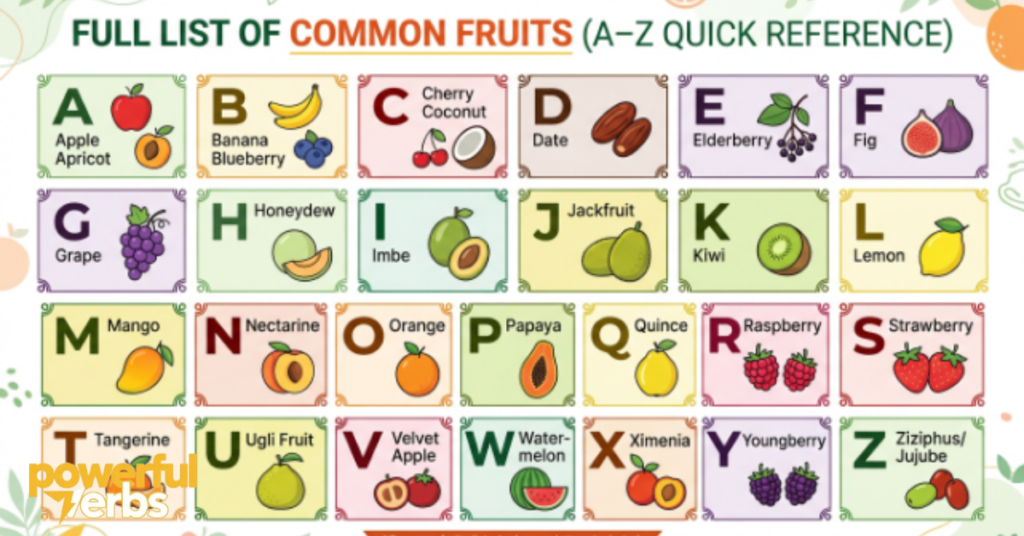
Below is a master alphabetical list of fruits for quick reference before we break them into detailed categories:
Apple, Apricot, Atemoya, Avocado, Banana, Bergamot, Bilberry, Bilimbi, Blackberry, Black currant, Blood orange, Blueberry, Boysenberry, Breadfruit, Calamansi, Canary melon, Cantaloupe, Carambola (Star fruit), Casaba melon, Cherry, Cherimoya, Citron, Clementine, Cloud berry, Coconut, Cranberry, Crabapple, Cupuaçu, Damson, Date, Dragon fruit, Durian, Elderberry, Fig, Finger lime, Gooseberry, Grape, Grapefruit, Greengage, Guava, Hami melon, Honeydew, Huckleberry, Jackfruit, Jujube, Kaffir lime, Kiwi, Kumquat, Langsat, Lemon, Lime, Lingonberry, Longan, Loquat, Lychee, Mandarin, Mango, Mangosteen, Marang, Melon, Miracle fruit, Mirabelle, Mulberry, Nectarine, Olive, Orange, Papaya, Passion fruit, Peach, Pear, Persimmon, Pineapple, Plantain, Plum, Pomegranate, Pomelo, Quince, Rambutan, Raspberry, Red currant, Salak (Snake fruit), Sapodilla, Satsuma, Seville orange, Soursop, Strawberry, Sudachi, Tamarind, Tangerine, Ugli fruit, Watermelon, White currant, Yuzu.
Types of Fruits — Classified by Botanical Category
Understanding how botanists and nutritionists group fruits helps you remember them faster and understand their nutritional profiles better.
1. Citrus Fruits (Rutaceae Family)
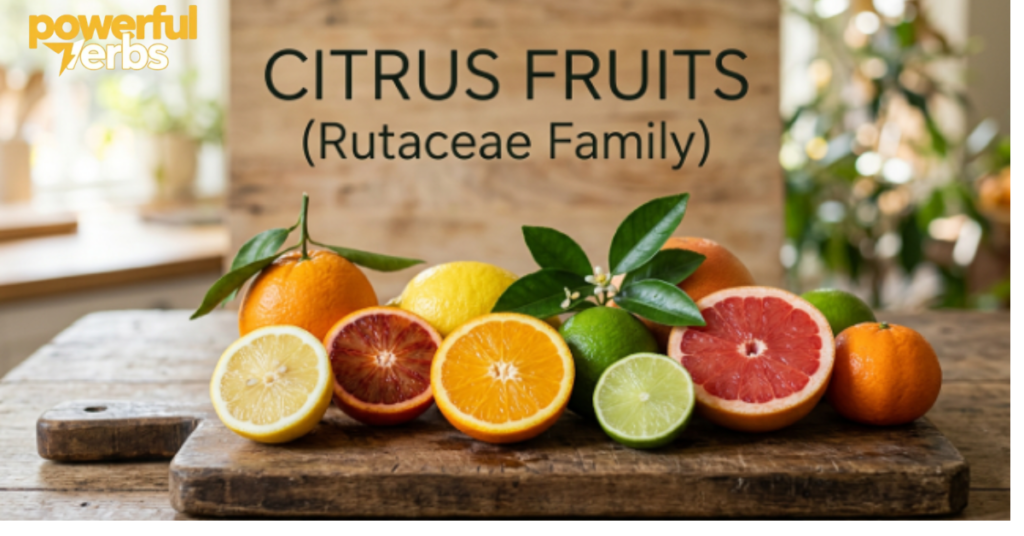
Citrus fruits are juicy, segmented fruits grown on fragrant evergreen trees. They are famous for their high vitamin C content, refreshing tartness, and bright essential oils found in their peel. These fruits thrive in subtropical and tropical climates.
Key Nutritional Benefit: Rich in flavonoids, vitamin C, folate, and potassium — all proven to support cardiovascular health, skin collagen production, and immune defense.
Complete Citrus Fruits List:
| Fruit Name | Taste Profile | Most Popular Use |
| Orange | Sweet-tangy | Fresh juice, marmalade |
| Mandarin | Mild, sweet | Snacking, salads |
| Clementine | Very sweet, seedless | Kids’ snacks, desserts |
| Tangerine | Sweet-tart | Fresh eating, smoothies |
| Lemon | Sour | Cooking, lemonade, baking |
| Lime | Sharp and sour | Cocktails, Asian cooking |
| Grapefruit | Bitter-sweet | Breakfast, weight-loss diets |
| Pomelo | Mildly sweet | Fresh eating, Asian cuisines |
| Blood orange | Berry-sweet | Juices, desserts |
| Bergamot | Floral, aromatic | Earl Grey tea, perfume |
| Yuzu | Tart and floral | Japanese cuisine, zesting |
| Kaffir lime | Extremely aromatic | Thai curries, leaves used |
| Calamansi | Sour | Filipino dishes, drinks |
| Seville orange | Intensely bitter | British marmalade |
| Sudachi | Tart | Japanese ponzu sauce |
| Sweet lime (Mosambi) | Very mild, sweet | Indian fresh juice |
| Ugli fruit | Sweet-tart | Fresh eating |
| Citron | Mild, thick peel | Zesting, preserved lemon |
| Kumquat | Sweet peel, sour flesh | Eaten whole, jams |
| Clementine × mandarin hybrids | Sweet | Various snacking |
2. Tropical Fruits Names
Tropical fruits grow in warm, humid regions near the equator. They are celebrated for bold, complex flavors ranging from creamy and sweet to fiery and tangy. Many are superfoods packed with enzymes, antioxidants, and rare plant compounds.
Key Nutritional Benefit: High in bromelain (pineapple), papain (papaya), and carotenoids (mango) — enzymes and pigments that reduce inflammation, support digestion, and protect eye health.
Tropical Fruits Complete List:
- Mango — Called the “King of Fruits,” mango is one of the most consumed fruits worldwide. Rich in vitamins A, C, and B6. Available in hundreds of varieties including Alphonso, Langra, and Ataulfo.
- Pineapple — Contains bromelain enzyme that breaks down protein and reduces joint inflammation. Sweet-tart flavor with firm yellow flesh.
- Banana — The world’s most popular fruit. Excellent source of potassium, vitamin B6, and quick-release energy. Unripe bananas also contain resistant starch that feeds gut bacteria.
- Papaya — Soft orange flesh with black seeds. Contains papain enzyme that aids protein digestion. High in beta-carotene and vitamin C.
- Guava — Pink or white-fleshed tropical fruit with nearly 4× more vitamin C than an orange. High in fiber and lycopene.
- Passion Fruit — Small wrinkled purple or yellow fruit with intensely aromatic seedy pulp. High in vitamin A, fiber, and magnesium.
- Dragon Fruit (Pitaya) — Stunning pink exterior with white or red spotted flesh. High in antioxidants, vitamin C, and prebiotics.
- Lychee — White translucent flesh with floral, rose-like sweetness. High in vitamin C, copper, and powerful plant phenols.
- Rambutan — Related to lychee but hairy on the outside. Sweet, juicy white flesh. Rich in iron and vitamin C.
- Durian — Known as the “King of Southeast Asian Fruits,” durian has a creamy, custard-like flesh with an intensely pungent aroma. Extremely rich in healthy fats, potassium, and B vitamins.
- Jackfruit — The world’s largest tree fruit, weighing up to 35 kg. Unripe jackfruit is used as a meat substitute. Ripe jackfruit is sweet with a bubble-gum-like aroma.
- Mangosteen — Called the “Queen of Fruits.” Deep purple shell reveals snow-white segments with a sweet-floral flavor. Contains rare antioxidants called xanthones.
- Star Fruit (Carambola) — Waxy, translucent yellow-green fruit that forms a five-pointed star when sliced. Crisp texture with a mix of sweet and tart.
- Breadfruit — Starchy round fruit the size of a football. Cooked like a vegetable when unripe; sweet when ripe. Major calorie source across Pacific islands.
- Sapodilla (Chikoo) — Brown, rough-skinned fruit with grainy, honey-sweet brown flesh. High in tannins and iron.
- Soursop (Graviola) — Large green spiny fruit with white fibrous pulp. Flavor combines strawberry, coconut, and citrus. Widely studied for its health properties.
- Longan — Smaller cousin of lychee. Translucent white flesh with a mild, musky sweetness. Called “Dragon Eye” in Chinese.
- Tamarind — Brown pod-like fruit with intensely sour-sweet brown pulp. Indispensable in Indian, Thai, and Mexican cuisines.
- Atemoya — Hybrid of sugar apple and cherimoya. Creamy, sweet flesh with a flavor reminiscent of vanilla custard.
- Coconut — Technically a drupe (stone fruit). Versatile: coconut water provides electrolytes; coconut meat offers healthy saturated fats (MCTs); coconut oil is extracted from dried meat.
3. Berry Fruits — Names, Health Benefits & Uses
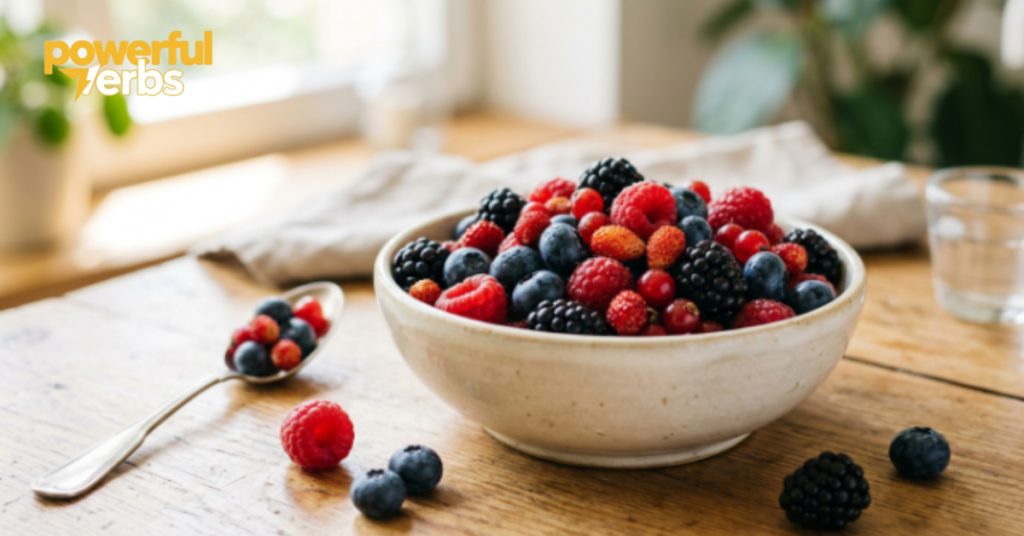
In botany, a “true berry” is a simple fruit developed from a single ovary. In common usage, the term includes any small, pulpy fruit eaten whole. Below are both true berries and commonly called berries.
Key Nutritional Benefit: Berries are among the most antioxidant-rich foods on earth. Regular consumption is linked to improved brain function, reduced cancer risk markers, lower blood sugar, and heart protection.
Strawberry Shape: Heart-shaped. Color: Bright red when ripe. One cup of strawberries provides 149% of the recommended daily value of vitamin C. Contains ellagic acid, a compound studied for its anti-cancer properties. Used in jams, desserts, smoothies, and fresh salads.
Blueberry Shape: Round, small. Color: Deep blue-purple. Often called a “brain superfood” — blueberries contain pterostilbene and anthocyanins that cross the blood-brain barrier and have been shown in studies to improve memory in older adults. Low glycemic index. Excellent fresh or frozen.
Raspberry Shape: Cluster of drupelets. Color: Red (most common), also black, yellow, and purple. Contains some of the highest fiber content among fruits (8g per cup). Ellagitannins in raspberries are studied for gut microbiome support. Extremely fragile; best eaten fresh or frozen.
Blackberry Shape: Elongated cluster of drupelets. Color: Deep black-purple. Higher in vitamin K than most other berries — important for blood clotting and bone health. Anthocyanins in blackberries have been shown to reduce oxidative stress markers.
Cranberry Shape: Round, firm. Color: Bright red. Highly acidic — rarely eaten raw. Famous for proanthocyanidins (PACs) that prevent bacteria (especially E. coli) from adhering to urinary tract walls. Used in juices, sauces, and dried form.
Elderberry (Sambucus) Shape: Tiny, clustered. Color: Deep purple-black. Must be cooked before eating — raw elderberries contain a compound that can cause nausea. Widely used in immune-boosting syrups and supplements. Studies show elderberry extract reduces the duration and severity of colds.
Gooseberry (Amla / Indian Gooseberry) Shape: Round. Color: Green, red, or translucent yellow. Regular gooseberry is tart and used in pies; Indian gooseberry (amla) is one of the richest natural sources of vitamin C and is central to Ayurvedic medicine.
Mulberry Shape: Elongated cluster. Color: Red, white, or dark purple-black depending on variety. Rich in iron and resveratrol (the same compound found in red wine). White mulberries are mildly sweet; black mulberries are intensely rich.
Boysenberry A hybrid developed in the 1920s by crossing raspberry, blackberry, and loganberry. Large, deep maroon-black fruit with a complex sweet-tart flavor. High in anthocyanins and vitamin C.
Huckleberry A wild North American berry closely related to blueberry. Darker, more intensely flavored than cultivated blueberries. Cannot be commercially farmed — harvested wild only.
Currants (Red, Black, White) Tiny, round berries growing in grape-like clusters on shrubs. Black currants contain the highest anthocyanin content of any commonly eaten fruit. Red and white currants are milder and used in jellies, cordials, and summer puddings.
Cloudberry Golden-amber berry that grows only in cold Arctic and subarctic regions. Extremely rich in vitamin C (three times more than oranges), omega-3 and omega-6 fatty acids, and carotenoids. Prized as a delicacy in Scandinavian countries.
Lingonberry Bright red Scandinavian berry with a bitter-tart flavor. Used famously in Swedish cuisine alongside meatballs. Contains high levels of arbutin, a natural compound studied for skin-brightening and urinary tract health.
Acai Berry Deep purple, olive-sized berry from the Amazon. Extraordinary antioxidant capacity — one of the highest ORAC scores of any food. Rich in healthy fats similar to olive oil. Best consumed as pulp, powder, or smoothie bowls.
4. Stone Fruits (Drupes) — Complete Names List
A drupe is a fleshy fruit with a thin outer skin, a fleshy middle layer (mesocarp), and a hard inner pit (endocarp) containing a seed. These are some of the world’s most commercially important fruits.
Key Nutritional Benefit: Stone fruits are rich in beta-carotene (apricot, peach), vitamin C (cherry, plum), and anti-inflammatory anthocyanins.
Peach — Fuzzy-skinned, juicy orange-yellow fruit. Native to China. Contains vitamins A and C, potassium, and niacin. Peach varieties are divided into clingstone (flesh sticks to pit) and freestone (flesh separates easily).
Nectarine — A genetic variant of peach with smooth, non-fuzzy skin. Same nutritional profile as peach but slightly firmer and sweeter. The difference between a peach and nectarine is caused by a single recessive gene mutation.
Plum — Available in red, black, yellow, and green varieties. High in sorbitol and isatin compounds that act as natural laxatives. Dried plums are called prunes and are concentrated in fiber and vitamin K.
Cherry — Two main types: sweet cherries (Bing, Rainier) for fresh eating; sour/tart cherries (Montmorency) for cooking, juice, and medicinal use. Tart cherries contain melatonin and tryptophan — studied extensively for improving sleep quality and reducing post-exercise muscle soreness.
Apricot — Small, golden-orange fruit. Among the richest fruit sources of beta-carotene (a precursor to vitamin A essential for vision and immune function). Available fresh in summer; dried apricots are a year-round concentrated source of iron.
Mango (also classified here) — Botanically a drupe. The seed inside the large flat pit contains mango butter, used in cosmetics.
Lychee (also classified here) — Though often grouped with tropical fruits, lychee is technically a drupe.
Olive — Technically a small stone fruit. Naturally extremely bitter — must be cured before eating. Rich in oleic acid (a monounsaturated fat) and polyphenols proven to reduce cardiovascular inflammation.
Date — Wrinkled, caramel-sweet drupe from date palm trees. One of humanity’s oldest cultivated foods — eaten for 6,000+ years in the Middle East and North Africa. Very high in natural sugars, fiber, iron, and potassium. Medjool and Deglet Noor are most popular varieties.
Loquat — Small oval orange-yellow fruit. Native to China; now widely grown in Mediterranean countries. Mild apricot-like flavor. Rich in vitamin A, pectin, and potassium.
Damson — Small, oval, tart purple plum. Too astringent to eat raw. Traditionally made into damson cheese, gin, and jam. Particularly rich in antioxidant tannins.
Greengage — Sweet, honey-flavored green plum. Originally from France (Reine Claude). Very high in vitamin C and dietary fiber.
Mirabelle Plum — Small, round, golden-yellow French plum. Extremely aromatic and sweet. Almost 75% of the world’s mirabelle production occurs in the Lorraine region of France.
5. Melon Fruits — All Types and Names
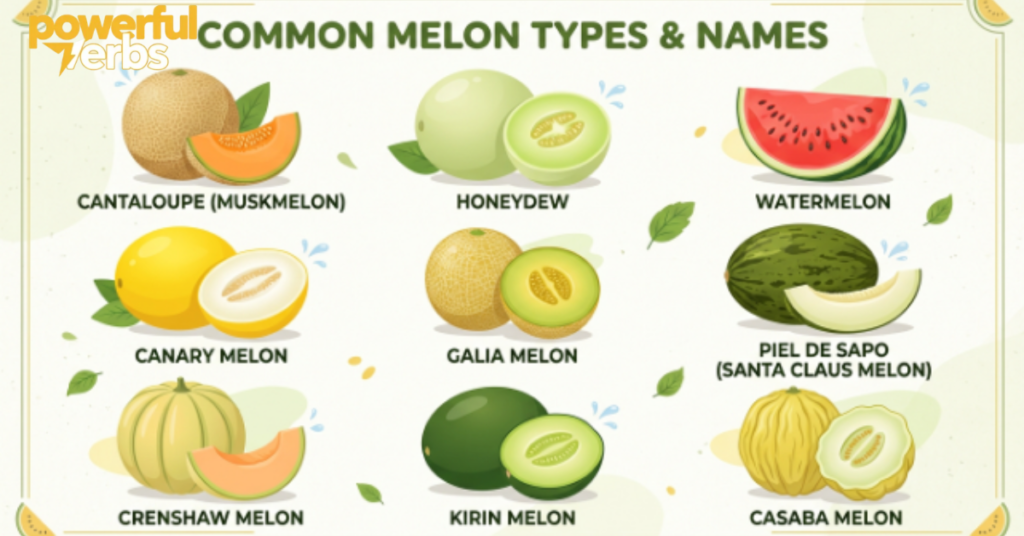
Melons belong to the Cucurbitaceae family (gourd family). They are characterized by thick rinds and extremely high water content (up to 95%) — making them among the most hydrating foods available.
Key Nutritional Benefit: High in citrulline (watermelon), beta-carotene (cantaloupe), and electrolytes — excellent for rehydration, skin health, and blood pressure support.
| Melon Name | Flesh Color | Flavor Profile | Notable Nutrient |
| Watermelon | Red or yellow | Sweet, refreshing | Lycopene, citrulline |
| Cantaloupe | Orange | Rich and musky | Beta-carotene, vitamin A |
| Honeydew | Pale green | Very sweet, mild | Vitamin C, potassium |
| Canary melon | White | Mild, sweet | Vitamin B, low calories |
| Galia melon | Green-white | Sweet, aromatic | Vitamin C, folate |
| Santa Claus melon | Green-white | Sweet, cucumber-like | Water, fiber |
| Crenshaw melon | Salmon-orange | Rich, spicy-sweet | Vitamins A and C |
| Casaba melon | Creamy white | Very mild | Low calories, hydration |
| Persian melon | Orange | Rich, aromatic | Beta-carotene |
| Hami melon | White-yellow | Crisp, honey-sweet | Vitamin C, potassium |
| Cantaloup de Charentais | Orange | Most aromatic melon | Vitamin A, antioxidants |
6. Pome Fruits
Pome fruits have a core surrounded by fleshy tissue developed from the receptacle (not the ovary itself). They are members of the Rosaceae (rose) family and are among the most widely cultivated fruits in temperate climates.
- Apple — Over 7,500 varieties exist worldwide. Apples are rich in quercetin, catechin, and chlorogenic acid — plant compounds with powerful anti-inflammatory and anti-cancer effects. The skin contains most of the fiber and polyphenols; never peel unless necessary.
- Pear — Slightly grittier texture than apple due to stone cells (sclereids). High in copper and vitamin K. Asian pears are rounder and crispier than European varieties.
- Quince — Golden-yellow, aromatic fruit that is too astringent to eat raw. Cooked quince develops a stunning deep pink color. Contains high levels of pectin — the natural gelling agent used in jam-making.
- Medlar — Ancient fruit rarely seen today. Must be “bletted” (softened through controlled decay or frost) before eating. Flavor resembles spiced apple butter.
- Loquat — Sometimes classified here due to its rosaceous family membership.
Fruits Names by Color
Color is one of the most powerful memory aids for learning and recalling fruit names. Color in fruits is determined by specific plant pigments — each linked to distinct health benefits.
Red Fruits Names
Red pigment in fruits comes from anthocyanins and lycopene — both powerful antioxidants linked to reduced cancer risk and cardiovascular protection.
Apple (Red Delicious, Fuji, Gala), Strawberry, Cherry (sweet and sour), Raspberry, Cranberry, Pomegranate, Watermelon (flesh), Blood orange, Red plum, Red grapes, Red currant, Tomato (botanical fruit), Acai berry, Lingonberry, Rose hip, Lychee (skin), Rambutan (skin), Pitaya / Red dragon fruit, Cornelian cherry, Barbados cherry.
Yellow Fruits Names
Yellow pigment comes from carotenoids (beta-carotene, lutein) and flavonoids — which support eye health, skin radiance, and anti-inflammatory processes.
Banana, Pineapple, Mango (ripe), Papaya (many varieties), Lemon, Canary melon, Yellow passion fruit, Loquat, Golden kiwi, Star fruit (when ripe), Mirabelle plum, Yellow fig, Yellow watermelon, Yuzu, Kumquat, Cantaloup (skin), Yellow pear, Honeydew (skin), Golden apple, Yellow plum, Starfruit, Calamansi (ripe).
Green Fruits Names
Green color comes from chlorophyll. Green fruits that stay green when ripe contain high levels of magnesium (the central atom of chlorophyll) and folate.
Granny Smith apple, Green pear (Bartlett), Kiwi (standard), Green grapes (Muscat, Thompson Seedless), Honeydew melon (flesh), Lime, Avocado, Green plum, Gooseberry, Breadfruit, Cherimoya, Soursop, Green mango, Feijoa, Guava (skin), Ackee, Bilimbi, Bitter melon, Ambarella, Green fig.
Orange Fruits Names
Orange color is produced by beta-carotene and cryptoxanthin — carotenoids that the body converts into vitamin A, essential for vision and immune function.
Orange (navel, Valencia), Tangerine, Clementine, Mandarin, Persimmon, Apricot, Cantaloupe (flesh), Papaya (flesh), Mango (skin of many varieties), Loquat, Nectarine (skin), Peach (skin), Sea buckthorn, Calamansi, Kumquat, Mirabelle (golden-orange), Cape gooseberry, Winter melon.
Purple and Blue Fruits Names
Deep purple and blue pigments come primarily from anthocyanins — among the most powerful plant antioxidants linked to brain health, anti-aging, and cardiovascular protection.
Blueberry, Blackberry, Black currant, Mulberry (black), Elderberry, Concord grape, Damson plum, Black plum, Boysenberry, Acai berry, Huckleberry, Bilberry, Blackcurrant, Fig (skin), Passion fruit (purple), Mangosteen (skin), Raisin grapes, Sloe berry, Jabuticaba, Prune.
White and Cream Fruits Names
White-fleshed fruits contain flavones and anthoxanthins — lesser-known plant compounds with anti-inflammatory and blood-pressure-lowering effects.
Coconut meat, Lychee flesh, Longan flesh, White peach, White dragon fruit flesh, White mulberry, Rambutan flesh, Pear flesh, Banana flesh, White grapes, Soursop flesh, Sapodilla flesh, White fig, Cherimoya flesh, Mangosteen flesh, Jackfruit segments, Breadfruit flesh.
Fruits Names by Shape
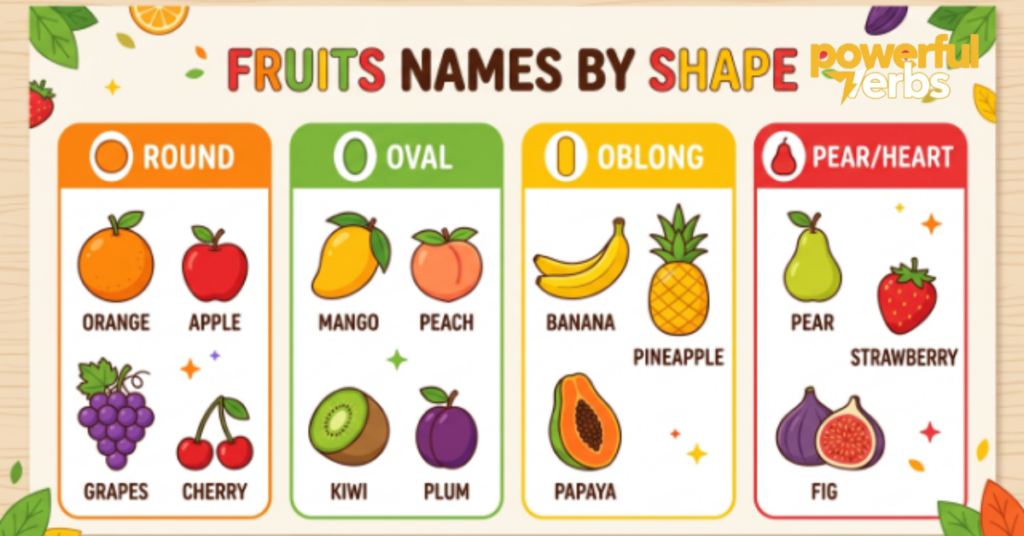
Round Fruits Names
Apple, Orange, Apricot, Avocado, Plum, Cherry, Peach, Kiwi, Pomegranate, Guava, Tomato, Passion fruit, Dragon fruit, Fig, Lemon, Lime, Grapefruit, Mandarin, Mangosteen, Sapodilla, Quince, Lychee, Rambutan, Longan, Jujube, Crabapple, Persimmon, Indian gooseberry (amla), Star apple, Loquat, Camu camu.
Long and Oval Fruits Names
Banana, Plantain, Mango, Papaya, Pineapple, Long watermelon, Dates (oval), Tamarind pod, Carambola (star fruit), Feijoa, Soursop, Finger lime, Bilimbi, Horned melon (kiwano), Akebi, Mamoncillo, Canistel, Pepino, Lucuma, June plum.
Heart-Shaped Fruits Names
Strawberry, Cherimoya (irregularly heart-shaped), Sugar apple, Papaya (some varieties), Pitahaya (some varieties).
Seasonal Fruits Names
Understanding fruit seasonality helps in shopping smarter, eating fresher, and reducing food miles.
Summer Fruits Names
Watermelon, Mango, Peach, Nectarine, Cherry, Plum, Blueberry, Blackberry, Raspberry, Fig, Apricot, Pineapple, Lychee, Honeydew, Cantaloupe, Grape, Guava, Passion fruit, Rambutan.
Winter Fruits Names
Orange, Mandarin, Clementine, Grapefruit, Pomelo, Blood orange, Kiwi, Persimmon, Quince, Date, Pomegranate, Apple (stored varieties), Pear (stored), Cranberry, Loquat.
Spring Fruits Names
Strawberry (early season), Apricot (early), Loquat, Mulberry, Rhubarb (botanical fruit), Honeydew (early), Lemon, Lime.
Autumn / Fall Fruits Names
Apple (peak harvest), Pear, Grape, Fig, Quince, Persimmon, Pomegranate, Cranberry, Pawpaw, Feijoa, Medlar, Damson.
Exotic and Rare Fruits Names
These fruits are less commonly found in mainstream supermarkets but are increasingly available at specialty stores and farmers’ markets.
Rambutan — Hairy red fruit from Southeast Asia. Tastes like a mild, sweet lychee. The seed contains fatty acids used in cosmetics.
Mangosteen — Purple tropical fruit with snow-white segments inside. Extremely perishable. Contains xanthones studied for their anti-inflammatory and anti-cancer properties.
Durian — Divisive fruit known for its powerful smell but rich, custard-like flavor. Banned on many forms of public transport in Southeast Asia due to its odor, yet loved intensely by millions.
Jackfruit — World’s largest tree-grown fruit. Unripe jackfruit has a meaty texture making it the most popular plant-based meat substitute globally as of 2026.
Feijoa (Pineapple Guava) — Oval green fruit from South America. Intensely aromatic flesh with flavors of guava, pineapple, and mint. Extremely popular in New Zealand.
Camu Camu — Amazon rainforest berry with the highest natural vitamin C concentration of any known plant — up to 3,000 mg per 100g (versus 50 mg in orange).
Miracle Fruit (Synsepalum dulcificum) — West African berry containing miraculin protein that binds to taste receptors and makes sour foods taste sweet for 30–60 minutes after eating it. Used in “flavor tripping” experiences and as a low-calorie sweetener aid.
Ackee — National fruit of Jamaica. Must be fully ripe before eating — unripe ackee contains hypoglycin A, a toxic compound. When properly ripe and cooked, the yellow arils have a creamy, buttery flavor.
Cherimoya — Mark Twain called it “the most delicious fruit known to men.” Scaly green exterior; creamy white flesh with a flavor combining banana, vanilla, and pineapple.
Jabuticaba — Brazilian fruit that grows directly on the trunk and main branches of the tree — not on branches. Deep purple, grape-like berries. Must be eaten immediately after harvest as they ferment within 3–4 days.
Finger Lime (Caviar Lime) — Elongated Australian native citrus fruit. When cut, it releases tiny spherical vesicles (cells) that pop on the tongue like citrus caviar. Extremely popular with high-end chefs worldwide.
Horned Melon (Kiwano) — Striking bright orange spiny melon from Africa. Lime-green, jelly-like flesh with a cucumber-banana flavor. Very high in water content and magnesium.
National Fruits of Different Countries
Many nations have designated a specific fruit as their national symbol, often reflecting the fruit’s cultural, agricultural, or historical significance.
| Country | National Fruit |
| India | Mango |
| Pakistan | Mango |
| Bangladesh | Jackfruit |
| Philippines | Mango |
| Sri Lanka | Jackfruit |
| Jamaica | Ackee |
| Brazil | Cupuaçu |
| USA (Georgia) | Peach |
| China | Kiwi / Fuzzy peach |
| Japan | Japanese persimmon |
| Malaysia | Durian |
| Indonesia | Salak (Snake fruit) |
| Iran | Pomegranate |
| Turkey | Fig |
| Italy | Bergamot |
| France | Apple (unofficially) |
| Australia | Finger lime (native symbol) |
Fruits Rich in Specific Nutrients (Nutritional Guide)
Fruits Highest in Vitamin C
Camu camu, Kakadu plum, Acerola cherry, Rose hip, Guava, Kiwi, Papaya, Strawberry, Citrus fruits (orange, grapefruit, lemon).
Fruits Highest in Potassium
Avocado, Guava, Banana, Kiwi, Dates, Passion fruit, Jackfruit, Dried apricot, Pomegranate, Sapodilla.
Fruits Highest in Fiber
Avocado, Guava, Raspberry, Blackberry, Passionfruit, Pear, Durian, Pomegranate, Figs, Dried prunes.
Fruits Highest in Antioxidants (ORAC Score)
Acai berry, Elderberry, Black currant, Blueberry, Cranberry, Wild strawberry, Mulberry, Plum, Pomegranate, Goji berry.
Low Sugar Fruits (Best for Diabetics)
Avocado, Lemon, Lime, Strawberry, Blackberry, Raspberry, Cranberry, Guava, Kiwi, Grapefruit.
Highest Calorie Fruits (Energy Dense)
Avocado, Coconut meat, Dates, Durian, Dried mango, Plantain, Banana, Jackfruit, Breadfruit, Fig.
FAQs
Q: What are the 10 most popular fruits in the world?
The 10 most widely consumed fruits globally are: banana, apple, watermelon, orange, grape, mango, pineapple, tomato, pear, and peach — in approximate order of global production volume.
Q: What is the difference between a fruit and a vegetable?
Botanically, any part of a plant containing seeds is a fruit — this includes tomatoes, cucumbers, avocados, peppers, and squash. In culinary tradition, “vegetable” refers to savory-tasting plant parts (roots, leaves, stems), while “fruit” means sweet or tart seed-bearing parts. This is why tomatoes are legally classified as vegetables in the USA (by a Supreme Court ruling from 1893) but are botanically fruits.
Q: What is the healthiest fruit in the world?
No single fruit holds this title, but consistently top-ranked choices include: blueberry (brain and heart health), avocado (healthy fats and potassium), pomegranate (anti-inflammatory antioxidants), guava (highest vitamin C among common fruits), and acai (highest antioxidant density).
Q: Which fruits should be eaten daily?
Nutrition guidelines recommend 2–3 servings of varied fruit daily. For maximum benefit, rotate between a citrus fruit (vitamin C), a berry (antioxidants), and a tropical or stone fruit (carotenoids and enzymes). Variety ensures you receive the full spectrum of plant compounds.
Q: What are citrus fruits?
Citrus fruits are a group of flowering plants in the family Rutaceae that produce segmented, vitamin C-rich fruits with aromatic peel. Common examples: orange, lemon, lime, grapefruit, mandarin, pomelo, yuzu, bergamot, and calamansi.
Q: What are the rarest fruits in the world?
Among the rarest commercially available fruits: Camu camu (Amazon), Miracle fruit (West Africa), Jabuticaba (Brazil), Black sapote (Mexico), Cupuaçu (Amazon), White strawberries (Japan’s Hatsukoi no Kaori variety), Lardizabala (Chile), and Keule (Chile).
Q: Which fruits are highest in sugar?
Highest natural sugar fruits: dates (70g sugar/100g), dried figs, raisins, lychee, mango, grape, banana, cherry, pomegranate, and kiwi. Note that the fiber content of whole fruits significantly slows sugar absorption — making most whole fruits safe even for people monitoring blood sugar.
Conclusion
Knowing the names of 250+ fruits is not just about vocabulary — it is about opening yourself to a richer world of food, culture, health, and nature. Every fruit on this list has a story: a place of origin, a traditional use, a unique nutritional fingerprint, and often a cultural significance to the people who have cultivated it for centuries.
Use this guide as a reference, a study tool, and a starting point for exploration. Try one new fruit per week. Read the label. Look up its origin. Notice its flavor. That is how you build lasting, useful knowledge — and a healthier, more varied diet.

Liam Johnson is a dedicated language expert with 4 years of professional experience. He specializes in Grammar, Vocabulary, and Sentence structure.
