

You write an email, you’re about to send it, and suddenly you stop: is it cancelled or canceled? One extra “l” shouldn’t cause this much hesitation, yet it’s one of the most searched spelling questions in English. The confusion is real, and it shows up everywhere — news headlines, school assignments, business emails, and social media posts.
This guide clears up the confusion completely. You’ll learn exactly where each spelling comes from, which regions use which form, how to apply the same rule to similar words, and how to avoid the small slip-ups that make writing look inconsistent.
see also: Referral or Referal: Which Spelling Is Correct?
Quick Answer: Cancelled or Canceled?
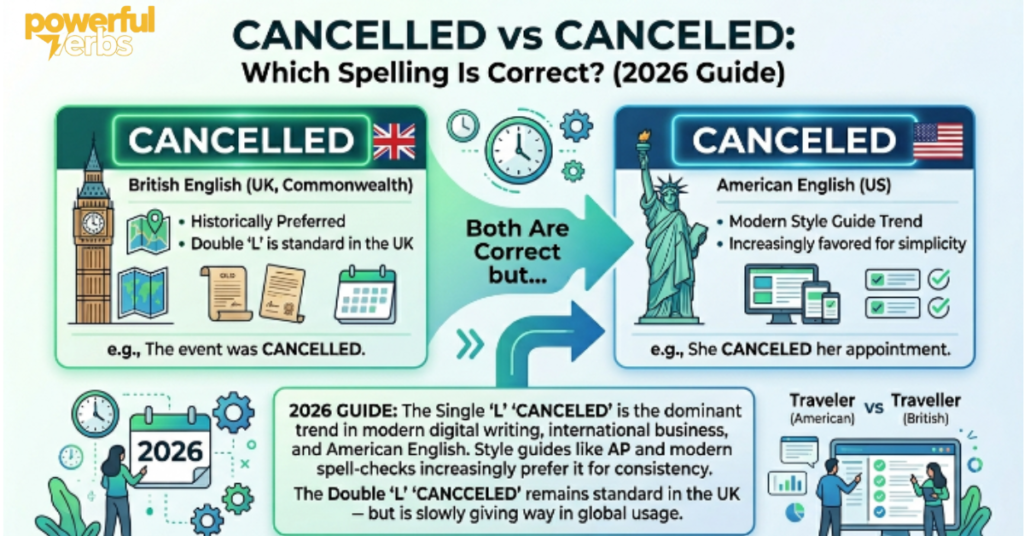
- Cancelled (with double “l”) is the standard spelling in British, Australian, and Canadian English.
- Canceled (with a single “l”) is the standard spelling in American English.
- Both words mean exactly the same thing: stopped, called off, or ended before it happened.
- Neither spelling is a mistake — the difference is purely regional, not grammatical.
If you remember nothing else from this guide, remember: double “l” for British style, single “l” for American style.
Why Do Two Spellings Exist for the Same Word?
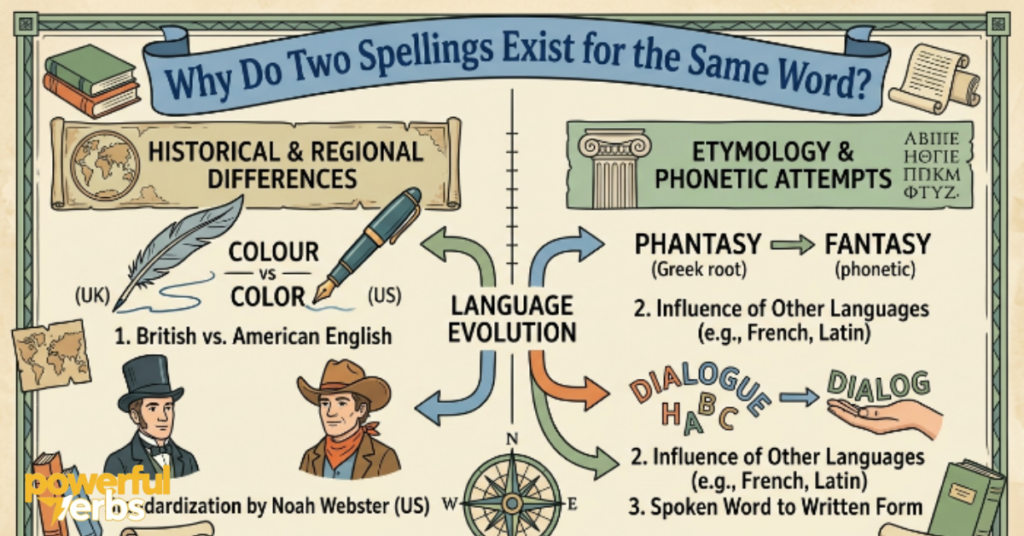
The root cause goes back to how English spelling evolved differently on each side of the Atlantic. British English largely kept older, traditional spelling patterns, while American English — shaped heavily by lexicographer Noah Webster in the early 1800s — simplified many words to make them more phonetic and consistent.
Webster’s reforms specifically targeted verbs ending in a single vowel followed by a consonant, like cancel. Under traditional British rules, when you add a suffix such as -ed or -ing to a verb like this, the final consonant is doubled:
- travel → travelled
- label → labelled
- cancel → cancelled
American English simplified this pattern, dropping the extra consonant in most cases:
- travel → traveled
- label → labeled
- cancel → canceled
This is why cancelled and canceled aren’t really “two different words” — they’re two regional outcomes of the same spelling rule applied differently.
Is There Any Difference in Meaning?
No. Whether you write cancelled or canceled, the meaning stays identical. Both describe something that has been:
- Called off or stopped before it happened
- Withdrawn or terminated
- Ended without being completed
- Voided or annulled (in formal or legal contexts)
The spelling tells the reader nothing about the meaning — only about which English variety the writer is following.
see also: Rehireable or Rehirable: Definition, Usage, and Key Difference (2026 Guide)
British English vs American English: A Side-by-Side Look
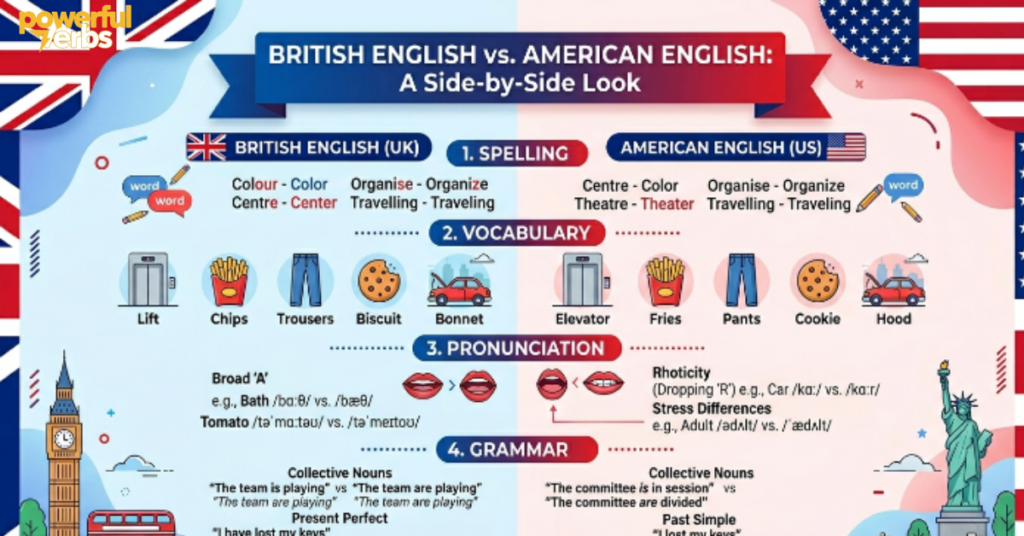
| Aspect | Cancelled | Canceled |
| Region | UK, Australia, Canada, India (often) | United States |
| Spelling rule | Doubles the final consonant before suffix | Keeps a single consonant before suffix |
| Common in | Newspapers, official UK documents, academic writing | US news, business communication, tech industry |
| Word length | Two L’s | One L |
| Correct? | Yes | Yes |
How to Use “Cancelled” in a Sentence
- The football match was cancelled due to heavy rainfall.
- Her subscription was cancelled after she missed three payments.
- The airline cancelled dozens of flights because of the storm.
- They cancelled the contract before it was finalized.
How to Use “Canceled” in a Sentence
- The conference was canceled at the last minute.
- He canceled his gym membership last week.
- The company canceled the product launch after negative feedback.
- Our reservation got canceled without any notice.
Swap the spelling in any of these sentences, and the meaning won’t change — only the regional spelling style shifts.
Common Mistakes to Avoid
- Believing one spelling is “incorrect.” Both forms are fully valid; treating either as wrong is the actual error.
- Switching spellings mid-document. If your article starts with cancelled, don’t suddenly switch to canceled later — pick one and stay consistent.
- Misapplying the rule to “cancellation.” Both British and American English actually agree on doubling the “l” here — it’s almost always cancellation, not cancelation, in formal writing on both sides.
- Assuming the rule applies to every word ending in “-el.” Some words don’t double the consonant in British English at all (like develop → developed), so it’s safer to check individual words rather than memorizing one universal rule.
- Ignoring your audience. Using canceled for a UK-based readership (or vice versa) can look like a typo to native readers, even though it’s technically correct elsewhere.
Other Words That Follow the Same British–American Pattern
This single-versus-double-letter pattern isn’t unique to cancel. Several common verbs follow the exact same British-versus-American divide:
- Travelled (UK) vs Traveled (US)
- Labelled (UK) vs Labeled (US)
- Modelling (UK) vs Modeling (US)
- Signalled (UK) vs Signaled (US)
- Fuelled (UK) vs Fueled (US)
Recognizing this pattern makes it much easier to predict the correct spelling for similar words without memorizing each one individually.
Where You’ll See Each Spelling in Real Life
News and Media: UK outlets like the BBC will report that an event “has been cancelled,” while US outlets like CNN will say it “was canceled” — same story, different spelling convention.
Business Communication: A British company email might read, “Your order has been cancelled,” while an American company would write, “Your order has been canceled.”
Travel and Airlines: Flight status boards often reflect regional spelling depending on the airline’s home country — British Airways uses cancelled, while Delta or American Airlines use canceled.
Academic Writing: Students writing for UK universities should use cancelled, while those writing for US institutions should use canceled, since most style guides (APA, MLA, Chicago) follow American conventions by default.
Which Spelling Should You Use?
- Writing for a UK, Australian, or Canadian audience → use cancelled.
- Writing for a US audience, American clients, or following APA/MLA/Chicago style → use canceled.
- Writing for a global or mixed audience → either is acceptable, but American spelling (canceled) tends to be more recognized internationally due to US media dominance.
- Working on one document, website, or app → choose a single spelling and apply it consistently throughout.
conclusion
The difference between cancelled and canceled comes down to geography, not grammar. Both spellings are dictionary-correct, both carry the same meaning, and both trace back to the same root word — they simply followed different paths as British and American English diverged over the past two centuries.
Pick the spelling that matches your audience or style guide, stay consistent throughout your writing, and you’ll never need to second-guess this word again.
see also: Sentence or Sentance: Definition, Examples, and Correct Usage for 2026
FAQs
Is “canceled” a misspelling of “cancelled”?
No, it’s the standard American English spelling and is completely correct in that context.
Which spelling should I use for a US-based business website?
Use “canceled,” since American audiences and US style guides expect the single-“l” form.
Does “cancellation” also change between British and American English?
No, both varieties typically spell it “cancellation” with a double “l,” regardless of region.
Can I use “cancelled” and “canceled” in the same article?
It’s best to avoid mixing them — pick one spelling style and use it consistently for a professional, polished result.
Why does British English double the final letter more often than American English?
British English largely preserved older spelling conventions, while American English simplified many words during 19th-century spelling reforms.
Is one spelling considered more “correct” globally?
Neither is universally more correct; the right choice depends entirely on your target audience and the English style guide you’re following.

Liam Johnson is a dedicated language expert with 4 years of professional experience. He specializes in Grammar, Vocabulary, and Sentence structure.
