

“Pookie” is one of the sweetest words taking over chats and social media right now. It’s soft, fun, and full of good vibes. If you’ve seen it in someone’s caption or text and wondered what it means, you’re in exactly the right place.
Introduction: What Does “Pookie” Mean?
Everyone seems to be calling someone their “pookie” these days. From Instagram captions to late-night texts, this little word is absolutely everywhere right now. It feels warm, personal, and just a little bit magical when someone uses it for you.
The word carries a vibe that’s hard to explain but very easy to feel. It’s the kind of word that makes a conversation instantly softer and more affectionate. People of all ages are using it, but Gen Z has taken it to a whole new level online.
What makes “pookie” so special is how naturally it fits into everyday language. You don’t need a reason to use it—just a person you care about and a good mood. And once you start using it, it’s honestly hard to stop.
What Does “Pookie” Mean in Text?
“Pookie” in text simply means a cute, lovable person you absolutely adore. It carries a soft, playful emotional tone that feels sweet, warm, and never too serious or heavy.
- It’s a term of endearment used to show genuine affection
- The emotional tone is always cute, light, and full of good energy
- It never sounds aggressive or harsh—it’s purely a positive word
- People use it the same way they’d use “babe” or “sweetheart” in a text
- It works whether you’re being romantic, funny, or just casually sweet
The best thing about “pookie” in texts is that it automatically softens the entire message. Even a simple “good morning, pookie” feels ten times more caring than just a regular good morning text.
What Is the Full Form of “Pookie”?
A lot of people wonder if “pookie” stands for something, but the truth is, it doesn’t. It is not an acronym and has no hidden full form or secret meaning behind the letters.
- It’s simply a nickname or a pet name people give to someone they love
- The word was created to sound naturally cute and soft, like baby talk
- Think of words like “honey,” “babe,” or “darling”—none of them have full forms either
- “Pookie” was designed to feel warm and gentle, not formal or technical
- The cuteness of the word comes from how it sounds, not what it stands for
So if someone ever asks you what “pookie” stands for, the answer is simple — it stands for love, affection, and the fact that someone really likes you.
Origin and History of “Pookie”
The word “pookie” has actually been around longer than most people think. It didn’t just show up on TikTok one day—it has a real history that stretches back several decades in American culture.
- The word first appeared as a playful, made-up nickname used in close families
- It gained real pop culture fame through cartoons and TV shows in the 1980s and 90s
- The famous comic strip character Garfield had a stuffed teddy bear named “Pookie,” which many people remember fondly
- Over time, the word slowly moved from childhood nicknames into adult relationships
- Gen Z then rediscovered it, gave it a fresh internet energy, and turned it into a full-blown trend
Today, “pookie” has traveled far from its cartoon origins. It’s now used by millions of people across every social media platform and in everyday conversations all around the world.
How Is “Pookie” Used in Chat?
In everyday chats, “pookie” pops up as a nickname, a random compliment, or just a way to make someone smile mid-conversation. It flows naturally, no matter what kind of chat you’re having.
- “Good morning, pookie! Hope your day is amazing 🌸”—warm and sweet
- “You looked absolutely adorable today, pookie.” — romantic and affectionate
- “Stop it, pookie, you’re being so dramatic 😂”—playful and teasing
- “Miss you so much, pookie 🥺”—emotional and heartfelt
- “Pookie!! Where are you? Let’s go eat!” — casual and fun with close friends
The word adapts to whatever tone your conversation already has. If you’re being sweet, it sounds sweeter. If you’re being funny, it sounds funnier. That’s what makes it such a flexible and popular word to use in chats.
What Does “Pookie” Mean From a Girl or a Boy?
The core meaning of “pookie” stays the same no matter who uses it, but the tone and energy behind it can feel slightly different. A lot depends on the relationship and the context of the conversation.
- From a girl: it often feels nurturing, emotionally warm, and deeply affectionate
- From a boy: it can feel playful, teasing, or surprisingly tender depending on his personality
- Between two close friends, it feels more like an inside joke or a cute nickname with no romantic pressure
- In a romantic relationship, it carries real emotional weight and signals genuine care
- From a parent to a child: it feels protective, loving, and completely wholesome
In every single case, being called “pookie” is a good thing. It means the person saying it sees you in a positive, affectionate light—and that’s always something worth smiling about.
“Pookie” Meaning on WhatsApp, Instagram, and Snapchat
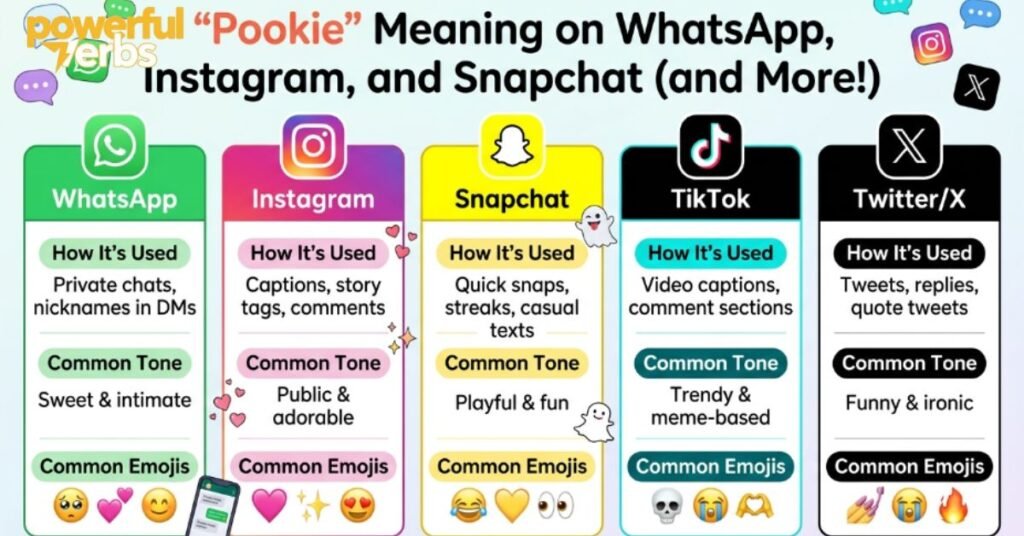
The word “pookie” feels a little different depending on which platform you’re using it on. The setting, the emojis, and the audience all shape how the word lands and what vibe it creates.
| Platform | How It’s Used | Common Tone | Common Emojis |
| Private chats, nicknames in DMs | Sweet & intimate | 🥺💕😊 | |
| Captions, story tags, comments | Public & adorable | 🩷✨😍 | |
| Snapchat | Quick snaps, streaks, casual texts | Playful & fun | 😂💛👀 |
| TikTok | Video captions, comment sections | Trendy & meme-based | 💀😭🫶 |
| Twitter/X | Tweets, replies, quote tweets | Funny & ironic | 💅😭🔥 |
On WhatsApp, it feels personal and private—like a word only two people share. On Instagram and TikTok, it’s more of a public statement that says “this person is my favorite.” The platform changes the presentation, but the love behind it always stays the same.
Is “Pookie” Rude or Polite?
“Pookie” is almost always a positive, kind, and polite word to use. It was built from affection, and that warmth shows up every single time someone uses it in conversation.
- In most situations, it’s a genuine compliment that instantly makes people feel good
- It has no aggressive or offensive energy attached to it—it’s soft by nature
- It might feel a tiny bit awkward if you use it with someone you barely know
- In close, comfortable relationships, it always lands well and feels completely natural
- Some people might find it too childish or cutesy, but that’s a personal preference, not an insult
The bottom line is that “pookie” is one of the safest and most positive slang words you can use right now. The worst reaction you’ll get is a laugh—and even that feels like a win.
When Should You Use “Pookie”?
“Pookie” works best in relationships and conversations where comfort and affection already exist. Here’s exactly when it fits in perfectly and feels completely right:
- ✦ With your romantic partner during daily texts and cute conversations
- ✦ With your best friend when you want to be sweet or playfully annoying
- ✦ In fun, lighthearted group chats where the vibe is already relaxed and happy
- ✦ When you’re leaving a comment on someone’s photo that you genuinely adore
- ✦ With a sibling or family member you’re close with and share inside jokes
- ✦ With your pet — yes, calling your dog or cat “pookie” is perfectly valid and very popular
- ✦ When you’re texting someone goodnight and want it to feel extra warm and personal
The more comfortable you are with someone, the more naturally “pookie” will come out. It’s a word that grows with the relationship.
When Should You NOT Use “Pookie”?
As lovable as the word is, “pookie” absolutely does not belong in every situation. Knowing when to hold back is just as important as knowing when to use it freely.
- ✦ In professional or work chats—your boss or coworker does not need to be called “pookie.”
- ✦ In emails, school assignments, or any kind of formal written communication
- ✦ With strangers or people you’ve just met—it can feel way too familiar too fast
- ✦ In serious arguments or emotional conversations, it might come across as dismissive
- ✦ In interviews, presentations, or any public speaking situation
- ✦ When someone has clearly told you they don’t like pet names or nicknames
- ✦ In professional social media bios, LinkedIn posts, or work-related captions
There’s a time and a place for sweet words, and reading the room matters a lot. “Pookie” thrives in warmth—not in formality.
Best Replies to “Pookie”
Getting called “pookie” feels really good, but now you need to reply without freezing up. Here are some perfect replies depending on your mood and the vibe of the conversation:
Cute Replies
- “Aww, you’re my pookie too, always. 💕”
- “Stop, you’re literally making me blush right now. 😊”
- “You can’t just say that and expect me to act normal. 🥺”
- “That made my whole day, not even joking.”
Funny Replies 😂
- “Did you just call me a cartoon teddy bear?!”
- “I accept this title with great honor and zero shame. 🫡”
- “Pookie reporting for duty. 🐾”
- “I’ve been waiting my whole life for this moment, honestly.”
Flirty Replies 😏
- “Only you get to call me that, just so you know. 😉”
- “Say it again… I really liked how that sounded.”
- “Keep calling me that and see what happens. 😌”
- “You’re dangerous, you know that? 💛”
Examples of “Pookie” in Sentences
Seeing a word used in real-life conversations makes it so much easier to understand when and how to use it yourself. Here are detailed examples across different tones and situations:
Romantic Examples 💕
- “I missed you all day today, pookie. 🥺”
- “You have no idea how much I like you, pookie.”
- “Goodnight, pookie. Dream about something sweet.”
Friendly Examples 😄
- “Come on, pookie, let’s go get some food already!”
- “You’re such a pookie; I swear I can’t be mad at you.”
- “Okay, pookie, spill—what happened today??”
Teasing & Funny Examples 😂
- “Aww, is my little pookie nervous? 😂”
- “You’re such a pookie when you’re tired; it’s actually adorable.”
- “Don’t be a pookie about it—just send the text!”
Caption Style Examples ✨
- “Date night with my forever pookie 🌙✨”
- “She’s my person, my best friend, my pookie 🩷.”
- “POV: you finally found your pookie 🫶”
Caring & Emotional Examples 🥺
- “You okay, pookie? You seem really quiet today.”
- “I’ve got you, pookie. Always.”
- “Proud of you more than you know, pookie. 💕”
Similar Slang Words Like “Pookie”
If “pookie” isn’t quite your style, there are plenty of other terms that carry a very similar warm and affectionate energy. They all mean roughly the same thing — someone incredibly special to you.
| Slang Word | Vibe | Best Used With |
| Babe | Classic, smooth, and romantic | Romantic partners |
| Boo | Cool, casual, and laid-back | Partners or close friends |
| Bae | Trendy and deeply affectionate | Romantic interests |
| Honey | Warm, traditional, and timeless | Partners or family |
| Cutie | Light, playful, and sweet | Crushes or new connections |
| Babes | Friendly and fun | Best friends |
| Angel | Soft, loving, and sincere | Partners or people you admire |
| Love | Classic British-style endearment | Anyone you care deeply about |
Each of these words has its own personality, but they all come from the same place—genuine affection. “Pookie” just happens to be the most fun to say right now.
Is “Pookie” Trending on Social Media?
Yes—”pookie” is absolutely having its moment, and it doesn’t seem to be slowing down anytime soon. Gen Z brought it back from the past and gave it a completely fresh internet identity.
- TikTok videos using the word “pookie” in captions and voice-overs have racked up millions and millions of views
- Memes about calling your partner, best friend, or even your pet “pookie” are shared constantly across every platform
- The word has become a symbol of soft, sweet internet culture—the kind that makes people feel warm instead of anxious
- Influencers and content creators use it in their captions regularly because it gets higher engagement and feels relatable
- It’s moved beyond slang now—”pookie” is practically its own aesthetic at this point
The reason it trends so consistently is that it feels genuine. In a world full of irony and sarcasm online, “pookie” is refreshingly sweet, and people are clearly hungry for that kind of energy.
Final Thoughts
“Pookie” is more than just a slang word—it’s a tiny little pocket of warmth you can drop into any conversation to make someone feel truly special. It started as a simple nickname and quietly grew into one of the most beloved terms of affection on the entire internet right now.
Whether you use it with your partner, your best friend, your sibling, or your dog, the vibe is always good, and the intention is always kind. So go ahead, send that “hey pookie” text you’ve been thinking about. Someone out there is absolutely going to smile the second they read it. 🩷
Frequently Asked Questions
1. What does “pookie” mean in slang when someone texts it to you?
“Pookie” is a term of endearment used in texts and social media to call someone cute, lovable, or special—similar to “babe,” “boo,” or “cutie.” It’s most commonly used between romantic partners or close friends.
2. How do you use the word “pookie” in a sentence on social media?
You can use it like “Omg, you look so good in that pic, pookie 😍” or “Good morning, pookie!” It works as a nickname in captions, comments, DMs, or TikTok replies to show affection.
3. Is “pookie” a romantic term, or can you use it with friends too?
“Pookie” can be both! While it’s popular as a romantic nickname, many people use it platonically with best friends, siblings, or even pets to express that someone is adorable or deeply loved.
4. Where did the slang term “pookie” originally come from?
“Pookie” has been used as a cute nickname for decades, but it exploded in modern internet slang through TikTok and Twitter/X, where creators used it to hype up partners, friends, and even celebrities in a sweet, playful way.
5. What is the difference between calling someone “pookie” versus “boo” in a text?
Both are terms of affection, but “pookie” feels softer, cuter, and more playful, while “boo” leans slightly more romantic or street-casual. “Pookie” is also trending on Gen Z platforms like TikTok and Instagram in 2024–2025.
6. How do you respond when someone calls you “pookie” in a text or comment?
You can respond with something like “Aww, you’re MY pookie 🥹,” a heart emoji, or a playful “Stop, you’re too sweet!”—matching their warm, affectionate energy keeps the conversation cute and lighthearted.
7. Can “pookie” be used sarcastically or as a joke on social media?
Yes! “Pookie” is often used humorously on TikTok and Twitter/X—for example, calling out someone’s funny fail with “What was pookie doing here 😭”—giving it a sarcastic, teasing tone while still sounding affectionate.
8. Is it weird or too forward to call someone pookie if you just met them?
It can feel overly familiar if used too soon with someone you don’t know well. It’s best reserved for people you’re close to—a crush, partner, or best friend—to avoid coming across as too intense or flirtatious too early.
9. What are some other slang words similar to “pookie” that mean the same thing?
Words similar to “pookie” include “boo,” “babe,” “babes,” “cutie,” “hun,” “darling,” “lovebug,” and “bae”—all used as affectionate nicknames in texting and social media with slightly different vibes and generational popularity.
10. Why is everyone on TikTok using the word “pookie” in their videos and comments in 2025?
“Pookie” went viral on TikTok as creators used it to hype up their partners, friends, and faves in a wholesome, Gen Z way. Its soft, cute sound made it perfect for affectionate trends, couple content, and supportive comment culture.

Liam Johnson is a dedicated language expert with 4 years of professional experience. He specializes in Grammar, Vocabulary, and Sentence structure.
