

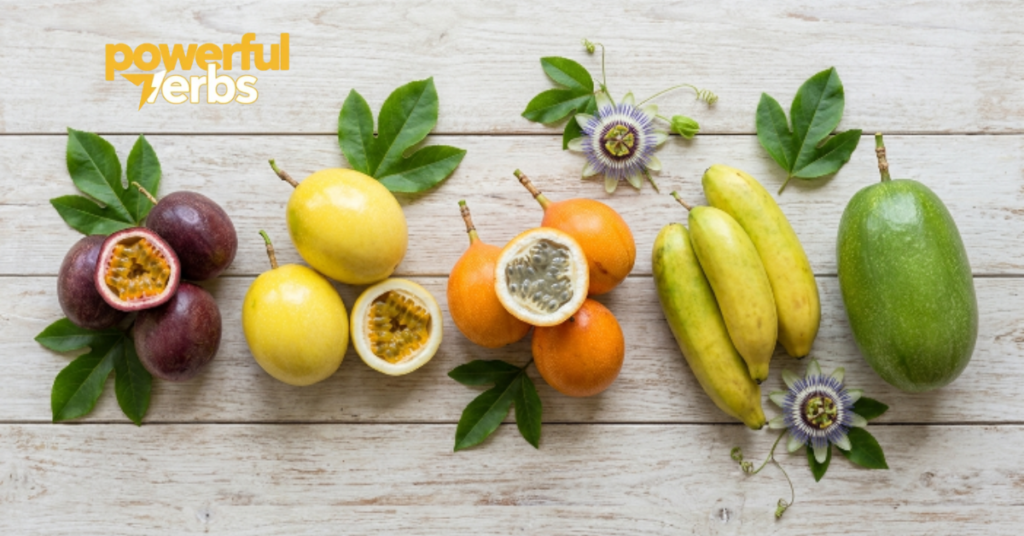
Passion fruit is one of the most exotic, nutritious, and flavorful tropical fruits enjoyed across the world. Yet most people have only ever tasted one or two varieties completely unaware that over 30 distinct types of passion fruit exist, each with its own unique flavor profile, skin color, size, aroma, and culinary use.
Whether you are a home gardener, a nutrition enthusiast, a chef, or simply someone who loves discovering new fruits, this complete guide gives you everything you need to identify, understand, and appreciate every major passion fruit variety grown around the world today.
What Is Passion Fruit? (Full Overview)
Passion fruit belongs to the Passiflora genus — a family of climbing vines native to South America that now grow across tropical and subtropical regions worldwide. The fruit earned its name not from romantic passion but from the Passionflower (Passiflora), whose elaborate blooms early Spanish missionaries in South America compared symbolically to the Passion of Christ.
Each fruit consists of a tough outer rind and a juicy, seed-filled interior bursting with bold tropical flavor. The pulp ranges from pale yellow to deep orange depending on the variety, and the seeds are entirely edible and nutritious.
Key Facts About Passion Fruit
| Feature | Details |
| Scientific Family | Passifloraceae |
| Main Genus | Passiflora |
| Origin | South America (Brazil, Paraguay, Argentina) |
| Growth Habit | Fast-climbing vine with curling tendrils |
| Climate | Tropical and subtropical |
| Harvest Season | Varies by variety and region |
| Taste Profile | Sweet-tart, citrusy, tropical |
| Nutritional Highlights | Vitamin C, fiber, antioxidants, potassium |
What Does Passion Fruit Look Like?
Passion fruit is typically round to oval in shape with a thick, waxy rind that changes color as the fruit ripens. Depending on the variety, the outer skin may be deep purple, bright yellow, orange, red, or even green.
When you cut one open, you find a jelly-like golden pulp packed with small, dark, crunchy seeds. The interior has an intensely fruity aroma that fills the room immediately — one of the most distinctive scents of any tropical fruit.
Signs of Ripeness:
- Skin begins to wrinkle slightly
- Deep, rich color appears (purple, yellow, or orange depending on type)
- Fruit feels heavy for its size
- Strong tropical aroma when held close
What Does Passion Fruit Taste Like?
The flavor of passion fruit is truly unlike any other fruit. It delivers a bold combination of sweet and tart with strong tropical notes that are often compared to a blend of pineapple, mango, guava, and citrus — all in a single bite.
| Taste Element | Description |
| Sweetness | Natural fruit sugars create a rich, satisfying sweetness |
| Acidity | A sharp citrusy tartness that balances the sweetness |
| Aroma | Intensely floral, tropical, and distinctive |
| Texture | Jelly-like pulp with small crunchy edible seeds |
| Aftertaste | Lingering tropical sweetness with slight tartness |
The exact flavor intensity varies considerably between varieties — sweet granadilla is delicate and mild, while yellow maracuja is boldly acidic and punchy.
How to Cut and Eat Passion Fruit
Step-by-Step Cutting Guide
- Rinse the fruit thoroughly under cool running water to remove any surface residue.
- Place it on a stable cutting board and hold it firmly.
- Slice straight through the center using a sharp knife, cutting the fruit into two equal halves.
- Observe the interior — you will see golden, jelly-like pulp surrounding numerous small black seeds.
- Scoop out the pulp using a spoon, collecting both the pulp and seeds together.
Best Ways to Enjoy Passion Fruit
- Eat fresh — scoop directly from the shell for a quick, healthy snack
- Add to yogurt — stir into plain or Greek yogurt for a tropical flavor boost
- Blend into smoothies — pairs beautifully with mango, banana, and coconut milk
- Make fresh juice — strain the pulp through a sieve for a pure, refreshing drink
- Use in desserts — cheesecakes, pavlovas, tarts, and ice creams benefit from passion fruit pulp
- Drizzle over salads — the tart pulp adds brightness to fruit and green salads
- Create sauces and dressings — reduces beautifully into a tangy tropical sauce
- Flavor cocktails and mocktails — a classic ingredient in tropical beverages worldwide
30+ Types of Passion Fruit — Complete Variety Guide
1. Purple Passion Fruit (Passiflora edulis)
The most widely recognized passion fruit variety in the world, purple passion fruit originated in southern Brazil and spread to every tropical continent through trade and cultivation. It thrives in mild tropical highland climates where temperatures remain consistently warm without extreme heat.
| Feature | Detail |
| Shape | Round to oval |
| Size | Small (golf ball sized) |
| Weight | 35 to 50 grams |
| Skin Color | Deep purple to dark burgundy |
| Skin Texture | Smooth when young, wrinkled when ripe |
| Flesh Color | Bright golden yellow |
| Seeds | Small, black, fully edible |
| Flavor | Sweet-tart with powerful tropical aroma |
| Best Use | Fresh eating, desserts, beverages |
| Growing Regions | Australia, South Africa, India, Hawaii |
Why It Stands Out: Purple passion fruit contains the highest concentration of aromatic compounds among all varieties, giving it the signature intense fragrance the fruit family is famous for.
2. Yellow Passion Fruit (Passiflora edulis var. flavicarpa)
Also called Maracuja throughout Brazil and Latin America, yellow passion fruit is the dominant commercial variety used in juice production worldwide. It grows vigorously in hot lowland tropical climates and produces significantly larger fruit with more juice content than its purple cousin.
| Feature | Detail |
| Shape | Round |
| Size | Medium to large |
| Weight | 60 to 90 grams |
| Skin Color | Bright yellow |
| Skin Texture | Thick and smooth |
| Flesh Color | Deep orange-yellow |
| Seeds | Numerous black seeds |
| Flavor | Strongly tangy and sharply acidic |
| Best Use | Commercial juice, concentrates, sauces |
| Growing Regions | Brazil, Colombia, Ecuador, Indonesia |
Why It Stands Out: Yellow passion fruit produces nearly double the juice volume of purple varieties, making it the global standard for the passion fruit juice industry.
3. Giant Granadilla (Passiflora quadrangularis)
The largest passion fruit in existence, giant granadilla can grow to the size of a small melon. Native to Central America and the northern regions of South America, this impressive fruit is easily identified by its remarkable size and distinctive square-shaped stem.
| Feature | Detail |
| Shape | Large oval |
| Size | Very large (melon-sized) |
| Weight | 200 to 400 grams |
| Skin Color | Yellow-green when ripe |
| Skin Texture | Hard, smooth, and thick |
| Flesh Color | Pale creamy yellow |
| Seeds | Large black seeds with soft coating |
| Flavor | Mildly sweet, gentle and delicate |
| Best Use | Fresh eating, candied rind, local dishes |
| Growing Regions | Central America, Colombia, Venezuela |
Why It Stands Out: The thick rind of giant granadilla is edible when cooked and is used in traditional Central American recipes as a vegetable substitute.
4. Sweet Granadilla (Passiflora ligularis)
Widely regarded as the sweetest passion fruit variety, sweet granadilla is a highland favorite across Andean countries. Unlike most passion fruits, it lacks the sharp acidity that defines the flavor of yellow and purple varieties — instead delivering a clean, gentle sweetness that requires no added sugar.
| Feature | Detail |
| Shape | Round |
| Size | Medium |
| Weight | 80 to 120 grams |
| Skin Color | Orange to orange-yellow |
| Skin Texture | Hard, brittle shell |
| Flesh Color | Clear to pale white |
| Seeds | Black, fully edible |
| Flavor | Purely sweet, mild, and refreshing |
| Best Use | Fresh eating, fruit salads, light desserts |
| Growing Regions | Colombia, Peru, Bolivia, Guatemala |
Why It Stands Out: Sweet granadilla is the only passion fruit variety commonly eaten without any additional sweetener, making it perfect for people sensitive to acidic fruits.
5. Banana Passion Fruit (Passiflora mollissima)
Aptly named for its elongated banana-like shape, this Andean native adapted brilliantly to cool highland conditions where most tropical fruits cannot survive. It has become a naturalized wild species in Hawaii and New Zealand, where it grows abundantly along forest edges.
| Feature | Detail |
| Shape | Elongated, cylindrical |
| Size | Long |
| Weight | 90 to 150 grams |
| Skin Color | Yellow to orange when ripe |
| Skin Texture | Smooth and soft |
| Flesh Color | Orange |
| Seeds | Small black seeds |
| Flavor | Sweet-tangy with fruity tropical notes |
| Best Use | Smoothies, desserts, fresh eating |
| Growing Regions | Andes, Hawaii, New Zealand, East Africa |
Why It Stands Out: Banana passion fruit thrives at altitudes above 2,000 meters — making it the most cold-tolerant passion fruit variety and the best choice for highland gardeners.
6. Spanish Passion Fruit
Cultivated across Spain and southern Europe for several centuries, Spanish passion fruit represents the adaptation of South American varieties to Mediterranean climates. It is particularly valued in European pastry and gourmet cooking for its balanced, aromatic flavor that performs well in both sweet and savory applications.
| Feature | Detail |
| Shape | Round |
| Size | Medium |
| Weight | 40 to 55 grams |
| Skin Color | Deep purple |
| Skin Texture | Smooth and firm |
| Flesh Color | Golden yellow |
| Seeds | Small, edible |
| Flavor | Sweet-tart with strong floral aroma |
| Best Use | Baking, gourmet cooking, fresh eating |
| Growing Regions | Spain, Portugal, Mediterranean coast |
7. Red Passion Fruit (Passiflora edulis forma rubra)
A rare and visually striking variety, red passion fruit is prized by specialty fruit growers and gourmet markets for its vibrant crimson skin that sets it apart immediately from all other varieties. The pulp delivers a richly sweet flavor with moderate acidity.
| Feature | Detail |
| Shape | Round to oval |
| Size | Small to medium |
| Weight | 40 to 65 grams |
| Skin Color | Deep red to crimson |
| Skin Texture | Smooth, becomes slightly wrinkled at peak ripeness |
| Flesh Color | Deep orange |
| Seeds | Black, fully edible |
| Flavor | Sweet with mild tartness |
| Best Use | Fresh eating, specialty desserts, garnishing |
| Growing Regions | Brazil, select tropical regions |
8. Maracuja (Brazilian Yellow Passion Fruit)
While closely related to standard yellow passion fruit, true maracuja refers specifically to the wild-origin varieties cultivated in the Amazon basin and northeastern Brazil. These fruits carry a more complex flavor profile with deeper acidic intensity and a stronger aroma than commercially cultivated yellow types.
| Feature | Detail |
| Shape | Round |
| Size | Medium |
| Weight | 55 to 80 grams |
| Skin Color | Bright yellow |
| Skin Texture | Thick and smooth |
| Flesh Color | Orange-yellow |
| Flavor | Intensely tangy, complex, aromatic |
| Best Use | Juices, cocktails, concentrated syrups |
| Growing Regions | Brazil, particularly Amazon basin |
9. Blue Passion Fruit (Passiflora caerulea)
One of the most ornamentally beautiful passion fruit species, blue passion fruit is widely grown as a decorative garden vine across temperate climates in Europe and North America. While its fruit is edible, it is primarily cultivated for its spectacular blue-and-white flowers.
| Feature | Detail |
| Shape | Oval |
| Size | Small |
| Weight | 20 to 35 grams |
| Skin Color | Orange when fully ripe |
| Flesh Color | Pale orange |
| Flavor | Mildly sweet, subtle |
| Best Use | Ornamental gardens, mild fresh eating |
| Growing Regions | Europe, temperate zones, gardens worldwide |
10. Orange Passion Fruit
A hybrid variety developed through selective breeding, orange passion fruit combines the mild sweetness of sweet granadilla with the juiciness of yellow varieties. Its bright orange skin makes it one of the most visually appealing passion fruits available in specialty markets.
| Feature | Detail |
| Shape | Round |
| Size | Medium |
| Weight | 60 to 85 grams |
| Skin Color | Vivid orange |
| Skin Texture | Smooth |
| Flesh Color | Orange-yellow |
| Flavor | Mildly sweet with light tangy finish |
| Best Use | Fresh eating, smoothies, fruit platters |
11. Misty Gem Passion Fruit
A premium Australian cultivar developed specifically for the commercial fresh fruit market, Misty Gem produces consistent, high-quality fruit with exceptional sweetness and a particularly beautiful deep purple skin. It is one of the most sought-after varieties among Australian specialty fruit growers.
| Feature | Detail |
| Shape | Oval |
| Size | Medium |
| Weight | 50 to 70 grams |
| Skin Color | Deep glossy purple |
| Flavor | Richly sweet with balanced tartness |
| Best Use | Premium fresh market, gourmet desserts |
| Growing Regions | Australia |
12. Golden Passion Fruit (Passiflora edulis var. flavicarpa hybrid)
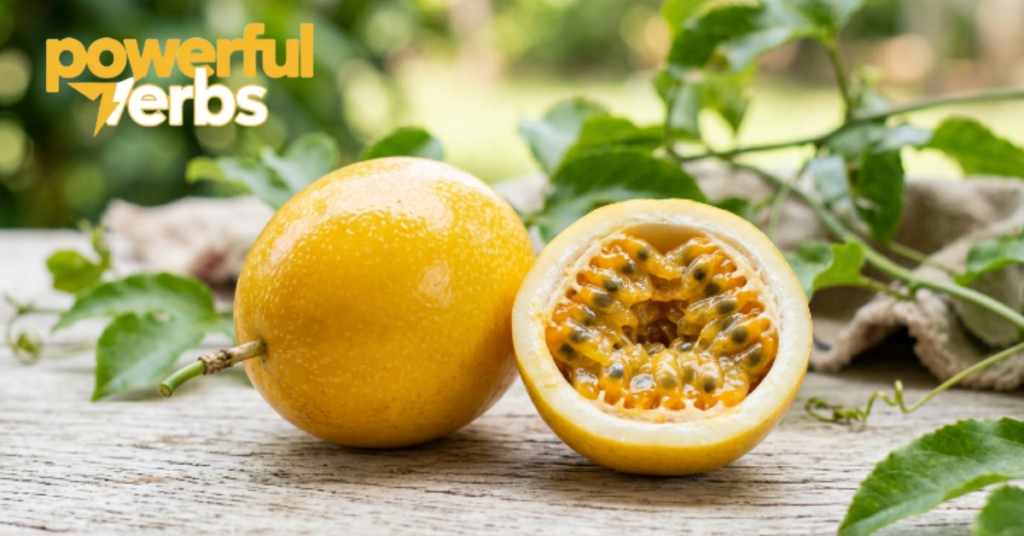
Developed through careful hybridization programs, golden passion fruit combines the large size of yellow varieties with a noticeably sweeter, less acidic flavor. It performs well in both fresh markets and juice production, making it commercially versatile.
| Feature | Detail |
| Shape | Round |
| Size | Large |
| Weight | 80 to 110 grams |
| Skin Color | Deep golden yellow |
| Flesh Color | Rich orange |
| Flavor | Sweet-tart with reduced acidity |
| Best Use | Fresh eating, juices, export markets |
13. Possum Purple Passion Fruit
An Australian heritage variety with an unusually deep purple-black skin at peak ripeness, Possum Purple is celebrated among home gardeners for its exceptionally rich flavor and reliable production. It performs well in subtropical conditions and is favored for backyard cultivation.
| Feature | Detail |
| Shape | Round |
| Size | Small to medium |
| Skin Color | Dark purple-black |
| Flavor | Intensely sweet-tart |
| Best Use | Home gardens, fresh eating, preserves |
| Growing Regions | Australia, subtropical zones |
14. Tropical Sun Passion Fruit
A hybrid variety bred for tropical lowland conditions, Tropical Sun produces abundantly even during the hottest months of the year. Its bright yellow skin and high juice content make it a reliable choice for commercial juice operations in equatorial regions.
| Feature | Detail |
| Shape | Round |
| Size | Large |
| Skin Color | Bright yellow |
| Flavor | Tangy with strong tropical aroma |
| Best Use | Commercial juice production |
| Growing Regions | Equatorial Africa, Southeast Asia |
15. Lemon Drop Passion Fruit (Passiflora citrina)
A miniature species native to Guatemala and Honduras, lemon drop passion fruit produces tiny fruits with a strikingly citrusy, lemon-like flavor. The vine itself is slender and delicate, making it popular as an ornamental plant that also produces edible fruit.
| Feature | Detail |
| Shape | Small oval |
| Size | Very small |
| Weight | 10 to 20 grams |
| Skin Color | Yellow |
| Flavor | Sharply citrusy, strongly tart |
| Best Use | Garnishing, specialty beverages, ornamental |
| Growing Regions | Guatemala, Honduras, specialty gardens |
Complete A to Z Passion Fruit Variety Reference
| Variety Name | Skin Color | Flavor Profile | Primary Use |
| Adriatic Passion Fruit | Purple | Sweet-tart | Fresh eating |
| Banana Passion Fruit | Yellow-orange | Sweet-tangy | Smoothies, desserts |
| Blue Passion Fruit | Orange (ripe) | Mild, subtle | Ornamental, light eating |
| Calcutta Sweet | Purple | Moderately sweet | Desserts |
| Colombian Yellow | Yellow | Strongly tangy | Juice production |
| Dragon Passion Fruit | Red-purple | Sweet, mild | Fresh markets |
| Ecuadorian Purple | Purple | Rich, aromatic | Export, fresh |
| Florida Gold | Yellow | Sweet with low acid | Fresh eating, juice |
| Giant Granadilla | Yellow-green | Mildly sweet | Fresh eating, cooking |
| Giant Panama | Purple | Juicy, slightly tangy | Fresh eating |
| Golden Passion Fruit | Golden yellow | Sweet-tart, balanced | Fresh, juice |
| Granadilla | Orange | Sweet, light | Beverages, fresh |
| Hawaiian Purple | Purple | Intensely aromatic | Fresh, desserts |
| Incense Passion Flower | Purple | Fragrant, mild | Ornamental |
| Jamaican Gold | Yellow | Tangy, tropical | Juice, cocktails |
| Kaveri | Purple | Balanced | South Asian markets |
| Lemon Drop | Yellow | Citrusy, tart | Specialty drinks |
| Maracuja | Yellow | Intensely tangy | Juice, cocktails |
| Misty Gem | Purple | Sweet, rich | Premium fresh market |
| NZ Black | Dark purple | Deep sweet-tart | New Zealand market |
| Orange Passion Fruit | Orange | Mild, sweet | Fresh eating |
| Possum Purple | Dark purple | Richly aromatic | Home gardens |
| Purple Granadilla | Purple | Sweet-tart | Fresh eating |
| Purple Passion Fruit | Purple | Sweet-tart, aromatic | Worldwide fresh market |
| Queensland Selection | Purple | Balanced, sweet | Australian markets |
| Red Passion Fruit | Crimson | Sweet, mildly tart | Specialty markets |
| Spanish Passion Fruit | Purple | Aromatic, balanced | European cooking |
| Sweet Granadilla | Orange | Purely sweet | Fresh eating |
| Tropical Sun | Yellow | Tangy, aromatic | Commercial juice |
| Uganda Yellow | Yellow | Tangy, robust | African juice market |
| Venezuelan Red | Red | Sweet, complex | Local markets |
| Yellow Maracuja | Yellow | Highly tangy | Juice specialty |
Passion Fruit Varieties Grouped by Skin Color
Purple-Skinned Varieties
Purple passion fruit has the richest aromatic profile among all color groups. Varieties including Purple Passion Fruit, Misty Gem, Possum Purple, Hawaiian Purple, and Spanish Passion Fruit all belong to this group. These fruits thrive in cooler tropical and subtropical highlands and are primarily grown for fresh consumption in local and export markets.
Yellow-Skinned Varieties
Yellow passion fruits dominate the global juice industry. Yellow Passion Fruit, Maracuja, Golden Passion Fruit, Tropical Sun, Jamaican Gold, and Yellow Maracuja all fall into this category. Their higher juice content and stronger acidity make them the preferred choice for commercial beverage production worldwide.
Orange-Skinned Varieties
Orange-skinned types occupy a middle ground between sweet and tart. Sweet Granadilla, Orange Passion Fruit, and Blue Passion Fruit (when fully ripe) all display orange skin. These varieties are celebrated for their mild, approachable flavor that suits people who find yellow varieties too acidic.
Red and Crimson Varieties
The rarest group visually, red-skinned passion fruits including Red Passion Fruit and Venezuelan Red are specialty crops valued primarily in gourmet and premium markets for their striking appearance and rich antioxidant content.
Passion Fruit Types Grouped by Flavor Profile
Sweetest Passion Fruit Varieties
These varieties have the lowest acidity and the highest natural sugar content, making them ideal for fresh eating without any added sweeteners:
- Sweet Granadilla (the sweetest of all)
- Giant Granadilla
- Banana Passion Fruit
- Orange Passion Fruit
- Possum Purple
Most Tangy and Acidic Varieties
These varieties deliver bold acidity and are best suited for juice production, cooking, and recipes that benefit from tartness:
- Yellow Passion Fruit / Maracuja
- Lemon Drop Passion Fruit
- Colombian Yellow
- Tropical Sun
- Yellow Maracuja
Balanced Sweet-Tart Varieties
These varieties strike the ideal middle ground and are the most widely popular for both fresh eating and culinary use:
- Purple Passion Fruit (the global favorite)
- Spanish Passion Fruit
- Golden Passion Fruit
- Misty Gem
- Hawaiian Purple
Complete Nutritional Benefits of Passion Fruit Varieties
Every passion fruit variety delivers impressive nutritional value, but the specific benefits vary by type. Understanding these differences helps you choose the right variety for your health goals.
| Variety | Key Nutrients | Primary Health Benefits |
| Purple Passion Fruit | Antioxidants, Vitamin C, Fiber | Heart health, digestion, immunity, skin health, anxiety reduction |
| Yellow Passion Fruit | High Vitamin C, Potassium | Immunity boost, collagen production, blood pressure regulation |
| Giant Granadilla | Calcium, Phosphorus, Fiber | Bone strength, blood circulation, digestive health, mental wellness |
| Sweet Granadilla | Vitamins A and C, Anti-inflammatory compounds | Weight management, skin health, energy levels |
| Banana Passion Fruit | Vitamins A and C, Mild sedatives | Vision improvement, stress reduction, immunity support |
| Lemon Drop Passion Fruit | Vitamin C, Flavonoids | Blood sugar regulation, mood enhancement, digestion |
| Red Passion Fruit | Antioxidants, Beta-carotene | Eye health, oxidative stress reduction, skin protection |
| Blue Passion Fruit | Flavonoids, Mild alkaloids | Sleep improvement, anxiety reduction, heart support |
| Maracuja | Vitamin C, Potassium, Fiber | Liver function, digestion, anti-aging, sleep quality |
| Golden Passion Fruit | Potassium, Fiber, Vitamin C | Electrolyte balance, heart health, digestive support |
Universal Health Benefits Across All Varieties
Regardless of which variety you choose, all passion fruits share these evidence-based health benefits:
- Supports Immune Function — High Vitamin C content in all varieties strengthens the immune response against infections and illness.
- Improves Digestive Health — Soluble and insoluble fiber content promotes healthy gut bacteria and regular bowel movement.
- Promotes Heart Health — Potassium and antioxidants work together to reduce blood pressure and protect cardiovascular function.
- Enhances Skin Quality — Vitamin C supports collagen synthesis, improving skin elasticity and reducing visible signs of aging.
- Regulates Blood Sugar — The fiber content slows glucose absorption, supporting healthier blood sugar levels after meals.
- Reduces Anxiety and Stress — Certain alkaloids in passion fruit have mild calming properties that support nervous system health.
- Supports Eye Health — Beta-carotene and Vitamin A content in several varieties protect against age-related vision decline.
- Anti-Inflammatory Properties — Polyphenols and antioxidants reduce chronic inflammation throughout the body.
How Does a Passion Fruit Vine Grow?
Understanding the growth habit of passion fruit helps gardeners, farmers, and plant enthusiasts identify and cultivate these remarkable vines successfully.
Vine Structure and Growth Pattern
Passion fruit grows as a vigorous, fast-climbing perennial vine that uses thin, coiling tendrils to attach itself to fences, trellises, walls, and any available support structure. Under ideal tropical conditions, a single vine can extend 10 to 15 meters in length within a single growing season.
The vine produces glossy, deep green leaves that overlap densely, creating the lush tropical appearance the plant is celebrated for in ornamental gardens.
The Spectacular Passionflower
Before fruit develops, each vine produces the passionflower — one of the most intricate and beautiful blooms in the plant kingdom. The flower features:
- A central arrangement of stamens and pistils forming a corona
- Radiating filaments in purple, white, and blue color combinations
- Five petals and five sepals that form the outer flower structure
- A strong, sweet fragrance that attracts pollinators
After successful pollination — primarily by bees and in some species by hummingbirds — the flower drops and the developing fruit begins to grow.
Fruit Development Timeline
| Stage | Timeframe | What Happens |
| Flowering | Varies by season | Blooms appear, pollination occurs |
| Fruit set | 1 to 2 weeks after pollination | Small green fruit forms |
| Development | 60 to 80 days | Fruit grows to full size |
| Color change | Final 2 weeks | Skin changes to mature color |
| Ripeness | When skin wrinkles slightly | Fruit is ready to harvest |
How to Select the Best Passion Fruit at the Market
Choosing a perfectly ripe passion fruit requires knowing exactly what to look for — because the most visually unappealing fruits are often the sweetest.
Signs of a Perfectly Ripe Passion Fruit
- Wrinkled skin — Counterintuitively, wrinkled passion fruit is riper and sweeter than perfectly smooth fruit
- Heavy for its size — Full juice content makes ripe fruit noticeably heavy
- Deep, rich color — Fully developed color (deep purple, bright yellow, or vivid orange) indicates peak ripeness
- Strong aroma — A ripe passion fruit smells powerfully tropical even through the skin
- No soft spots or mold — The rind should be firm and intact despite surface wrinkling
How to Store Passion Fruit
| Storage Method | Duration | Best For |
| Room temperature | 2 to 3 days | Slightly underripe fruit to continue ripening |
| Refrigerator | 1 to 2 weeks | Ripe fruit ready to eat |
| Freezer (pulp only) | Up to 3 months | Preserving excess harvest |
| Sealed container (pulp) | 3 to 4 days refrigerated | Prepped pulp for repeated use |
Growing Passion Fruit at Home — Beginner’s Guide
Best Conditions for Growing Passion Fruit
| Requirement | Ideal Condition |
| Climate | Tropical or subtropical (frost-free) |
| Temperature | 18°C to 30°C (64°F to 86°F) |
| Sunlight | Full sun, minimum 6 hours daily |
| Soil | Well-drained, fertile, slightly acidic (pH 6.0 to 6.5) |
| Watering | Regular but never waterlogged |
| Support | Trellis, fence, or strong wire framework |
| Fertilizer | Balanced NPK fertilizer every 4 to 6 weeks |
Best Varieties for Home Growing
- Purple Passion Fruit — Most adaptable, suits subtropical and mild tropical gardens
- Sweet Granadilla — Perfect for highland gardens above 1,500 meters altitude
- Banana Passion Fruit — Excellent for cool climates and elevated gardens
- Blue Passion Fruit — Ideal for temperate European and North American gardens
- Golden Passion Fruit — Best for warm lowland tropical home gardens
Passion Fruit in Global Cuisine
How Different Cultures Use Passion Fruit
| Region | Traditional Use |
| Brazil | Maracuja juice, caipirinhas, mousse, ice cream |
| Australia | Pavlova topping, cheesecakes, fresh eating |
| Colombia | Fresh granadilla eaten from the shell, agua de maracuja |
| Hawaii | Lilikoi butter, syrup, marmalade, cocktails |
| Europe | Mousse, tarts, luxury desserts, sauces |
| Southeast Asia | Fresh juice, dessert toppings, tropical fruit salads |
| East Africa | Commercial juice, fresh market fruit |
Classic Passion Fruit Recipe Ideas
- Passion Fruit Curd — A rich, tangy spread for toast, cakes, and tarts
- Tropical Smoothie — Blend with mango, banana, and coconut milk
- Passion Fruit Vinaigrette — Whisk pulp with olive oil, honey, and lime juice
- Cheesecake Topping — Spoon fresh pulp over no-bake or baked cheesecakes
- Passion Fruit Sorbet — Freeze strained juice with sugar syrup for a refreshing dessert
- Cocktail Mixer — Combine with vodka or rum, lime juice, and sparkling water
Conclusion
From the intensely aromatic Purple Passion Fruit to the gently sweet Sweet Granadilla, from the towering Giant Granadilla to the delicate miniature Lemon Drop, the world of passion fruit is far richer and more diverse than most people ever discover.
This complete guide to 30+ types of passion fruit has given you everything you need to identify every major variety by appearance, understand their unique flavor profiles, appreciate their individual health benefits, and choose the right variety for eating, cooking, juicing, or growing at home.
Passion fruit is not just a single ingredient — it is an entire family of extraordinary tropical fruits, each one offering its own distinct experience. Explore them, taste them, grow them, and enjoy one of nature’s most spectacular gifts to the tropical world.
FAQs
Which passion fruit is the sweetest variety?
Sweet Granadilla (Passiflora ligularis) is universally considered the sweetest passion fruit variety. It contains the lowest acidity and the highest natural sugar content among all cultivated types, making it the only variety routinely eaten without added sweetener.
What is the difference between purple and yellow passion fruit?
Purple passion fruit is smaller, sweeter, and more aromatic with a richer flavor suited for fresh eating. Yellow passion fruit is larger, more acidic, and produces significantly more juice, making it the dominant choice for commercial juice production. Both belong to the same species (Passiflora edulis) but are distinctly different subspecies.
Can you eat passion fruit seeds?
Yes — passion fruit seeds are completely safe and nutritious to eat. They are small, dark, and pleasantly crunchy, providing additional dietary fiber and texture to the juicy pulp. Most people swallow them whole along with the pulp when eating fresh.
How many varieties of passion fruit exist in the world?
Botanists have identified over 500 species within the Passiflora genus, but only a small number — approximately 30 to 60 — produce fruit that is widely consumed. Of these, around 15 to 20 varieties are commercially cultivated and available in fruit markets globally.
Which passion fruit variety is best for making juice?
Yellow passion fruit (Passiflora edulis var. flavicarpa), known as Maracuja in Brazil, is definitively the best variety for juice production. Its large size, high juice yield, strong acidity, and powerful aroma create a juice that requires minimal additional flavoring and maintains its character well when diluted.
What is the rarest type of passion fruit?
Red passion fruit (Passiflora edulis forma rubra) and Lemon Drop passion fruit (Passiflora citrina) are among the rarest commercially encountered varieties. Both are grown only in limited geographic regions and rarely appear in mainstream markets outside their native areas.
How do I know when passion fruit is fully ripe?
A passion fruit is ready to eat when the skin begins to wrinkle slightly, the color has fully developed, the fruit feels noticeably heavy for its size, and a strong tropical aroma is detectable. Counterintuitively, wrinkled skin is a sign of peak sweetness — not spoilage.
Is passion fruit the same as granadilla?
No — while both belong to the Passiflora family, they are different varieties. Granadilla generally refers to sweet granadilla (Passiflora ligularis), a distinct species with an orange shell and purely sweet flavor. Passion fruit typically refers to Passiflora edulis in its purple or yellow forms, which have a characteristic sweet-tart flavor profile.
Which passion fruit has the most health benefits?
All passion fruit varieties deliver strong nutritional benefits. However, purple passion fruit is generally considered the most nutrient-dense for general wellness due to its high antioxidant concentration, while yellow passion fruit provides the highest Vitamin C content per gram of edible pulp.
Can passion fruit grow in a pot or container?
Yes — several compact varieties, including Blue Passion Fruit and Lemon Drop Passion Fruit, grow successfully in large containers on balconies and patios. Purple and yellow varieties can also be container-grown when given a strong trellis for support and consistent watering.

Liam Johnson is a dedicated language expert with 4 years of professional experience. He specializes in Grammar, Vocabulary, and Sentence structure.
