

Introduction
You have probably seen words like “fein,” “fien,” or “feining” all over your social media feed, texts, or group chats. These words are everywhere right now, but a lot of people are still confused about what they actually mean. This guide breaks down every spelling, every meaning, and every way people use this trending slang word today.
By the end of this article, you will know exactly what fein means, where it came from, and when you should or should not use it. Whether you are trying to understand a text or use it yourself, this article has everything you need.
What Does “Fein” Mean in Slang?
“Fein” means to desperately want or crave something, almost like you cannot stop thinking about it. It can be used for food, a person, a show, or anything that someone really, really wants. The tone is usually intense—it goes beyond just liking something.
The feeling behind Fein is obsessive and a little out of control. When someone says, “I am feining for that pizza,” they do not just want it. They need it. That desperate, almost addicted energy is exactly what makes this word so popular in casual conversation.
Different Spellings: Fein vs Fien vs Feining
People spell this word in different ways because it is slang, and slang does not follow dictionary rules. You will see fein, fien, and feining all used online, and they all carry the same basic meaning. No one spelling is more correct than the other.
Feining is just the verb form, meaning you are actively craving something right now. “Fein” and “fien” are the base words, and the difference between those two is mostly just personal style. As long as people understand what you mean, the spelling does not really matter in casual use.
Where the Word Comes From
The word “fein” comes from the older word “fiend,” which originally meant a demon or an evil spirit. Over time, it started being used to describe someone who was addicted to drugs or completely obsessed with something. That “drug fiend” meaning slowly turned into everyday slang.
Hip-hop culture and street slang picked it up early, and from there it moved into internet culture. Gen Z shortened and respelled it into the version we see today. It went from a serious, heavy word to something people use casually every day.
How “Fein” Is Used Today
In Text Messages
In texts, “fein” shows up when someone is craving something and wants their friend to know just how badly they want it. It is quick, expressive, and saves the trouble of writing a whole sentence about how much you want something.
- “I am feining for boba right now; can we please go?”
- “Bro, I am feigning to watch the next episode.”
On Social Media
On platforms like TikTok, Instagram, and Twitter, fein is used in captions, comments, and replies all the time. People use it to hype up food, celebrities, shows, or anything they are obsessed with at the moment.
- “Me feining for new music from my favorite artist every single day.”
- “The way I am feining for this outfit I cannot afford rn.”
In Conversations
In real-life conversations, especially among younger people, fein slips in naturally when talking about cravings or obsessions. It adds drama and energy to whatever you are saying without sounding too serious.
- “I have been feining for that restaurant all week.”
- “She is feining for his attention, and it is honestly kind of funny.”
The Feeling Behind “Feining”
Feining captures a specific emotional state—that restless, can’t-stop-thinking-about-it feeling you get when you really want something. It is more than a regular craving. It feels almost like an addiction, even when the thing you want is totally harmless. That intensity is what makes the word so expressive.
People use it both seriously and as a joke. Someone might say “I am feigning sleep” after a long week, or “I am feining for him” about a crush in a more emotional way. The word works because it stretches across both funny and real situations without losing its meaning.
Examples in Real-Life Use
Here are some examples of how fein looks in different situations:
Chat examples:
- “Bro, I am feining for McDonald’s at 2 am rn.”
- “She has been feining over that guy for months.”
- “I am feining for the weekend already, and it is only Monday.”
Social media captions:
- “Feining for summer as it owes me something.”
- “When you are feining for your fave artist to drop an album already.”
Casual speech:
- “I was feining for coffee so bad this morning.”
- “He is feining to get those sneakers before they sell out.”
When It Sounds Funny vs When It Sounds Negative
When used about food, shows, music, or silly cravings, fein sounds playful and relatable. Most people will laugh or agree because everyone knows that desperate craving feeling. It is lighthearted in these situations and totally fine to use.
When used about a person, especially romantically or obsessively, it can start to sound a little intense or unhealthy. Saying someone is “feining” for another person can imply they are too attached or desperate. In those cases, it is worth thinking about how the other person might take it.
Fein vs Similar Words
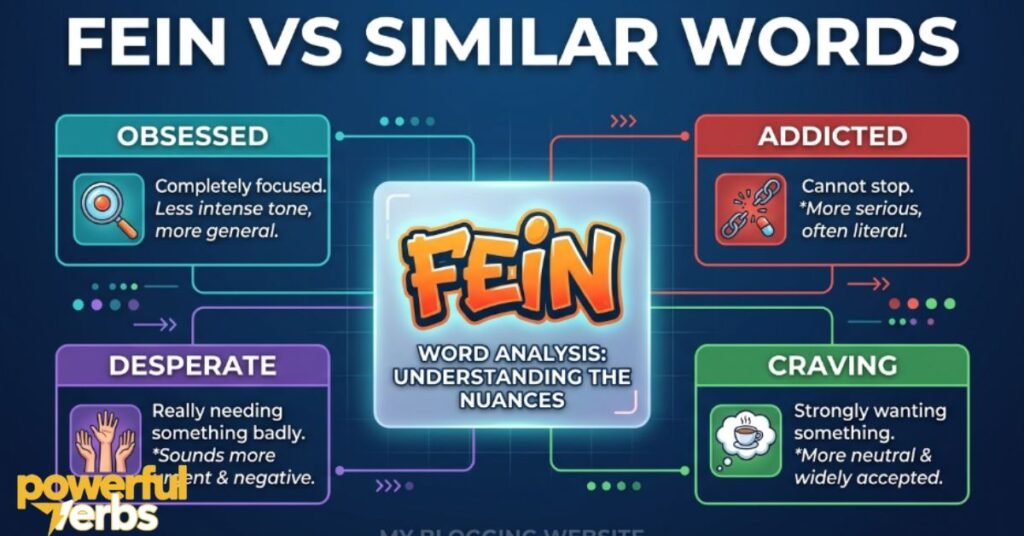
| Word | Meaning | How It Differs from Fein |
| Obsessed | Completely focused on something | Less intense in tone, more general |
| Addicted | Cannot stop doing or wanting something | More serious, often used literally |
| Desperate | Really needing something badly | Sounds more negative and urgent |
| Craving | Strongly wanting something specific | More neutral and widely accepted |
Fein sits somewhere between all of these. It has the intensity of addiction, the urgency of desperation, and the casual energy of craving. That unique mix is exactly why it took off as slang.
Common Misunderstandings
A lot of people think fein is always a negative word because of its roots in addiction. But today, most people use it in a totally lighthearted way about food, hobbies, or entertainment. Context is everything with this word.
Another common mistake is thinking the spelling matters a lot. People see fein and fien and assume they mean different things, but they do not. Both are just different ways of writing the same slang word. And finally, some people start overusing it in every sentence, which makes it lose its impact and can come across as trying too hard.
When You Should and Should Not Use It
You can use fein freely when talking to friends, posting on social media, or texting in a casual setting. It fits perfectly in situations where you are joking about a craving or sharing how much you love something. Among your friend group, it will sound natural and current.
You should avoid it in formal writing, school assignments, work emails, or professional conversations. It is also worth being careful when using it about a person, since it can sound creepy or obsessive depending on how it is said. Know your audience before you drop it into a conversation.
Why This Slang Became Popular
Internet culture loves words that express big feelings in a short, punchy way, and fein does exactly that. Gen Z in particular gravitates toward slang that is dramatic but also fun, and feining hits that sweet spot perfectly. When influencers and popular accounts started using it, it spread fast.
Trend cycles on TikTok and Twitter also play a huge role. Once a word starts showing up in viral videos or popular tweets, millions of people pick it up almost overnight. Fein followed that exact path from niche internet slang to mainstream everyday language.
Will the Meaning Change Over Time?
Slang words seldom stay the same forever. As new generations adopt a word, they stretch it, remix it, and sometimes flip the meaning entirely. Fein could eventually become even more casual, or it might fade out as the next big slang word takes over.
That is just how language works, especially online. The words that stick around are usually the ones that keep feeling useful and expressive. Whether “fein” lasts another decade or disappears in a year, right now, it is one of the most recognizable slang terms on the internet.
Quick Summary
| Term | Meaning | Common Use |
| Fein | To desperately crave something | Texts, social media, casual talk |
| Fien | Same as fein, different spelling | Online posts, comments |
| Feining | Actively craving right now | Captions, conversations |
| Origin | From the word “fiend.” | Hip-hop, street slang, internet |
| Tone | Intense, obsessive, craving | Funny or serious, depending on context |
| Use with caution | When talking about a person | Can sound obsessive or uncomfortable |
Conclusion
“Fein,” “fien,” and “feining” are all the same idea expressed in different ways—that desperate, can’t-stop-thinking-about-it craving that everyone has felt at some point. The word started as something heavy and serious, but internet culture turned it into everyday casual slang. Today, it is one of the most relatable and expressive words in the Gen Z vocabulary.
Now that you know what it means, where it came from, and how to use it right, you are fully caught up. Use it with friends, post it in captions, or just impress someone by knowing exactly what it means next time you see it online.
Frequently Asked Questions
1. What does “fein” mean in slang, and how is it used in everyday conversation?
“Fein” in slang means to intensely crave or desperately want something — usually a drug, person, or experience. It describes someone who can’t stop thinking about or chasing after that thing.
2. What is the difference between “fein,” “fien,” and “feining”—are they all spelled the same way?
All three are alternate spellings of the same slang word rooted in “fiend.” “Fein” and “fien” are both used as verbs meaning to crave, while “feining” is the active form—as in, “he’s feining for attention right now.”
3. Where did the slang word “fein” originally come from, and what is its etymology?
“Fein” evolved from the word “fiend,” which historically described someone possessed or obsessed. In modern slang, it dropped the “d” and became a verb meaning to desperately crave something, popularized through hip-hop and street culture.
4. How do you use the word “feining” correctly in a sentence when talking to someone?
You’d say something like, “I’m feining for a slice of pizza right now” or “She’s been feining over that guy all week.” It means you’re deeply craving or obsessing over something in the moment.
5. Is “feining” the same thing as being addicted to something, or does it just mean you really want it?
“Feining” doesn’t always mean addiction—it can mean an intense, almost uncontrollable craving for anything, from food to a person to a song. However, it’s most strongly associated with drug cravings in its original usage.
6. Why do rappers and hip-hop artists use the word “fein” so much in their lyrics?
Rappers use “fein” because it powerfully captures obsession and hunger—whether for money, fame, a person, or substances. It’s a raw, expressive word that fits the emotional intensity of hip-hop storytelling and resonates deeply with street culture authenticity.
7. Can you use the word “fein” to describe wanting a person romantically, or is it only about drugs?
Yes, “fein” is absolutely used to describe romantic or physical obsession over a person. Saying “I’m feining for her” means you’re intensely attracted and can’t stop thinking about her—it goes well beyond just substance cravings.
8. What is the correct way to spell it—is it “fein,” “fien,” or “fiend”—and which one should I use?
All three are acceptable depending on context. “Fiend” is the original standard English word, while “fein” and “fien” are informal slang spellings. If you’re writing casually or in a social media context, “fein” is the most widely recognized modern spelling.
9. How is the word “feining” different from the word “fiending,” and do they mean the same thing?
“Feining” and “fiending” mean essentially the same thing—craving something intensely. “Fiending” is slightly older slang and more commonly tied to drug use, while “feining” is the newer, softer spelling used more broadly in everyday casual conversation.
10. Is “fein” a negative word, or can it be used in a positive and fun way in conversation?
“Fein” isn’t strictly negative—context determines the tone. Saying “I’m feining for tacos” is lighthearted and fun, while “he’s feining for drugs” carries a darker weight. It’s a flexible slang term whose meaning shifts based on what you’re craving.

Liam Johnson is a dedicated language expert with 4 years of professional experience. He specializes in Grammar, Vocabulary, and Sentence structure.
