

Walk into any well-maintained home and you will notice one thing immediately — cleanliness does not happen by accident. Behind every spotless floor, streak-free window, and fresh-smelling bathroom is a carefully chosen set of cleaning tools and supplies. The right equipment does not just make cleaning faster — it makes the results dramatically better.
I used to grab whatever was nearby when cleaning. Then I started learning the names and purposes of specific tools — and my entire cleaning routine transformed. Less effort, better results, and a genuinely cleaner home.
This complete guide covers 150+ cleaning tools and supplies with names, descriptions, and uses — organized by room and category so you can find exactly what you need, every time.
What Are Cleaning Tools and Supplies?
Cleaning tools are physical instruments used to remove dirt, dust, grease, and bacteria from surfaces, floors, fabrics, and fixtures. Cleaning supplies are the chemical or natural products — liquids, powders, sprays, and wipes — that assist those tools in delivering a hygienic result.
Together, cleaning tools and supplies form a complete hygiene system for every home, office, school, and commercial space.
Understanding the full range of available tools helps you clean more efficiently, protect surfaces from damage, and maintain a genuinely healthy living environment year-round.
Why Having the Right Cleaning Tools Matters
Using the correct tool for each task makes a measurable difference:
- Saves time — The right tool cleans faster with less effort
- Protects surfaces — Wrong tools scratch, stain, or damage delicate materials
- Improves hygiene — Proper disinfecting tools eliminate bacteria, not just move dirt
- Reduces waste — Quality tools last longer and use less product per session
- Better results — Streak-free glass, deep-cleaned grout, and fresh-smelling rooms
Every room in your home has specific cleaning challenges — and specific tools designed to solve them.
Complete List of 150+ Cleaning Tools and Supplies
Floor Cleaning Tools
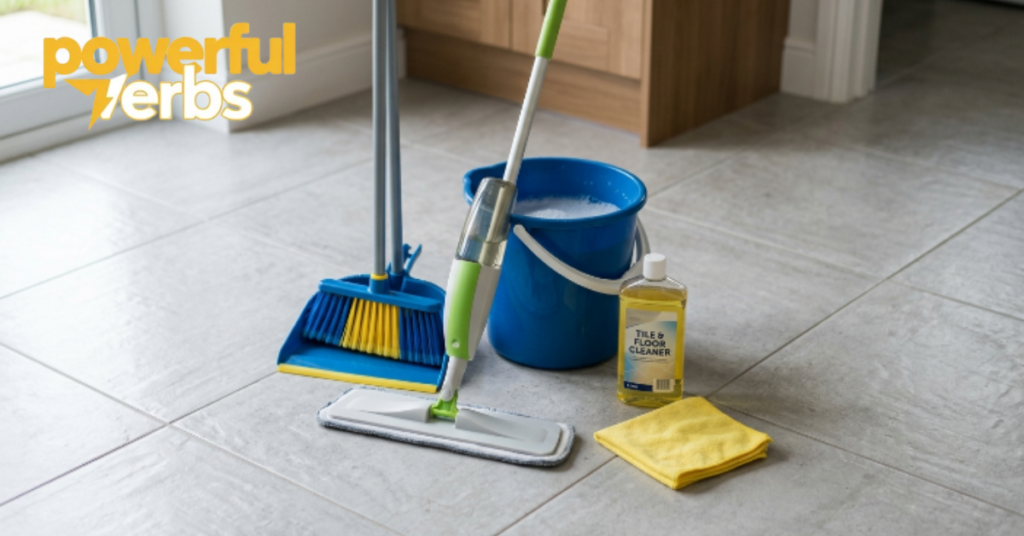
1. Broom Long-handled sweeping tool with dense bristles for gathering dust, debris, and crumbs from hard floor surfaces. Essential for daily maintenance before mopping. Use: Sweep kitchen and hallway floors before any wet cleaning.
2. Dustpan Flat-edged scoop used alongside a broom to collect swept debris and transfer it directly into a bin. Use: Hold flat against floor while sweeping dirt into it.
3. Dust Mop Wide flat mop head covered in microfiber or cotton strands that trap fine dust particles and pet hair from hard flooring without water. Use: Run across hardwood or tile floors daily for dust-free results.
4. Wet Mop Absorbent string or sponge mop designed for washing floors with water and cleaning solution for deep sanitization. Use: Mop hallways, kitchens, and bathrooms after sweeping.
5. Spin Mop Modern rotating mop system with a foot-pedal wringer bucket that removes excess water, leaving floors cleaner and drying faster. Use: Spin the head to control moisture before mopping.
6. Steam Mop Electric mop that uses pressurized hot steam to sanitize floors without chemicals — kills bacteria and loosens stubborn grime. Use: Run over sealed tile or hardwood for deep sanitation.
7. Flat Mop Slim rectangular mop head that slides under furniture and into corners for thorough coverage on smooth floor surfaces. Use: Reach under beds and sofas during floor cleaning.
8. Bucket Durable container used to hold water or cleaning solution during mopping — often paired with a wringer attachment. Use: Fill with warm water and floor cleaner before mopping.
9. Wringer Bucket Bucket with a built-in pressing mechanism that squeezes excess water from mop heads for controlled floor cleaning. Use: Press mop firmly through the wringer before each pass.
10. Vacuum Cleaner Powerful electric appliance that suctions dust, crumbs, allergens, and debris from floors, carpets, and upholstery through strong airflow. Use: Vacuum carpets and rugs at least twice weekly.
11. Handheld Vacuum Compact cordless device for quick spot cleaning on sofas, car seats, stairs, and tight spaces where full vacuums cannot reach. Use: Clean sofa cushions and car interiors easily.
12. Robot Vacuum Automated circular vacuum that navigates floors independently using sensors — schedules cleaning without manual effort. Use: Set a daily schedule for hands-free floor maintenance.
13. Wet and Dry Vacuum Heavy-duty vacuum that handles both dry dust and liquid spills — ideal for garages, workshops, and deep cleaning sessions. Use: Suction up water spills or sawdust from workshop floors.
14. Carpet Sweeper Manual rolling tool that picks up surface debris from carpets without electricity — quiet and lightweight for daily use. Use: Quick carpet refresh between full vacuum sessions.
15. Floor Scrubber Electric machine with rotating scrub pads that deep cleans hard floor surfaces by agitating dirt and applying solution simultaneously. Use: Deep clean commercial kitchens and large tiled areas.
16. Floor Polisher Motorized machine fitted with buffing pads that restores shine and luster to hardwood, marble, and vinyl flooring. Use: Buff hardwood floors to a high-gloss finish.
17. Mop Refill Head Replacement absorbent head that fits existing mop handles — extends the life of the mop without purchasing a full replacement. Use: Swap out when fibers become frayed or discolored.
18. Broom and Dustpan Set Matching paired tools designed for seamless sweeping and collection — often includes a standing dustpan with a long handle. Use: Keep one set in the kitchen and one near the entrance.
Surface and General Cleaning Tools
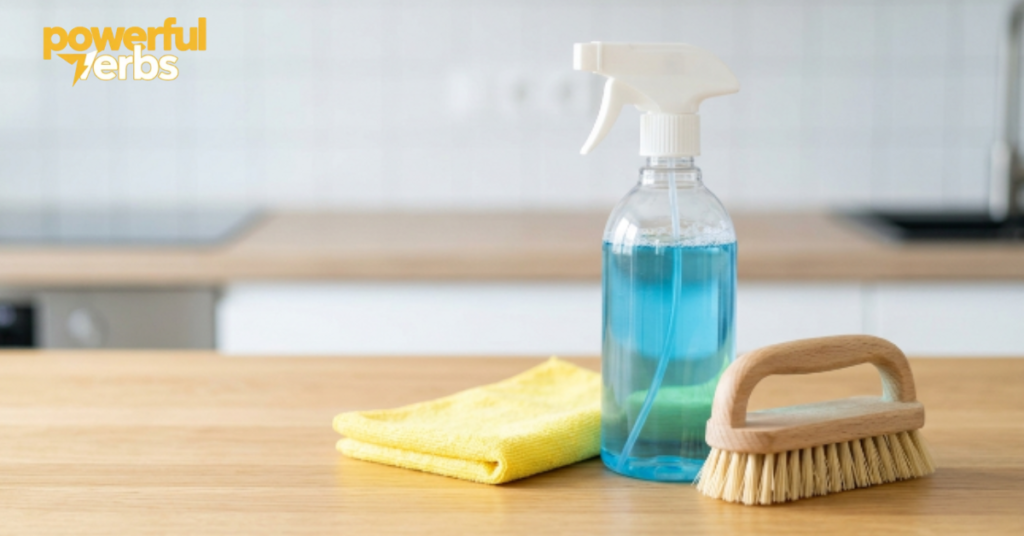
19. Microfiber Cloth Ultra-fine synthetic fabric with millions of tiny fibers that trap dust, absorb moisture, and clean surfaces without chemicals or scratching. Use: Wipe countertops, screens, and appliances streak-free.
20. Cleaning Rag Reusable cotton or terry cloth fabric used for general wiping, applying cleaners, and absorbing spills during household tasks. Use: Keep several in the kitchen for daily surface wiping.
21. Sponge Soft porous cleaning block that absorbs water and soap for scrubbing dishes, counters, and bathroom surfaces gently. Use: Replace weekly to prevent bacterial buildup.
22. Scrub Brush Stiff-bristled handheld brush designed to remove embedded dirt, stains, and grime from tiles, grout, and hard surfaces. Use: Scrub grout lines between bathroom tiles.
23. Toothbrush (Cleaning Use) Repurposed or dedicated small brush for reaching tight spaces, corners, grout lines, and fixture edges during detailed cleaning. Use: Clean around taps, hinges, and keyboard keys.
24. Grout Brush Narrow stiff-bristled brush specifically shaped to reach deep into tile grout lines and remove mold, mildew, and discoloration. Use: Scrub bathroom and kitchen grout weekly.
25. Feather Duster Lightweight natural or synthetic feather tool that lifts and removes dust from shelves, blinds, and fragile decorative items. Use: Dust ceiling fans, shelves, and picture frames.
26. Microfiber Duster Electrostatic microfiber tool that attracts and traps dust particles rather than spreading them into the air during dusting. Use: Dust electronics, blinds, and furniture surfaces.
27. Extendable Duster Long telescopic duster designed to reach ceiling corners, fan blades, and high shelving without needing a step ladder. Use: Clean ceiling cobwebs and high wall corners.
28. Spray Bottle Refillable trigger bottle used to dispense homemade or diluted cleaning solutions evenly across surfaces during cleaning. Use: Fill with all-purpose cleaner for daily surface spraying.
29. Squeegee Flat rubber-bladed tool for removing water, soap residue, and cleaning solution from glass, tiles, and smooth surfaces cleanly. Use: Pull down shower walls after each use to prevent mildew.
30. Cleaning Gloves Thick rubber or latex hand coverings that protect skin from harsh chemicals, hot water, and bacteria during cleaning tasks. Use: Always wear when using bleach or drain cleaner.
31. Cleaning Caddy Portable open-top organizer that carries multiple cleaning supplies and tools from room to room efficiently. Use: Stock with sprays, cloths, and gloves for room-to-room cleaning.
32. Scraper Tool Flat-edged blade tool used to remove dried paint, adhesive labels, burnt food, and stubborn residue from hard surfaces. Use: Scrape burnt food from stovetop glass surfaces.
33. Scouring Pad Abrasive green or blue pad designed to cut through grease, burnt food, and stuck-on residue without damaging most surfaces. Use: Scrub pots and pans after cooking.
34. Steel Wool Pad Fine metal fiber pad for heavy-duty scrubbing, rust removal, and polishing tough surfaces that resist standard scrubbers. Use: Remove rust from metal surfaces or polish cast iron.
35. Paper Towels Disposable absorbent sheets for quick drying, spill cleanup, and one-time surface sanitation without washing. Use: Wipe raw meat surfaces and discard immediately.
36. Lint Roller Adhesive-coated roller that picks up pet hair, lint, dust, and fine fibers from clothing, upholstery, and fabric surfaces. Use: Roll over sofa cushions and clothing before going out.
37. Upholstery Brush Soft-bristled attachment or handheld brush designed to loosen embedded dirt and refresh fabric on sofas and chairs. Use: Brush sofa fabric before vacuuming with attachment.
38. Trash Bags Heavy-duty plastic liners placed inside bins to contain waste, prevent leaks, and simplify garbage removal without mess. Use: Use thick bags for kitchen waste to prevent tearing.
39. Garbage Can Durable lidded container used to collect and contain household waste hygienically until disposal day. Use: Keep one in every room including the bathroom.
40. Step Ladder Foldable two-sided ladder used to safely reach elevated areas like ceiling fans, high shelves, and light fixtures during cleaning. Use: Always open fully and check stability before climbing.
Kitchen Cleaning Tools and Supplies
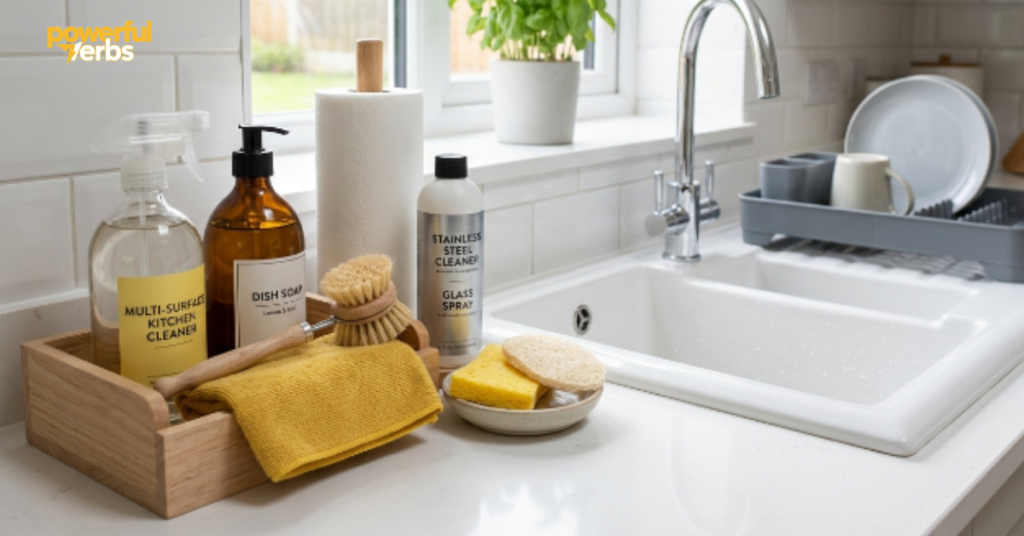
41. Dish Soap Concentrated liquid detergent formulated to cut through grease and food residue on plates, cookware, and utensils effectively. Use: Add two drops to warm water for a full sink of dishes.
42. Dish Brush Long-handled bristle brush designed for scrubbing plates, cups, and pots without requiring hand contact with food residue. Use: Scrub the inside of cups and bottles easily.
43. Bottle Brush Narrow cylindrical brush made to reach deep inside water bottles, thermoses, and tall glasses for thorough interior cleaning. Use: Clean reusable water bottles after every use.
44. Dish Rack Slotted drying stand that holds washed dishes, cups, and utensils upright allowing air circulation for natural drying. Use: Place beside the sink after hand washing.
45. Kitchen Sponge Dual-sided sponge with a soft absorbent side and an abrasive scrubbing side for tackling different kitchen cleaning tasks. Use: Use soft side for non-stick pans, scrubbing side for stainless steel.
46. Degreaser Powerful chemical spray formulated to dissolve and lift heavy cooking oil, grease splatter, and carbon buildup from kitchen surfaces. Use: Spray on stovetop and exhaust hood — leave for five minutes before wiping.
47. Kitchen Cleaner Multipurpose spray designed specifically for kitchen countertops, appliances, and cooking surfaces — kills bacteria safely. Use: Spray and wipe counters after every meal preparation.
48. Oven Cleaner Strong chemical formula that penetrates baked-on grease, food residue, and carbon deposits inside oven cavities. Use: Apply the night before and wipe clean the next morning.
49. Baking Soda Natural alkaline powder used for gentle scrubbing, deodorizing, and removing surface stains in kitchens and bathrooms. Use: Sprinkle inside the sink and scrub with a damp cloth.
50. White Vinegar Natural acidic solution that dissolves mineral deposits, limescale, and soap scum without harsh chemicals. Use: Run through the coffee machine monthly to remove buildup.
51. Dishwasher Tablets Pre-measured detergent pods designed for automatic dishwashers — clean, rinse, and dry dishes in one complete cycle. Use: Place one tablet in the dispenser before each wash.
52. Dishwasher Cleaner Specialized cleaning agent that removes grease, limescale, and odors from the interior of dishwasher machines. Use: Run an empty dishwasher cycle monthly with one tablet.
53. Garbage Disposal Cleaner Tablet or liquid formula that freshens, deodorizes, and cleans kitchen sink garbage disposal units thoroughly. Use: Drop in and run cold water with the disposal on.
54. Stainless Steel Cleaner Specialized polish that removes fingerprints, water marks, and smudges from stainless steel appliances and sinks. Use: Apply with a microfiber cloth in the direction of the grain.
55. Drain Strainer Mesh or perforated insert placed over sink drains to catch food particles and prevent blockages before they occur. Use: Empty after every few dish-washing sessions.
Bathroom Cleaning Tools and Supplies
56. Toilet Brush Long-handled bristle brush stored in a holder next to the toilet for regular scrubbing of the bowl interior. Use: Scrub under the rim and around the bowl weekly.
57. Toilet Bowl Cleaner Thick liquid formula squeezed under the toilet rim to remove stains, mineral rings, and odor-causing bacteria effectively. Use: Apply under the rim and leave for ten minutes before scrubbing.
58. Toilet Brush Holder Sanitary standing container that stores the toilet brush hygienically between uses — prevents drip marks on floor. Use: Keep positioned close to the toilet base.
59. Bathroom Cleaner Versatile spray formulated to cut through soap scum, hard water stains, and mildew on tiles, sinks, and fixtures. Use: Spray tiles and fixtures — wait two minutes and wipe clean.
60. Tile Cleaner Targeted formula designed to restore brightness to ceramic and porcelain tiles by removing soap buildup and discoloration. Use: Apply to tiles and scrub with a grout brush.
61. Mold and Mildew Remover Powerful spray that penetrates and eliminates mold spores and mildew staining from grout, caulk, and tile surfaces. Use: Spray on affected areas and leave for fifteen minutes.
62. Shower Squeegee Small wall-mounted rubber blade tool used to sweep water off shower screens and tiles after each use. Use: Squeegee shower walls after every single shower to prevent mildew.
63. Toilet Plunger Rubber suction cup tool used to dislodge clogs in toilet drains through repeated pressure and suction force. Use: Pump firmly and consistently until blockage clears.
64. Drain Snake (Hand Auger) Flexible coiled metal cable that feeds into drain pipes to physically pull out hair, soap, and debris causing clogs. Use: Insert and twist handle slowly to catch trapped material.
65. Drain Cleaner Chemical or enzyme-based liquid poured directly into blocked drains to dissolve organic matter and restore water flow. Use: Pour at night and flush with hot water in the morning.
66. Disinfectant Spray Fast-acting antimicrobial spray that kills up to 99.9% of bacteria and viruses on high-touch bathroom surfaces. Use: Spray on toilet seat, flush handle, and taps daily.
67. Disinfectant Wipes Pre-moistened antibacterial sheets for quick wipe-down of surfaces, fixtures, and handles during daily bathroom maintenance. Use: Keep a container on the bathroom counter for daily use.
68. Pumice Stone Natural volcanic rock used to gently remove hard water stains and mineral rings inside toilet bowls without scratching. Use: Wet the stone and rub directly on the stain.
69. Bathroom Scrub Brush Long or short-handled brush with firm bristles for scrubbing tiles, tubs, and shower bases free of soap scum. Use: Scrub tub and shower base with bathroom cleaner weekly.
70. Rubber Gloves (Heavy Duty) Thick chemical-resistant gloves specifically for bathroom cleaning — protects hands during disinfecting and heavy scrubbing. Use: Never clean bathrooms without wearing protective gloves.
Window and Glass Cleaning Tools
71. Glass Cleaner Streak-free spray formula that dissolves fingerprints, dust, and smudges from windows and mirrors without residue. Use: Spray and buff with a microfiber cloth in circular motions.
72. Window Squeegee Long-handled rubber blade designed to pull cleaning solution and water cleanly down window surfaces without streaking. Use: Work from top to bottom in overlapping S-shaped strokes.
73. Window Scrubber Soft padded applicator or mop-style tool that applies soapy water evenly across window glass before squeegee removal. Use: Wet the surface fully before pulling the squeegee across.
74. Microfiber Window Cloth Lint-free microfiber cloth specifically designed for glass surfaces — leaves windows and mirrors completely streak-free. Use: Use dry for final buffing after squeegee cleaning.
75. Telescopic Window Cleaner Extendable pole with a scrubber and squeegee attachment for cleaning high exterior windows safely from ground level. Use: Extend the pole to reach second-floor windows.
76. Newspaper (Traditional Method) Crumpled newspaper used as a traditional glass polishing material — slightly abrasive texture buffs glass to a clear shine. Use: Use after spraying glass cleaner for a streak-free finish.
77. Blind Cleaning Tool Multi-pronged tool that cleans multiple blind slats simultaneously — reduces dusting time significantly on venetian blinds. Use: Slide along each blind slat to remove accumulated dust.
78. Screen Cleaning Kit Gentle solution and microfiber cloth combination designed specifically for TV screens, monitors, and touchscreens. Use: Never spray directly on screen — apply to cloth first.
Laundry Cleaning Supplies
79. Laundry Detergent Cleaning agent formulated to penetrate fabric fibers, lift stains, and remove odors during machine or hand washing. Use: Follow dosage instructions on the label for best results.
80. Fabric Softener Liquid laundry additive that coats fabric fibers to reduce stiffness, static cling, and friction after washing. Use: Add to the softener compartment of the washing machine.
81. Stain Remover Spray Targeted pre-treatment spray applied directly to stains before washing to break down oil, food, and pigment marks. Use: Spray and leave for five minutes before placing in the machine.
82. Stain Remover Stick Solid portable stain treatment stick applied directly to fabric for immediate spot treatment when away from home. Use: Rub directly onto fresh stains to prevent setting.
83. Laundry Bleach Chlorine or oxygen-based liquid that whitens fabrics, removes tough stains, and disinfects laundry during washing. Use: Only use on white or color-safe fabrics as directed.
84. Washing Machine Cleaner Tablet or liquid formula that removes soap scum, limescale, and bacteria buildup from inside washing machine drums. Use: Run an empty hot cycle with cleaner monthly.
85. Dryer Sheets Single-use fabric sheets added to the dryer that reduce static, soften clothes, and add a fresh scent during drying. Use: Add one sheet per load in the tumble dryer.
86. Mesh Laundry Bag Zipped protective bag that safeguards delicate garments, lingerie, and hosiery from tangling or damage during machine washing. Use: Place delicates inside before every machine wash.
87. Lint Brush Firm-bristled brush that removes lint, pet hair, and surface fibers from clothing and upholstery with directional strokes. Use: Brush garments before wearing or after sitting on fabric furniture.
88. Ironing Board Padded foldable surface used to press and smooth wrinkles from freshly washed clothing with a hot iron. Use: Always use with a clean cover to protect light-colored garments.
89. Laundry Basket Ventilated container used to collect, transport, and sort dirty laundry before washing — reduces floor clutter. Use: Keep one in every bedroom for organized laundry collection.
Outdoor Cleaning Tools
90. Garden Hose Flexible water pipe used to rinse outdoor surfaces, wash vehicles, water plants, and clean garden furniture. Use: Attach a spray nozzle to control water pressure.
91. Pressure Washer High-powered electric or petrol machine that blasts concentrated water streams to clean driveways, decking, and exterior walls. Use: Start on low pressure to test surface before increasing.
92. Outdoor Broom Heavy-duty stiff-bristled broom designed for sweeping patios, driveways, and outdoor steps free of leaves and debris. Use: Sweep patio after windy days to prevent buildup.
93. Leaf Blower Electric or battery-powered machine that directs a strong airstream to blow leaves, dust, and debris from outdoor areas. Use: Blow leaves from paths and driveways into collection piles.
94. Outdoor Scrub Brush Large stiff-bristled brush with a long handle for scrubbing outdoor furniture, decking, and paved surfaces effectively. Use: Scrub garden furniture with soapy water at the start of each season.
95. Car Wash Mitt Soft microfiber or sheepskin glove that safely lifts dirt from paintwork without causing surface scratches during washing. Use: Always rinse the mitt frequently while washing.
96. Wheel Brush Long narrow cylindrical brush designed to reach into car wheel rims and clean brake dust from tight spaces. Use: Scrub each wheel before rinsing with a hose.
97. Squeegee Mop (Outdoor) Long-handled rubber squeegee for pushing water off garage floors, patios, and outdoor tiled surfaces after washing. Use: Push water toward the drain after pressure washing.
98. Window Cleaning Bucket Wide shallow bucket designed for outdoor window cleaning — fits a full window scrubber and squeegee comfortably. Use: Mix warm water with a few drops of dish soap.
Specialized Cleaning Equipment
99. Air Purifier Electric device that filters airborne dust, allergens, pollen, and bacteria — improves indoor air quality continuously. Use: Run in bedrooms and living areas around the clock.
100. Ozone Generator Machine that produces ozone gas to neutralize stubborn odors in rooms, vehicles, and enclosed spaces after deep cleaning. Use: Only run in unoccupied spaces — ventilate fully before re-entry.
101. UV Sanitizer Wand Handheld ultraviolet light device that kills bacteria and viruses on surfaces, keyboards, and personal items without chemicals. Use: Pass slowly over surfaces for at least thirty seconds.
102. Steam Cleaner Compact handheld or upright machine that delivers pressurized hot steam to sanitize surfaces, tiles, and upholstery. Use: Use on kitchen tiles and bathroom grout for chemical-free sanitation.
103. Carpet Cleaning Machine Electric deep-cleaning appliance that injects cleaning solution into carpet fibers and extracts dirty water simultaneously. Use: Deep clean carpets every three to six months.
104. Upholstery Steam Cleaner Handheld steam tool specifically designed to refresh, deodorize, and sanitize sofa and chair fabric surfaces. Use: Steam sofa cushions and fabric headboards seasonally.
105. Grout Cleaning Machine Motorized tool with oscillating brushes designed to clean grout lines faster and more thoroughly than hand scrubbing. Use: Run along grout lines after applying tile cleaner.
106. Spin Scrubber Battery-powered rotating brush tool with interchangeable heads for scrubbing tiles, tubs, and sinks without manual effort. Use: Attach the flat head for tiles and the cone head for taps.
Cleaning Supplies by Type
Chemical Cleaners:
107. All-Purpose Cleaner Versatile spray suitable for countertops, appliances, sinks, and most household surfaces — daily cleaning essential.
108. Bleach Powerful disinfectant and whitening agent used for sanitizing surfaces, whitening grout, and removing mold stains.
109. Disinfectant Concentrate Highly concentrated formula diluted with water for large-scale surface disinfection in homes, schools, and offices.
110. Antibacterial Spray Surface spray that kills harmful bacteria on high-touch areas like door handles, light switches, and taps.
111. Limescale Remover Acidic solution designed to dissolve hard white mineral deposits left by hard water on taps, showerheads, and kettles.
112. Rust Remover Chemical treatment that converts and removes rust from metal fixtures, tools, and garden equipment.
113. Mold Killer Penetrating spray formula that eliminates mold spores at the root to prevent regrowth on walls and ceilings.
114. Carpet Stain Remover Fast-acting spray or foam that lifts spills, pet accidents, and ground-in stains from carpet fibers.
115. Upholstery Cleaner Foam or spray formula safe for fabric sofas, chairs, and cushions — lifts stains without soaking the material.
Natural Cleaners:
116. White Vinegar Natural acid that dissolves limescale, mineral deposits, and soap buildup — safe for most surfaces and eco-friendly.
117. Baking Soda Mild abrasive and natural deodorizer used for scrubbing sinks, freshening fridges, and removing light stains.
118. Lemon Juice Natural citric acid that cuts grease, removes stains, and leaves a fresh scent on kitchen and bathroom surfaces.
119. Castile Soap Plant-based concentrated soap safe for floors, surfaces, dishes, and skin — biodegradable and chemical-free.
120. Hydrogen Peroxide Natural antiseptic solution used for disinfecting surfaces, whitening grout, and removing organic stains safely.
Protective and Finishing Supplies:
121. Air Freshener Spray Room spray that neutralizes odors and releases pleasant fragrance into living spaces after cleaning.
122. Gel Air Freshener Long-lasting gel formula that continuously releases fragrance into rooms over several weeks without spraying.
123. Furniture Polish Spray or paste that cleans, protects, and restores shine to wooden furniture surfaces while repelling dust.
124. Floor Wax Protective liquid applied to hard floors to seal, shine, and extend the life of the surface between deep cleans.
125. Stainless Steel Polish Specialized cleaner that removes smudges and restores the natural sheen of stainless steel appliances and fixtures.
126. Leather Cleaner Gentle formula designed to clean and condition leather sofas, bags, and shoes without drying or cracking the material.
127. Glass Polish Fine abrasive polish that removes light scratches, water spots, and mineral haze from glass surfaces.
128. Tile Sealant Protective coating applied to tile grout lines to prevent staining, moisture penetration, and mold growth.
Additional Essential Supplies:
129. Rubber Gloves (Light Duty) Thin disposable or reusable gloves for light cleaning tasks where chemical protection is minimal.
130. Disposable Cleaning Cloths Single-use pre-moistened cloths for quick surface cleaning and disposal — hygienic for raw food areas.
131. Heavy Duty Trash Bags Extra thick reinforced bags for sharp, heavy, or wet waste that would tear standard garbage bags.
132. Recycling Bags Color-coded bags used to separate recyclable materials from general waste for organized disposal.
133. Mop Bucket with Wringer Combined mopping system with integrated wringer handle for efficient water control during floor cleaning.
134. Dustbin Liner Clips Small plastic clips that secure bin liners to the rim of garbage cans to prevent sliding during use.
135. Cleaning Apron Waterproof protective apron worn during heavy cleaning tasks to keep clothing dry and chemical-free.
136. Knee Pads Cushioned pads worn during floor scrubbing and grout cleaning to protect joints during extended kneeling.
137. Face Mask Disposable or reusable mask worn during heavy chemical cleaning to prevent inhalation of fumes and particles.
138. Safety Goggles Protective eyewear worn when using bleach, oven cleaner, or other splashing chemical cleaning products.
139. Cleaning Checklist Clipboard Organizational tool used in commercial or large household settings to track completed cleaning tasks systematically.
140. Labeling Tape Adhesive tape used to label cleaning supply bottles, storage containers, and refillable spray bottles clearly.
141. Microfiber Mop Pad Flat replaceable microfiber pad that attaches to spray mop systems for streak-free hard floor cleaning.
142. Spin Mop Replacement Head Compatible replacement head for spin mop systems — maintains cleaning performance without replacing the entire unit.
143. Grout Pen White or colored marker used to refresh and brighten discolored grout lines between tiles quickly and easily.
144. Drain Cover Removable cover placed over shower and sink drains to catch hair and debris before it enters the plumbing.
145. Toilet Rim Block Hanging chemical tablet placed inside the toilet cistern or rim that cleans and freshens the bowl with every flush.
146. Washing Up Bowl Plastic basin placed inside the kitchen sink for hand washing dishes — protects sink surface and conserves water.
147. Scrubbing Stone Natural pumice or synthetic cleaning stone used to remove hard water stains from toilet bowls and baked-on residue from grills.
148. Cleaning Toothbrush Set Dedicated set of old or purpose-made toothbrushes reserved for cleaning grout, taps, hinges, and tight corners.
149. Wax Applicator Pad Soft foam or microfiber pad used to apply floor wax, furniture polish, or car wax evenly without streaks.
150. Cleaning Supply Storage Cabinet Lockable wall-mounted or freestanding cabinet for safely organizing and storing all cleaning products away from children.
Do Cleaning Supplies Expire?
Yes and this matters more than most people realize.
Most cleaning products have a shelf life between one and three years. Over time, active ingredients break down, reducing effectiveness significantly:
- Disinfectant sprays lose germ-killing power after one to two years
- Bleach degrades to saltwater within six months if improperly stored
- Laundry detergent loses cleaning strength after one year
- Antibacterial wipes dry out and lose efficacy once packaging is compromised
Always check expiration dates, store products in cool dry locations away from sunlight, and replace expired supplies promptly.
Conclusion
A clean home starts with the right tools — and now you have a complete reference for all 150+ of them.From the everyday reliability of a mop and bucket to the precision of a UV sanitizer wand, every cleaning tool on this list serves a specific purpose. Understanding what each one does — and when to use it — transforms cleaning from a chore into a simple, efficient routine.
Build your cleaning kit gradually, starting with the essentials for each room. Replace tools when they wear out. Store supplies safely. And remember — the best cleaning routine is the one that keeps your home consistently healthy, fresh, and welcoming every single day.
FAQs
1. What are the most essential cleaning tools for every home?
Every home needs a broom, dustpan, mop, vacuum cleaner, microfiber cloths, scrub brush, toilet brush, cleaning gloves, spray bottle, sponge, trash bags, and an all-purpose cleaner. These cover floors, surfaces, bathrooms, and kitchens effectively.
2. How often should cleaning tools be replaced?
Sponges should be replaced weekly. Mop heads every one to three months. Broom bristles when they splay. Vacuum filters every three to six months. Microfiber cloths last hundreds of washes before replacement is needed.
3. Are natural cleaning supplies as effective as chemical ones?
For everyday cleaning, yes. White vinegar, baking soda, and castile soap handle most household tasks effectively. For heavy disinfection, killing mold, or removing tough stains, chemical-based cleaners typically deliver faster and more thorough results.
4. How should I safely dispose of old cleaning products?
Never pour concentrated chemicals down the drain or into general waste. Check local council guidelines for hazardous waste collection points. Natural cleaners like vinegar and baking soda can be safely rinsed away in small amounts.
5. What is the difference between cleaning, sanitizing, and disinfecting?
Cleaning removes visible dirt and debris using soap or detergent. Sanitizing reduces bacteria to safe levels. Disinfecting kills nearly all bacteria and viruses on surfaces. Effective hygiene requires all three steps in the correct order.
6. Which cleaning tools are best for people with allergies?
Microfiber cloths, HEPA-filter vacuum cleaners, steam cleaners, and fragrance-free cleaning products are best for allergy sufferers. They trap allergens rather than spreading them and avoid chemical irritants that trigger reactions.
7. Can I make my own cleaning supplies at home?
Yes. Many effective homemade cleaners use white vinegar, baking soda, lemon juice, and castile soap. These work well for general cleaning, deodorizing, and light disinfection — while being safer for children, pets, and the environment.
8. What cleaning tools are best for small apartments?
A compact vacuum, microfiber cloths, a spray mop, a squeegee, a toilet brush, and a small cleaning caddy cover all essential tasks in small spaces without taking up significant storage space.

Liam Johnson is a dedicated language expert with 4 years of professional experience. He specializes in Grammar, Vocabulary, and Sentence structure.
