

Have you ever wondered what makes a noun “concrete”?Think about the last thing you touched today. Your phone. A cup of tea. A door handle. Every single one of those is a concrete noun — a word that names something real, physical, and tangible in the world around you.
Concrete nouns are the building blocks of descriptive English. They make your writing vivid, your communication clear, and your vocabulary stronger. Whether you are a student, a teacher, or someone learning English — mastering concrete nouns will immediately improve how you express yourself.
This complete guide covers 200+ concrete noun examples in sentences, organized by category, with definitions, types, singular and plural forms, and everything you need to understand this essential grammar topic.
What Are Concrete Nouns?
A concrete noun is a word that names a physical object — something that exists in the real world and can be experienced through one or more of the five senses: sight, touch, sound, taste, or smell.
Concrete nouns are the opposite of abstract nouns. While abstract nouns name ideas, emotions, or concepts you cannot physically touch — like happiness, freedom, or courage — concrete nouns name real, tangible things that occupy space in the physical world.
Simple Examples:
- Apple — you can see it, touch it, smell it, and taste it
- Dog — you can see it, hear it, and touch it
- Rain — you can hear it, feel it, and see it
- Perfume — you can smell it and see the bottle
- Music — you can hear it through physical sound waves
The key test for a concrete noun is simple: Can you experience it with your physical senses? If yes — it is a concrete noun.
Concrete vs Abstract Nouns
Understanding the difference between concrete and abstract nouns sharpens your grammar instantly.
| Concrete Noun | Abstract Noun |
| Book | Knowledge |
| Heart | Love |
| Trophy | Victory |
| Smile | Happiness |
| Fist | Anger |
| Clock | Time |
| Teacher | Wisdom |
| Prison | Freedom |
| Coin | Wealth |
| Candle | Hope |
Key Rule: If you can physically see, touch, hear, taste, or smell it — it is concrete. If it is a feeling, idea, quality, or concept — it is abstract.
Types of Concrete Nouns
Concrete nouns are divided into four main categories based on what they name:
1. People — Names of individuals or groups: teacher, doctor, child, crowd 2. Places — Physical locations: school, river, mountain, kitchen 3. Animals — Living creatures: cat, eagle, dolphin, butterfly 4. Things — Physical objects: chair, laptop, umbrella, brick
Each category contains hundreds of everyday words used constantly in spoken and written English.
200+ Concrete Noun Examples in sentences
Concrete Nouns for People
These concrete nouns name real individuals you can see and interact with in daily life.
| Concrete Noun | Example Sentence |
| Teacher | The teacher wrote on the board clearly. |
| Doctor | The doctor examined the patient carefully. |
| Farmer | The farmer harvested wheat at sunrise. |
| Driver | The driver stopped at the red light. |
| Chef | The chef prepared a delicious meal. |
| Student | The student submitted her assignment early. |
| Artist | The artist painted a colorful landscape. |
| Singer | The singer performed to a full crowd. |
| Writer | The writer finished his novel last year. |
| Pilot | The pilot landed the plane smoothly. |
| Nurse | The nurse checked the patient’s temperature. |
| Engineer | The engineer designed a strong bridge. |
| Actor | The actor delivered a powerful speech. |
| Judge | The judge announced the final verdict. |
| Carpenter | The carpenter built a solid wooden table. |
| Tailor | The tailor stitched the dress perfectly. |
| Soldier | The soldier stood guard at the gate. |
| Firefighter | The firefighter rescued the trapped child. |
| Scientist | The scientist conducted a new experiment. |
| Painter | The painter covered the wall with white. |
| Mechanic | The mechanic repaired the engine quickly. |
| Librarian | The librarian organized the bookshelves neatly. |
| Dentist | The dentist checked every tooth carefully. |
| Architect | The architect drew detailed building plans. |
| Baker | The baker pulled fresh bread from the oven. |
Concrete Nouns for Places
These concrete nouns name physical locations that can be visited, seen, and experienced.
| Concrete Noun | Example Sentence |
| School | The school opened its new building today. |
| Hospital | The hospital treated hundreds of patients daily. |
| Market | The market was crowded with morning shoppers. |
| Park | The park fills with children every evening. |
| Airport | The airport announced a flight delay. |
| Library | The library was silent during exam season. |
| Restaurant | The restaurant serves fresh seafood every Friday. |
| Hotel | The hotel offered a stunning view of the mountains. |
| Garden | The garden bloomed with colorful roses in spring. |
| Beach | The beach was packed with tourists this summer. |
| Temple | The temple bell rang every morning at dawn. |
| Mosque | The mosque stands tall in the center of town. |
| Stadium | The stadium roared when the team scored. |
| Office | The office smelled of fresh coffee every morning. |
| Village | The village remained peaceful through the night. |
| Factory | The factory produced thousands of bottles daily. |
| Museum | The museum displayed ancient Egyptian artifacts. |
| Pharmacy | The pharmacy stocked every essential medicine. |
| Bakery | The bakery filled the street with the smell of bread. |
| Bridge | The bridge connects the two sides of the city. |
| Classroom | The classroom had twenty desks arranged in rows. |
| Kitchen | The kitchen was warm from the cooking stove. |
| Bedroom | The bedroom had a large window facing east. |
| Garage | The garage held two cars and a bicycle. |
| Playground | The playground echoed with children’s laughter. |
Concrete Nouns for Animals
These concrete nouns name living creatures experienced through sight, sound, and touch.
| Concrete Noun | Example Sentence |
| Cat | The cat curled up on the warm blanket. |
| Dog | The dog wagged its tail at the door. |
| Horse | The horse galloped across the open field. |
| Cow | The cow grazed peacefully near the fence. |
| Lion | The lion rested under the shade of a tree. |
| Tiger | The tiger moved silently through the tall grass. |
| Elephant | The elephant sprayed water with its long trunk. |
| Rabbit | The rabbit nibbled on a fresh carrot. |
| Parrot | The parrot repeated every word it heard. |
| Eagle | The eagle soared high above the mountain peaks. |
| Dolphin | The dolphin leaped gracefully out of the ocean. |
| Butterfly | The butterfly landed gently on a yellow flower. |
| Frog | The frog jumped into the pond with a splash. |
| Snake | The snake slithered quietly through the tall grass. |
| Peacock | The peacock spread its feathers in full display. |
| Wolf | The wolf howled at the full moon. |
| Bear | The bear searched for food near the river. |
| Deer | The deer stood still at the edge of the forest. |
| Penguin | The penguin waddled across the icy ground. |
| Crocodile | The crocodile lay motionless at the riverbank. |
| Goat | The goat climbed the rocky hillside effortlessly. |
| Duck | The duck swam in calm circles on the pond. |
| Bee | The bee buzzed around the flowering bushes. |
| Camel | The camel crossed the desert without stopping. |
| Sparrow | The sparrow built a small nest in the tree. |
Concrete Nouns for Things — Technology and Furniture
| Concrete Noun | Example Sentence |
| Laptop | The laptop battery died during the presentation. |
| Phone | The phone rang at midnight and woke everyone. |
| Tablet | The tablet has a cracked screen on one side. |
| Keyboard | The keyboard makes a clicking sound when typed. |
| Printer | The printer ran out of ink before finishing. |
| Router | The router stopped working during the storm. |
| Speaker | The speaker filled the room with music. |
| Microphone | The microphone picked up every small sound. |
| Camera | The camera captured a stunning sunset photograph. |
| Charger | The charger was left behind at the hotel. |
| Television | The television was left on all night. |
| Remote | The remote slipped between the sofa cushions. |
| Chair | The chair creaked under his weight. |
| Table | The table was covered with books and papers. |
| Desk | The desk had three deep drawers on each side. |
| Shelf | The shelf held old family photographs. |
| Cupboard | The cupboard was filled with folded clothes. |
| Sofa | The sofa was wide enough for four people. |
| Bed | The bed had a thick mattress and soft pillows. |
| Lamp | The lamp cast a warm yellow glow across the room. |
| Mirror | The mirror showed a full reflection of the room. |
| Clock | The clock on the wall ticked loudly at night. |
| Curtain | The curtain blocked all the morning sunlight. |
| Carpet | The carpet felt thick and soft underfoot. |
| Pillow | The pillow was too flat for comfortable sleep. |
Concrete Nouns for Food and Drink
| Concrete Noun | Example Sentence |
| Apple | The apple was crisp and sweet. |
| Bread | The bread came out of the oven golden brown. |
| Milk | The milk was cold and fresh from the farm. |
| Rice | The rice cooked for twenty minutes on low heat. |
| Egg | The egg cracked cleanly on the edge of the bowl. |
| Butter | The butter melted quickly on the warm toast. |
| Cheese | The cheese was sliced thin for the sandwich. |
| Soup | The soup simmered on the stove all afternoon. |
| Cake | The cake had three layers of chocolate frosting. |
| Tea | The tea was poured into a white ceramic cup. |
| Coffee | The coffee filled the kitchen with a rich aroma. |
| Orange | The orange was peeled and divided into segments. |
| Banana | The banana was soft and perfectly ripe. |
| Potato | The potato was boiled and mashed with butter. |
| Tomato | The tomato was sliced for the fresh salad. |
| Onion | The onion made her eyes water when chopped. |
| Lemon | The lemon juice added sharpness to the dish. |
| Mango | The mango was juicy and sweet when ripe. |
| Carrot | The carrot was grated finely into the salad. |
| Chocolate | The chocolate melted slowly in the warm hand. |
| Biscuit | The biscuit snapped cleanly when broken in half. |
| Bottle | The bottle of water was half empty already. |
| Bowl | The bowl was filled with warm oatmeal. |
| Plate | The plate was cleaned completely after dinner. |
| Spoon | The spoon clinked against the glass bowl. |
Concrete Nouns for Nature
| Concrete Noun | Example Sentence |
| Tree | The tree provided shade on a hot afternoon. |
| Flower | The flower opened its petals at dawn. |
| River | The river flowed rapidly after the heavy rain. |
| Mountain | The mountain was covered with snow all year. |
| Ocean | The ocean stretched endlessly beyond the horizon. |
| Cloud | The cloud drifted slowly across the blue sky. |
| Rain | The rain drummed steadily on the tin roof. |
| Sun | The sun set in brilliant shades of orange. |
| Moon | The moon cast a silver light across the garden. |
| Star | The star shone brightly in the clear night sky. |
| Rock | The rock was smooth from years of river water. |
| Sand | The sand was warm between her toes on the beach. |
| Leaf | The leaf turned golden brown in autumn. |
| Grass | The grass was wet with morning dew. |
| Wind | The wind rattled the loose window panes. |
| Snow | The snow covered every rooftop by morning. |
| Soil | The soil was rich and dark after the harvest. |
| Lake | The lake reflected the surrounding pine trees. |
| Forest | The forest was thick with ancient oak trees. |
| Waterfall | The waterfall roared as it crashed onto the rocks. |
| Seed | The seed was planted in a small terracotta pot. |
| Branch | The branch swayed heavily in the evening storm. |
| Pebble | The pebble skipped three times across the pond. |
| Mud | The mud stuck firmly to his boots after the walk. |
| Fog | The fog rolled in from the sea before sunrise. |
Concrete Nouns for Clothing
| Concrete Noun | Example Sentence |
| Shirt | The shirt had a small button missing at the collar. |
| Trousers | The trousers were pressed and neatly folded. |
| Dress | The dress had delicate embroidery at the hem. |
| Jacket | The jacket kept him warm in the cold evening air. |
| Shoe | The shoe left a muddy print on the floor. |
| Sock | The sock had a small hole near the toe. |
| Hat | The hat shielded her face from the bright sun. |
| Scarf | The scarf was wrapped twice around her neck. |
| Glove | The glove was lost somewhere on the journey home. |
| Belt | The belt was too tight after the large meal. |
| Coat | The coat was heavy with rainwater after the walk. |
| Sweater | The sweater was knitted by her grandmother. |
| Uniform | The uniform was pressed and ready for inspection. |
| Tie | The tie was straightened before the interview. |
| Boots | The boots were caked in mud from the trail. |
Concrete Nouns for Body Parts
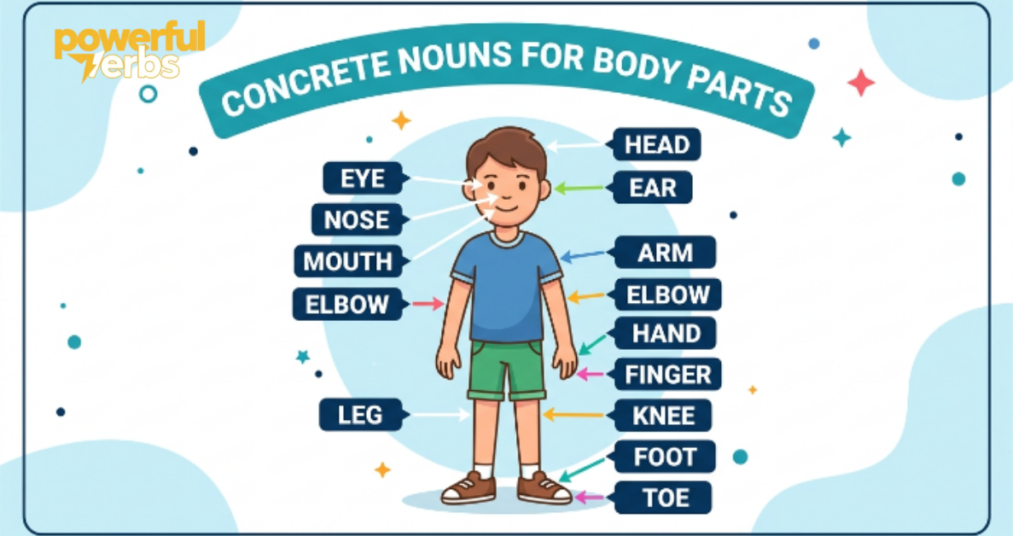
| Concrete Noun | Example Sentence |
| Hand | His hand was cold from working outside all morning. |
| Eye | Her eye caught the movement across the room. |
| Ear | The ear detected a faint sound in the distance. |
| Nose | His nose picked up the smell of fresh bread. |
| Mouth | Her mouth curved into a wide smile. |
| Finger | The finger was wrapped in a small bandage. |
| Foot | Her foot slipped on the wet kitchen floor. |
| Shoulder | He rested his head on her shoulder. |
| Knee | The knee swelled after the fall on the pavement. |
| Elbow | Her elbow rested on the edge of the table. |
Singular and Plural Concrete Nouns
Most concrete nouns change form when referring to more than one. Understanding singular and plural forms builds stronger grammar.
| Singular | Plural | Example Sentence |
| Book | Books | The books were stacked on the wooden shelf. |
| Chair | Chairs | All the chairs were arranged in a circle. |
| Dog | Dogs | The dogs barked at the passing bicycle. |
| Apple | Apples | She washed the apples before placing them in the bowl. |
| Tree | Trees | The trees lost their leaves in autumn. |
| Car | Cars | The cars filled every space in the parking lot. |
| Child | Children | The children played until sunset in the garden. |
| Tooth | Teeth | The dentist checked all her teeth carefully. |
| Leaf | Leaves | The leaves crunched underfoot on the morning walk. |
| Foot | Feet | His feet ached after the long mountain hike. |
| Mouse | Mice | The mice found their way into the storage room. |
| Knife | Knives | The knives were sharpened before the cooking class. |
| Shelf | Shelves | The shelves were empty after the moving day. |
| Wolf | Wolves | The wolves hunted together in the deep forest. |
| Flower | Flowers | The flowers filled the room with a gentle fragrance. |
| Bottle | Bottles | The bottles were collected and taken for recycling. |
| Bag | Bags | All the bags were packed the night before departure. |
| Window | Windows | The windows were left open during the afternoon breeze. |
| Shoe | Shoes | Her shoes were polished before the formal dinner. |
| Phone | Phones | The phones were switched off during the ceremony. |
Concrete Nouns in Descriptive Sentences
Using concrete nouns with strong adjectives and verbs creates powerful, vivid writing.
| Concrete Noun | Descriptive Sentence |
| Mountain | The snow-capped mountain towered over the tiny village below. |
| Ocean | The dark blue ocean crashed violently against the jagged rocks. |
| Library | The old library smelled of wood polish and aging paper. |
| Puppy | The tiny brown puppy whimpered softly outside the gate. |
| Candle | The white candle flickered gently in the cool evening breeze. |
| Bread | The freshly baked bread filled the entire kitchen with warmth. |
| Train | The heavy train thundered through the tunnel at full speed. |
| Garden | The overgrown garden was bursting with wild colour and life. |
| Clock | The ancient brass clock chimed deeply on every hour. |
| Raindrop | Each raindrop left a perfect circle on the dusty window glass. |
Conclusion
Concrete nouns are the foundation of clear, vivid, and powerful English.Every physical thing you see, touch, hear, taste, or smell has a concrete noun attached to it. Mastering these words gives you the tools to describe the world around you with precision and confidence.
From the warmth of fresh bread to the sound of crashing ocean waves — concrete nouns bring your writing to life in ways that abstract language simply cannot.
Use this list of 200+ concrete noun examples as your daily reference — for writing, grammar practice, vocabulary building, or teaching. The more confidently you use concrete nouns, the stronger and more compelling your English becomes.
FAQs
1. What is a concrete noun?
A concrete noun is a word that names a physical object experienced through the five senses — sight, touch, sound, taste, or smell. Examples include chair, river, dog, lemon, and rain.
2. What are 10 examples of concrete nouns?
Ten clear examples are: apple, teacher, mountain, dog, laptop, rain, bridge, shirt, ocean, and clock. Each names something real and physically present in the world.
3. What is the difference between concrete and abstract nouns?
Concrete nouns name physical things you can see, touch, hear, taste, or smell — like book, flower, or stone. Abstract nouns name ideas, feelings, or concepts that have no physical form — like love, freedom, or courage.
4. Can concrete nouns be plural?
Yes. Most concrete nouns form plurals by adding -s or -es. Some have irregular plural forms — like tooth becomes teeth, child becomes children, and leaf becomes leaves.
5. Is water a concrete noun?
Yes. Water is a concrete noun because you can see it, touch it, taste it, and hear it. It is a physical substance experienced directly through the senses.
6. Is music a concrete noun?
Yes. Music is a concrete noun because it is experienced through the sense of hearing. Sound waves are physical — making music a concrete sensory experience.
7. Is love a concrete noun?
No. Love is an abstract noun. It represents an emotion or feeling that cannot be physically seen, touched, or measured. It has no tangible form in the physical world.
8. How do concrete nouns improve writing?
Concrete nouns make writing more vivid, specific, and easy to visualize. Instead of writing “she sat on the furniture” — writing “she sat on the cracked wooden chair” gives the reader a precise, physical image.
9. What are proper concrete nouns?
Proper concrete nouns name specific real-world people, places, or things and are always capitalized — like London, the Nile River, the Eiffel Tower, or Albert Einstein.
10. How many types of concrete nouns are there?
Concrete nouns are grouped into four main types: people (teacher, nurse), places (market, forest), animals (eagle, dolphin), and things (keyboard, umbrella). Each type names something physically real and tangible.

Liam Johnson is a dedicated language expert with 4 years of professional experience. He specializes in Grammar, Vocabulary, and Sentence structure.
